Lifestyle · Outdoor Living
Gardening Without the Backache: Patios, Raised Planters, and HOA Front Yard Care
How to keep your hands in the soil in a 55+ community, without the bending, written by independent 55+ specialist Gary Lee.
By Gary Lee, Northern California 55+ Specialist | October 2026
Last verified:
Gardening does not end when you move into a 55+ community, it just changes shape. Front yards are frequently handled by the association or bound to strict drought-tolerant palettes, so the gardening focus shifts to patios, courtyards, and containers. With waist-high raised planters, good soil, and the right sun, you can grow more in a 10-by-10 patio than many people grow in a quarter-acre yard, and you can do it standing upright.
This guide covers what you can plant, what the HOA controls, and where the community garden plots are. For the CC&R side of landscaping, our guide to solar, exterior paint, yard art, and landscaping limits goes deeper into what needs approval.
The New Gardening Reality
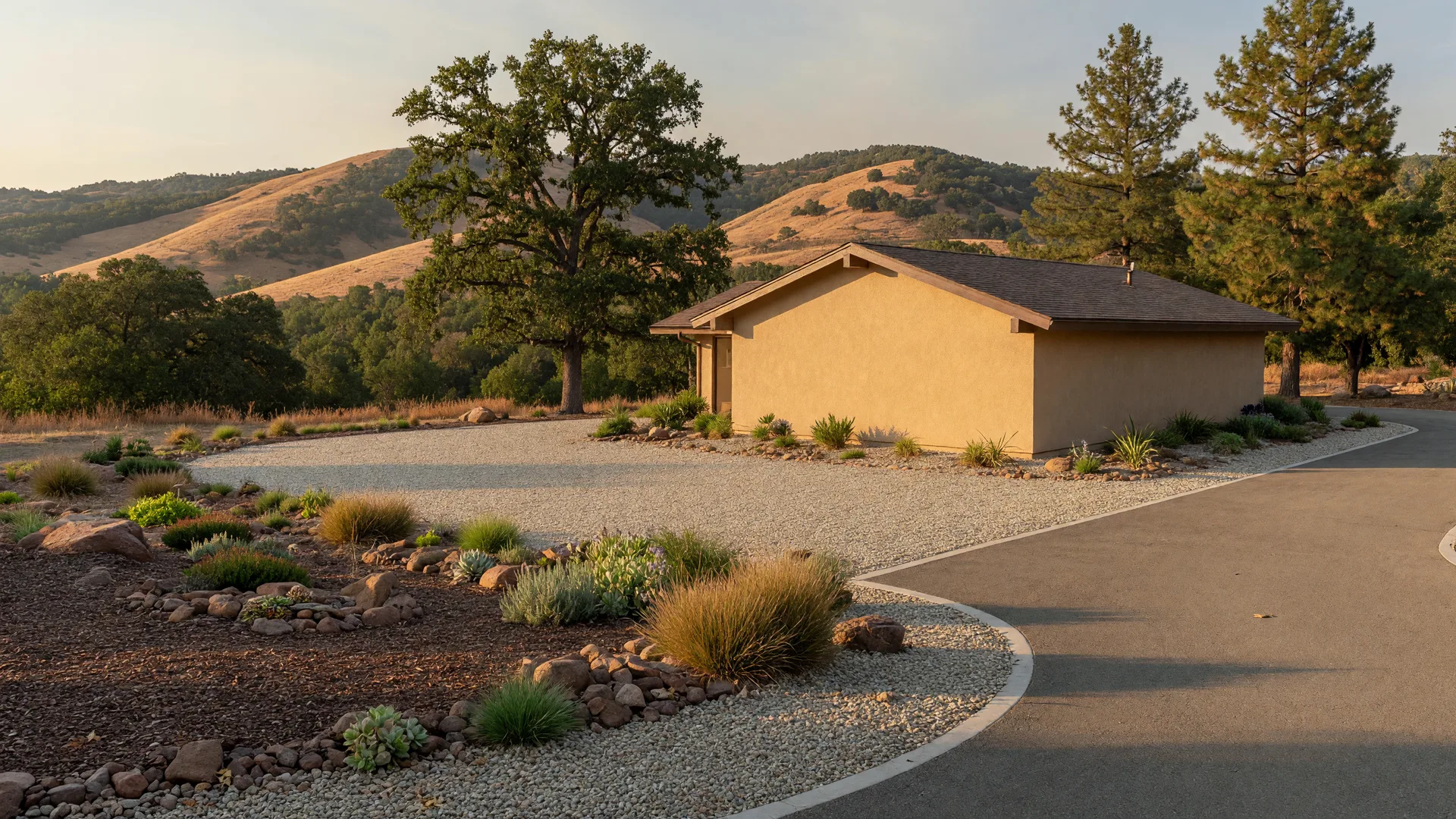
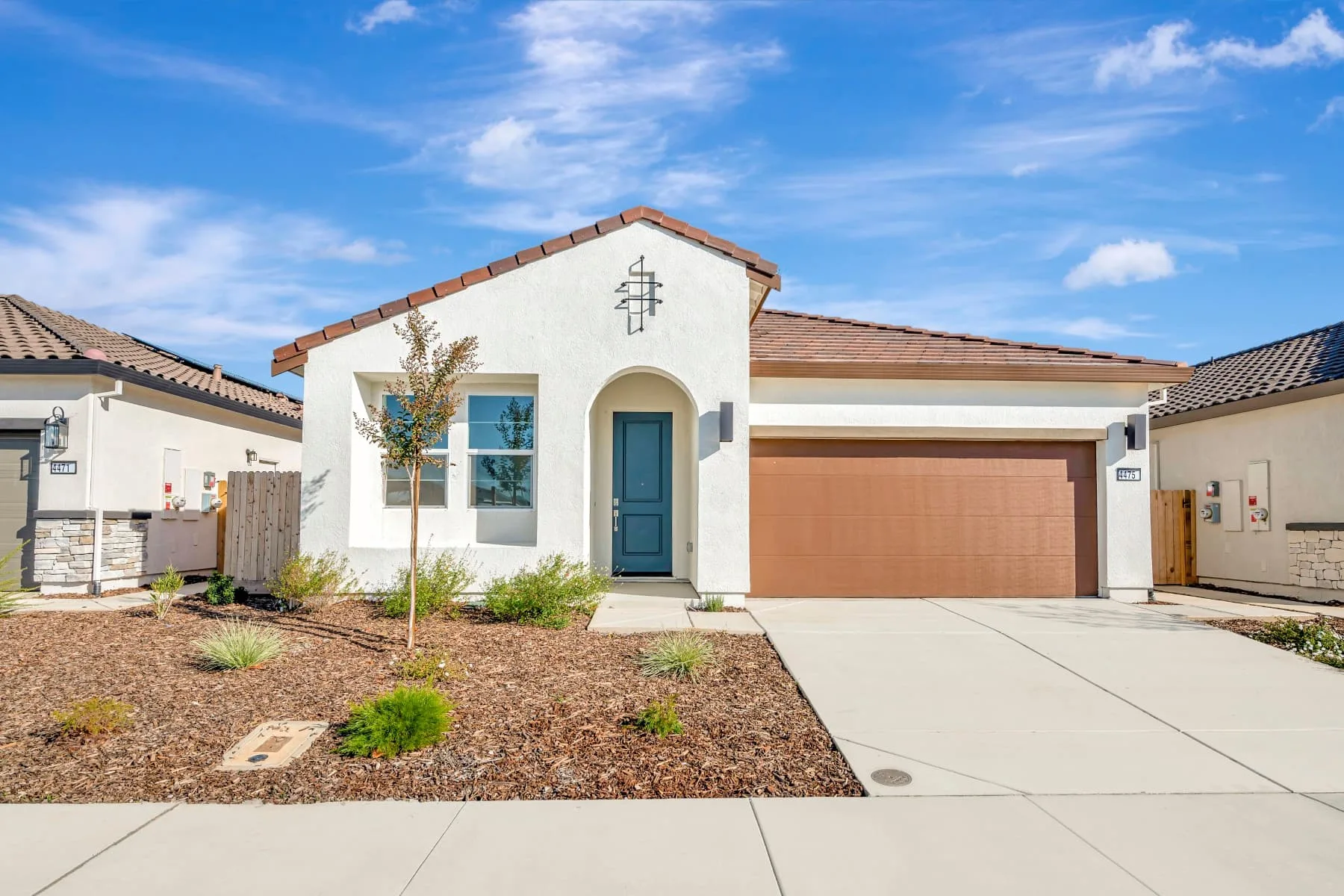
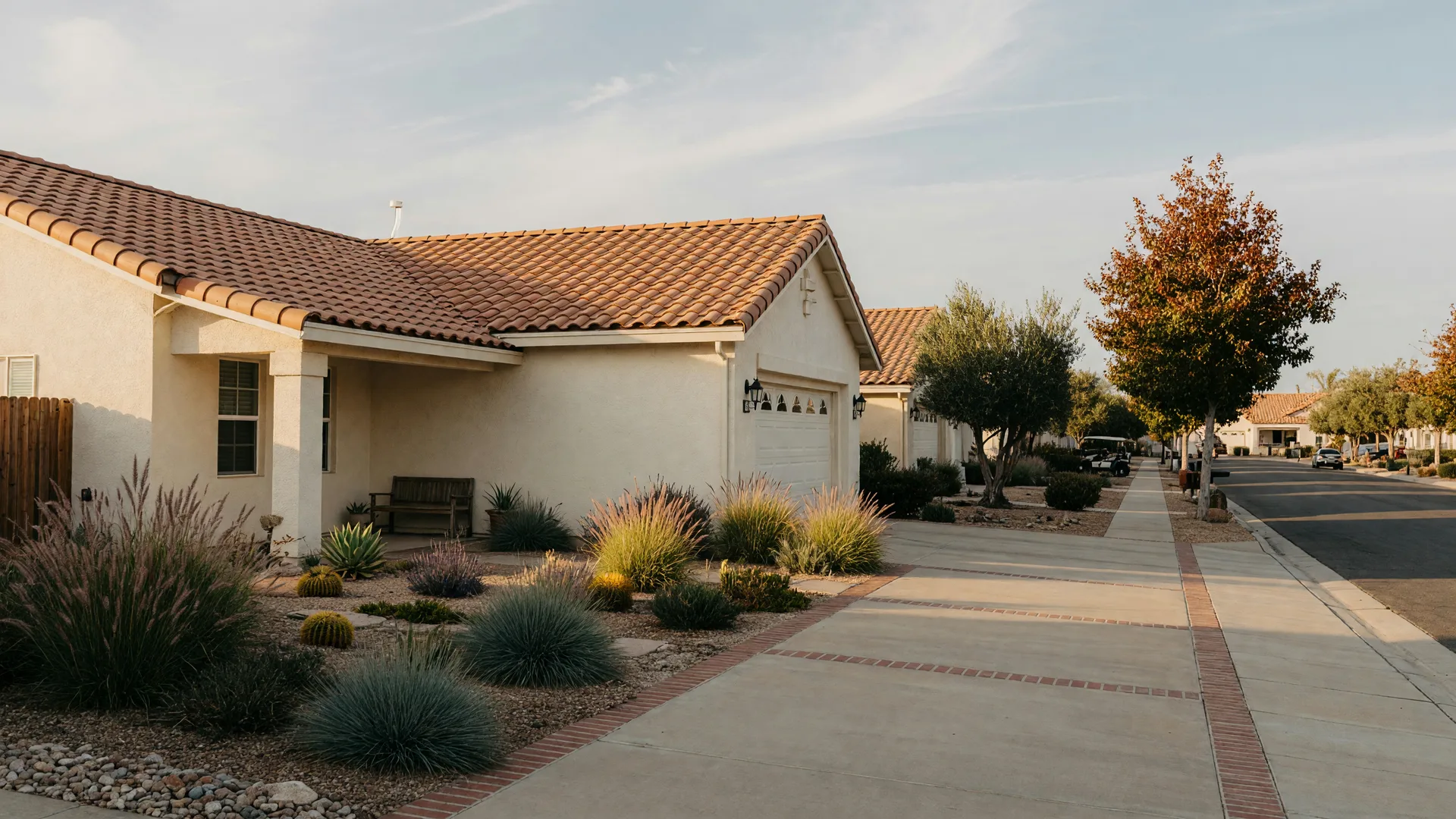
In most 55+ communities, the front yard is no longer yours to manage, and that is a feature, not a bug. Front yards are frequently handled by the association or bound to strict drought-tolerant palettes, which means no mowing, no weeding, and no weekend turf battles. The association keeps the street view tidy, and you keep your weekends.
The trade-off is that your gardening energy has to find a new home. For most residents, that home is the backyard patio, the interior courtyard, or a set of containers by the door. The shift from "yard" to "patio" is the single biggest adjustment for gardeners moving into active-adult living, and it is also the liberation: a patio garden is smaller, easier, and far less work than a lawn.
If gardening is a priority, the floor plan matters. A home with a covered patio, a courtyard, or a south-facing wall gives you the space and the sun to grow real food. Our guide to what fits in modern single-story layouts is a good companion when you are comparing floor plans for both the indoor and outdoor life.
Raised Planters and Containers
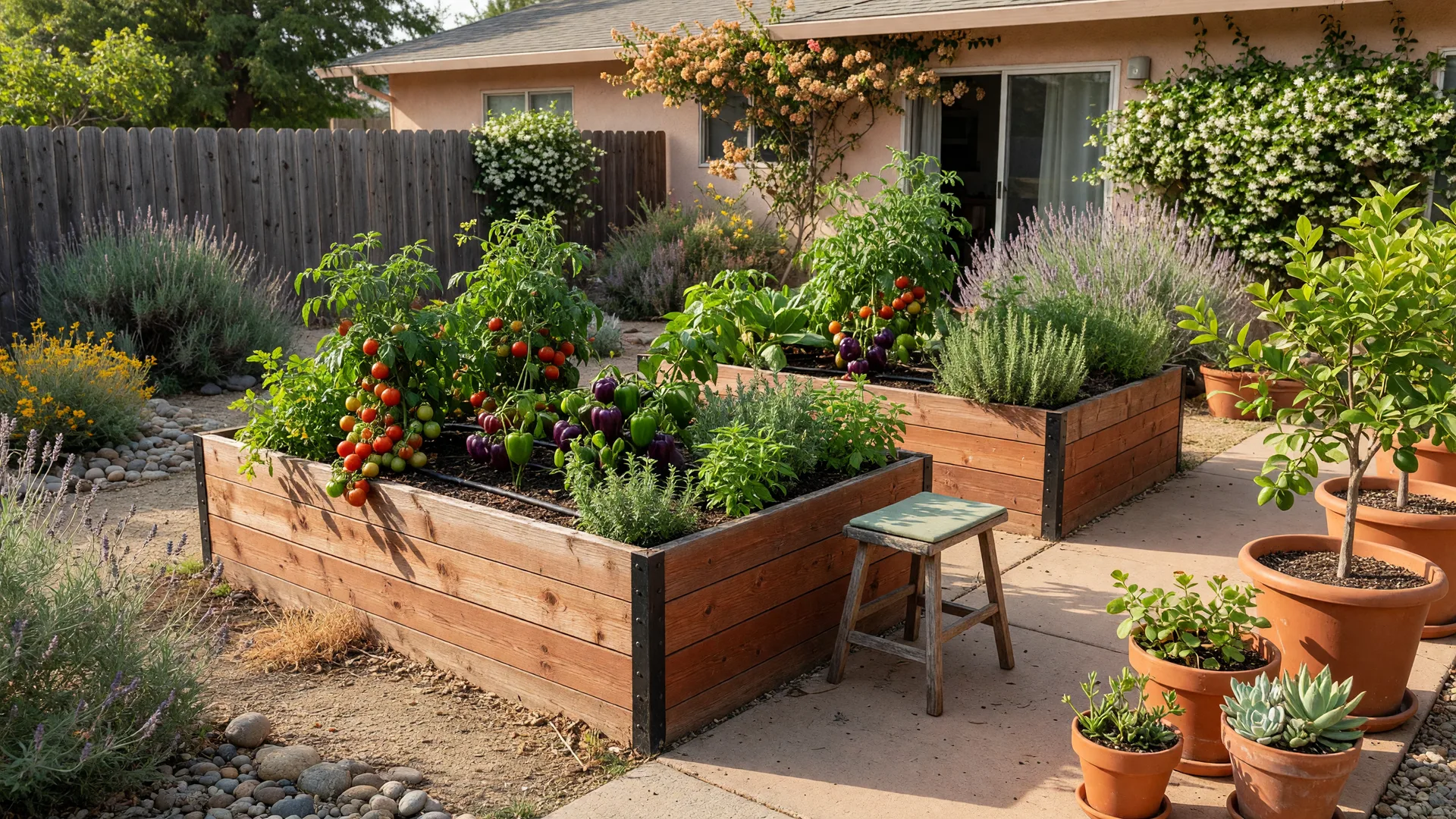
Raised beds at waist height are the gardener's best friend in a 55+ community. Built roughly 30 to 36 inches tall, they bring the soil to you, so planting, weeding, and harvesting happen standing upright with almost no bending or kneeling. For anyone with a back, knees, or hips that have opinions, this is the difference between gardening and not gardening.
Containers work beautifully on patios and balconies, and they are the most flexible option of all: tomatoes in a 15-gallon pot, herbs in a window box, peppers along a sunny wall. You can rearrange them, move them for sun, and take them with you if you ever move again.
- Good drainage matters more than plot size. A raised bed or container with proper drainage outperforms a big bed with soggy soil. Add drainage holes, a layer of gravel, and quality potting mix.
- Quality soil beats quantity. Fill raised beds with a good raised-bed mix, and refresh containers each season. Healthy soil is the whole secret.
- Right sun, right plant. Most vegetables want six or more hours of sun. Watch the patio through a day before you buy, and match your plants to the light you actually get.
The freedom is in the back:
While front yards are frequently handled by the association or bound to strict drought-tolerant palettes, backyard patios and interior courtyards offer homeowners full creative freedom for raised beds, container gardening, and waist-high planters.
What the HOA Controls
The HOA's landscaping rules are usually about the street view, and they are worth reading before you buy. The typical controls:
- Front-yard plant palettes. Many associations maintain the front yard outright, and others approve the plant palette, so the street has a cohesive look. Native and drought-tolerant plants are the norm across Northern California.
- Water-efficient landscaping. California's water reality is baked into the rules: drip irrigation, mulch, and low-water plants are standard, and lush lawns are increasingly rare in new communities.
- Limits on structures. Trellises, greenhouses, sheds, and sometimes even large raised beds can require architectural review committee (ARC) approval, especially if they are visible from the street.
The rule of thumb: know what needs ARC approval before you build, and get it in writing. The ARC exists to keep the community looking cohesive, and in most cases a well-designed patio garden sails through. Our reserve study guide shows you how to size up the association itself, so you know what kind of steward you are buying into.
Community Garden Plots
For gardeners who want more room than a patio offers, some communities have a better answer: dedicated community garden plots. Dedicated community garden plots are a standout feature in select master-planned communities, such as Lincoln Hills' community garden program, and buyers should ask about waitlists during their initial tour.
Community gardens are social places too, with gardeners trading tips, seeds, and harvests, and they are often located along the walking trails, so a visit to your plot is also a walk through the community. For solo residents, a garden plot can be another quiet on-ramp to the neighborhood, the kind of recurring place where connections form; our guide to moving in alone and building an instant community explains how those places work.
The catch is demand. Plots are often in high demand, so buyers should ask about waitlists during their initial tour, and ask how plots are assigned, sized, and maintained. A community with a garden program and a short waitlist is a different experience from one where the wait runs years. If you are looking at Lincoln specifically, our Sun City Lincoln Hills review and our Sun City Lincoln Hills local guide cover the community in depth.
And if your garden comes with a four-legged supervisor, our guide to pet rules in 55+ communities covers the other side of outdoor living.
Frequently Asked Questions
Can I garden in a 55+ community with HOA-maintained yards?
Yes, and the gardening just moves to a different stage. Front yards are frequently handled by the association or bound to strict drought-tolerant palettes, so the creative freedom lives in the backyard: patios and interior courtyards offer homeowners full freedom for raised beds, container gardening, and waist-high planters. If you love to dig, choose a home with a patio or courtyard you can make your own, and check the HOA rules for what the association maintains versus what you control.
What are raised planters?
Raised planters are garden beds built above ground level, typically framed in wood, stone, or metal and filled with quality soil. Waist-high planters, built roughly 30 to 36 inches tall, let you garden standing upright with almost no bending or kneeling, which is why they are so popular in 55+ communities. They also drain well, warm up faster in spring, and keep weeds and gophers at bay. If bending is a concern, a waist-high bed is the single best gardening upgrade you can make.
Do I need HOA approval for garden structures?
Usually, yes. Most associations require architectural review committee (ARC) approval for structures like trellises, greenhouses, sheds, and sometimes raised beds if they are visible from the street or exceed a size limit. The rule of thumb is to check the CC&Rs and get written approval before you build anything. Backyard patios and interior courtyards are typically the most flexible spaces, but the ARC process protects you from building something you would have to remove.
Are there community garden plots?
In some communities, yes, and they are a standout feature. Dedicated community garden plots are available in select master-planned communities, such as Lincoln Hills’ community garden program, where residents can grow vegetables and flowers on a shared plot. Plots are often in high demand, so buyers should ask about waitlists during their initial tour, and ask how plots are assigned, sized, and maintained.
Find a Patio With Room to Grow
Gary and Rutsell know which homes have the sunny patios, the courtyards, and the community garden programs. Call or text Gary at 916-595-4279, Rutsell at 916-695-2800, or send a message through our contact page.
Written by The Gary Lee Team
Gary Lee, REALTOR, CA DRE #01448722, and Rutsell Fabillar Lee, REALTOR, CA DRE #02067791, are the husband-and-wife team behind NorCal55Plus.com. The Gary Lee Team operates under eXp Realty of Northern California, Inc. Gary has served Northern California real estate clients since 2004 and specializes in 55+ active-adult communities, resale homes, new construction, relocation, and downsizing. Client services are offered in English, Tagalog, and Bisaya.
Call or text Gary at 916-595-4279 or Rutsell at 916-695-2800, or send a message through our contact page. Whether you dream of tomatoes or roses, we would love to help you find the patio to grow them on.
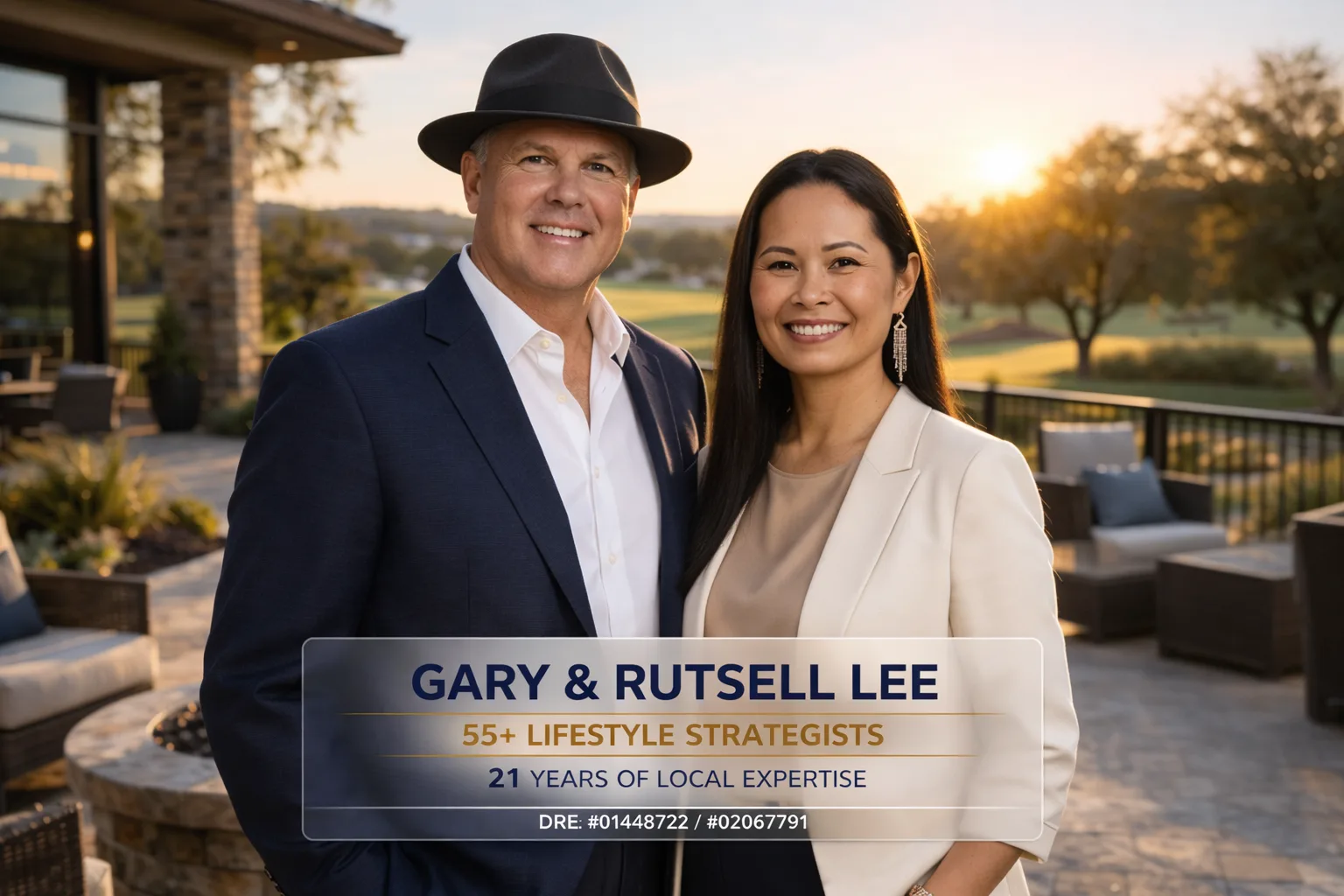
Meet your specialists
Meet Gary & Rutsell, your Northern California 55+ REALTORS
Gary Lee has been a full-time California REALTOR® since 2004. Rutsell Lee is also a California REALTOR® and co-founder of The Gary Lee Team. Together they research Northern California 55+ communities, tour homes and amenities, and help buyers and sellers compare their options throughout Greater Sacramento and Northern California.
The Gary Lee Team · eXp Realty of Northern California, Inc.