Lifestyle · Downsizing
Downsizing Furniture: What Fits in Modern Single-Story Layouts
Measure first, keep fewer and better pieces, and design the new room for ease. Written by independent 55+ specialist Gary Lee.
By Gary Lee, Northern California 55+ Specialist | October 2026
Last verified:
Modern single-story layouts reward fewer, better pieces. Measure the doorways, hallways, and rooms first, standard interior doors run about 30-32 inches, then decide what earns a place. Formal dining sets, china hutches, and oversized sectionals usually do not translate to open great rooms, while a sofa plus chairs, casual dining, and flexible modular pieces do. Design for roughly 36 inches of clearance in main walkways, and the new home will feel open instead of crowded.
This guide pairs with our 30-day declutter roadmap for the room-by-room plan, and our estate sales, consignment, and clean-out guide for what to do with the pieces that stay behind.
Measure First: Doorways, Hallways, Stairs, and Elevators
The most expensive mistake in downsizing is falling in love with a piece of furniture that cannot get through the door. Measure the new home's doorways, hallways, stairs or elevators before you decide what moves. Standard interior doors run about 30-32 inches, and a sofa that came through your current front door may not clear a 30-inch bedroom door or a tight hallway turn.
Many 55+ community homes make this easier: single-story layouts with wider, step-free doorways and no stairs to navigate. But elevators, if the building has one, have their own limits, and even single-story homes have hallway turns. Measure the furniture's dimensions, write them down, and compare them to the new home's openings before you commit.
The Great Room Reality
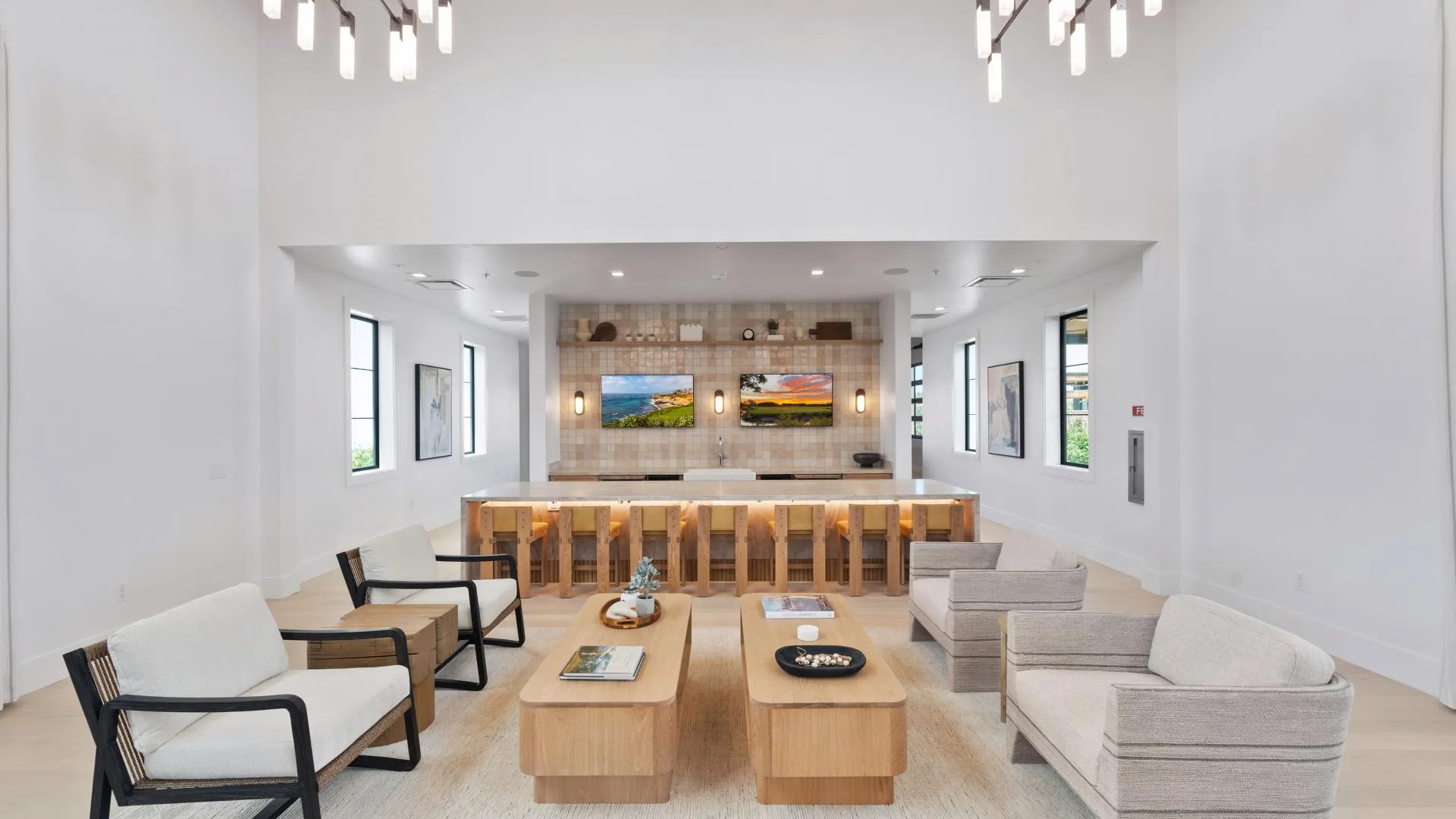
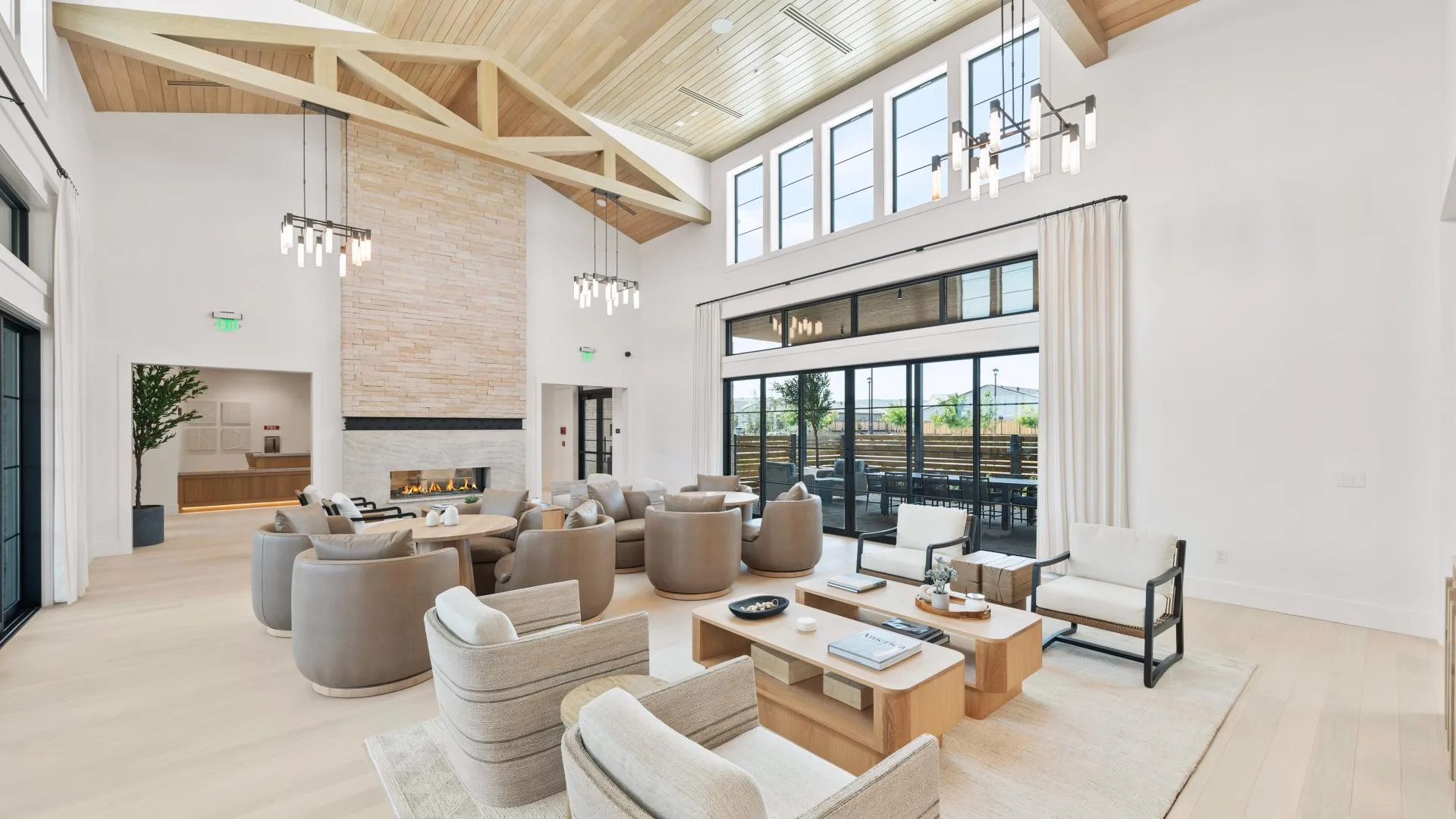
Open-concept layouts are the norm in modern 55+ communities: the kitchen, dining, and living areas flow into one great room. That openness rewards fewer, better pieces. A sofa plus chairs beats an oversized sectional for flexibility and walking paths, because the room needs to work as a kitchen, a dining room, and a living room all at once.
In a great room, every piece earns its place by earning its keep. A large sectional that works in a dedicated family room can turn a great room into a maze. Two comfortable chairs that can move for a gathering, or angle toward the fireplace, give you more usable space and more options. Fewer pieces, chosen well, is the whole strategy.
What Usually Does Not Translate
- Formal dining sets. The 8-seat table and matching hutch for a dining room you will not have. Casual dining and built-ins often replace them in 55+ floor plans.
- China hutches and breakfronts. Beautiful, heavy, and almost never needed in a smaller home. The good news: they sell well when listed early.
- Bulky sectionals. The great-room killer. A sofa plus chairs gives you the same seating with better flow.
- Oversized desks and home office suites. A compact desk or a built-in workspace usually serves a 55+ home better than a massive executive desk.
The pieces that do translate are the flexible ones: comfortable sofas and chairs, casual dining sets, modular storage, and furniture that can serve more than one purpose. Start selling or consigning the big formal pieces early, because they take the longest to sell and they are the ones you least want to move twice.
Designing for Ease
A 55+ home should be easy to move through every day, and the furniture plan is how you make that true. A good starting point is roughly 36 inches of clearance in main walkways, enough for comfortable movement including for someone using a walker or wheelchair. Scale the furniture to the room, use area rugs to define zones without shrinking the paths, keep bedside clearance in the primary suite, and make sure the lighting is good where you sit and read.
Favor flexible, modular great-room layouts over large rigid formal pieces. A modular sofa that can be rearranged, a dining table with a leaf, chairs that can move between rooms, these pieces adapt as your needs change. The goal is a home that works for you now and still works in ten years, which is exactly the kind of thinking that makes a 55+ move feel like a fresh start rather than a squeeze.
For the whole downsizing process around this decision, our 30-day declutter roadmap covers the room-by-room plan, and our estate sales, consignment, and clean-out guide helps you decide how each piece leaves the old house.
Frequently Asked Questions
Will my formal dining set fit in a 55+ community home?
Often not, and that is usually fine. Modern single-story layouts tend to favor casual dining and built-ins over formal dining rooms, so a large formal dining set with a china hutch frequently does not translate. Measure the new dining area first, and if the set does not fit, sell or consign it early. A casual dining table with comfortable chairs usually serves daily life better in a 55+ home anyway.
Should I keep my big sectional?
Probably not. Oversized sectionals are the piece that most often overwhelms a smaller great room. Open-concept layouts reward fewer, better pieces, and a sofa plus chairs gives you more flexibility and clearer walking paths than a giant sectional. If the sectional fits the new room without blocking traffic, keep it; if it turns the room into a maze, sell it and buy pieces scaled to the space.
How wide should walking paths be?
A good rule of thumb is roughly 36 inches of clearance in main walkways. That is enough for comfortable movement, including for someone using a walker or wheelchair. Measure the new floor plan, place the furniture, and check every main path before you commit. Area rugs can define zones without shrinking the paths, and bedside clearance matters just as much as living room clearance.
What should I measure before moving?
Measure the doorways, hallways, stairs or elevators, and the rooms themselves. Standard interior doors run about 30-32 inches, and a sofa that fit through your current front door may not fit through a narrower hallway or a 30-inch bedroom door. Measure the new home’s openings and the furniture’s dimensions before you decide what moves, and remember that many 55+ community homes are single-story with wider, step-free layouts that make this easier.
Tour the Floor Plan Before You Decide What Moves
Gary and Rutsell walk buyers through floor plans and talk furniture fit before the offer, not after. Call or text Gary at 916-595-4279, Rutsell at 916-695-2800, or send a message through our contact page.
Written by The Gary Lee Team
Gary Lee, REALTOR, CA DRE #01448722, and Rutsell Fabillar Lee, REALTOR, CA DRE #02067791, are the husband-and-wife team behind NorCal55Plus.com. The Gary Lee Team operates under eXp Realty of Northern California, Inc. Gary has served Northern California real estate clients since 2004 and specializes in 55+ active-adult communities, resale homes, new construction, relocation, and downsizing. Client services are offered in English, Tagalog, and Bisaya.
Call or text Gary at 916-595-4279 or Rutsell at 916-695-2800, or send a message through our contact page. Whether you are measuring, selling, or planning the move, we would love to help.

Meet your specialists
Meet Gary & Rutsell, your Northern California 55+ REALTORS
Gary Lee has been a full-time California REALTOR® since 2004. Rutsell Lee is also a California REALTOR® and co-founder of The Gary Lee Team. Together they research Northern California 55+ communities, tour homes and amenities, and help buyers and sellers compare their options throughout Greater Sacramento and Northern California.
The Gary Lee Team · eXp Realty of Northern California, Inc.