Buyer Education · HOA & CC&R Rules
The Unwritten CC&R Rules: Solar, Exterior Paint, Yard Art & Landscaping Limits
The rules that shape how your home looks from the street, written by independent 55+ specialist Gary Lee.
By Gary Lee, Northern California 55+ Specialist | October 2026
Last verified:
Most exterior changes in a 55+ community need written approval from the architectural review committee (ARC) before work starts: paint colors, landscaping, fences, yard art, and solar installations included. California's Solar Rights Act generally protects your right to install solar, but placement, appearance, and the approval process can still be governed. The practical rule is simple: get the ARC application, the timeline, and the rules before you order any exterior work.
This guide covers the rules that show up again and again across Northern California communities: paint, landscaping, yard art, and solar, with the California law that protects solar access. It is general education, not legal advice, and every community's exact rule lives in its own CC&Rs.
How the ARC Works
The architectural review committee, sometimes called the architectural control committee, is the body that reviews and approves exterior changes in a community. In most 55+ communities, nearly any visible change needs written approval before work starts: paint, roofing, landscaping, hardscaping, fences, solar, window coverings, and sometimes even interior changes visible from the street.
ARC approval is required prior to ordering exterior work, paint, or solar installations. The process is usually straightforward: ask for the application, the timeline, and the rules. Most committees publish their guidelines, and the CC&Rs spell out what needs approval and how long the review takes. Plan for the approval before you sign a contract with a contractor, because a contractor who starts before approval can leave you with a fine and a redo.
How to Validate the ARC Process Before You Make an Offer
The ARC is only as predictable as its written process, so buyers should validate that process before committing to a home, not after moving in. The committee's authority comes from the CC&Rs, and the working rules live in the ARC guidelines, review application, and the community's enforcement record. A five-step check catches most of the surprises:
-
Ask for the governing documents in writing. Get the CC&R article that creates the ARC, the current ARC guidelines, and a blank review application before you make an offer. If the guidelines are not published, that itself is information: it means approvals may run on unwritten judgment rather than a palette and a checklist.
-
Confirm the review timeline. Ask how long a typical review takes and whether there is a written response deadline. A committee that meets monthly with a set review cycle is manageable; one with no stated timeline can stall a planned improvement for a season.
-
List what actually needs approval. Confirm in writing whether screen doors, window coverings, front-door paint, exterior light fixtures, and landscaping changes require review alongside the obvious items like roofing and solar. The gap between what you think needs approval and what the CC&Rs say can be wide.
-
Check the enforcement record. Ask whether owners have been fined or forced to redo work in the last few years and what for. Recent enforcement means the rules are live, which is good to know before you plan a project, and the board minutes document it.
-
Get approval in writing before work starts. An oral okay from a board member or a committee chair has no enforcement value. The only approval that counts is the written one, and it should name the specific work approved.
Write the answers into your offer period, not after it. The same documents you collect now, the guidelines, the palette, the application, the enforcement history, are the ones that tell you whether the community's rules fit how you actually want to live.
Exterior Paint: The Palette Is the Rule
Pre-approved paint palettes are common in planned communities. The community publishes a set of approved body colors, and accent colors, trim, and front doors can be restricted to match. The goal is a cohesive streetscape, and the palette is how the community enforces it.
Get the palette before planning a repaint. A color that looks great on a paint chip can be outside the approved list, and repainting after the fact is expensive. The same applies to a front door refresh: even a "simple" accent color change usually needs approval. When you buy, ask for the current palette and the ARC guidelines so you know what your home can look like before you own it.
Landscaping: Who Maintains What, and What Can Grow
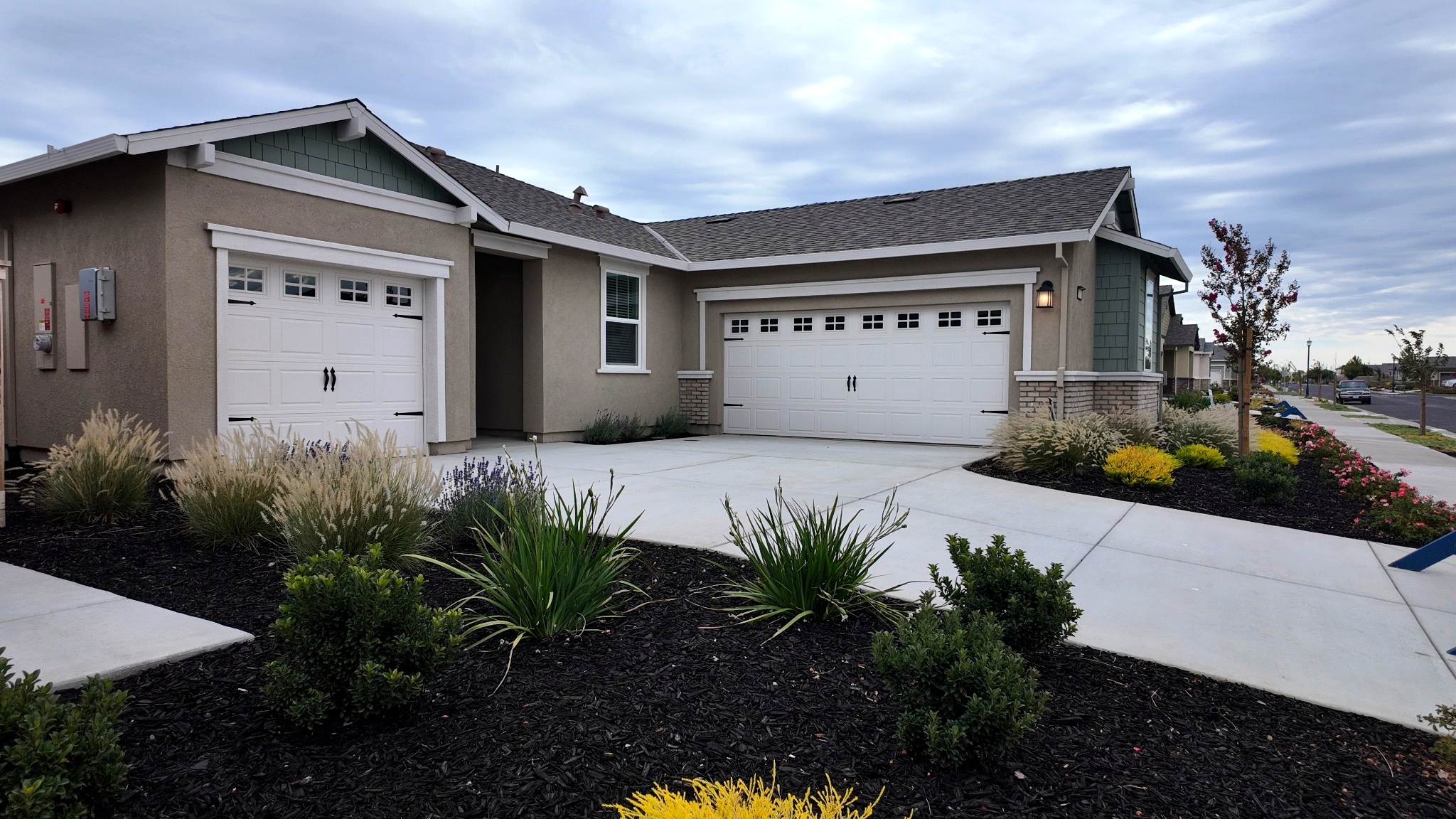
Landscaping rules vary more than any other CC&R topic, and the regional reality matters. In developments such as Turkey Creek, Lincoln Hills, and Sun City Roseville, front-yard maintenance is commonly handled by the HOA or strictly regulated by an approved plant palette to ensure water efficiency. That means the community may mow, trim, and irrigate your front yard for you, or it may require that your front yard match an approved list of plants, with limits on lawns and who maintains what.
Drought-tolerant plant requirements are common in Placer and Sacramento developments, reflecting California's water reality. That often means limits on traditional lawns, rules about artificial turf (some communities allow it with approval, others restrict it), and approved plant lists that favor low-water natives and ornamentals. Before you buy, ask three questions: who maintains the front yard, what is on the approved plant list, and are lawns or artificial turf allowed?
Yard Art and Personalization: Tasteful and Consistent
Statues, fountains, flags, and holiday decor are where buyers most often collide with rules they did not read. CC&Rs commonly limit yard art and personalization with language like "tasteful and consistent" with the community. That phrase gives the ARC wide discretion, and the practical effect is that a large statue, an oversized flag, or a fountain in the front yard may need approval or may not be allowed at all.
Holiday decor timing is another common rule: many communities set windows for when decorations can go up and when they must come down. Visible storage is also regulated: boats, RVs, trailers, and even some vehicles must be kept out of sight. If personalization matters to you, read the CC&Rs' yard art and storage sections before you buy, and ask the HOA what "tasteful and consistent" has meant in practice.
Solar Panels: Your Right, With Reasonable Rules
California's Solar Rights Act (Civil Code section 714) generally protects the right to install solar energy systems, and HOAs cannot unreasonably restrict them (Civil Code section 714.1). A community cannot simply ban solar. But placement, appearance, and the approval process can still be governed: where panels sit on the roof, how visible they are from the street, and the ARC application all fall within the community's reasonable rules.
Read the CC&Rs' solar section before you buy, and get written ARC approval before you order. A solar contractor who knows the community's process can help, but the approval is yours to secure. The same discipline applies to every exterior change: ARC approval is required prior to ordering exterior work, paint, or solar installations.
This is general education about California housing rules, not legal advice. For your specific home and community, read the current CC&Rs and ARC guidelines, and consult a qualified attorney if a rule dispute comes up.
Palettes, Yard Art, and the Solar Rights Act: The Deeper Rules
The four rules buyers actually trip on, exterior paint, yard art, landscaping, and solar, all play out a little differently from one Placer or Sacramento development to the next. The depth below covers how each rule typically works in the region's 55+ communities and where California law draws its lines.
Exterior paint palette restrictions, in practice
In most planned Northern California communities, the approved palette is the rule, not a suggestion. The community publishes body colors, and trim, accent, and front door colors are matched to them, often with limits on how many accent colors a home can use and where they can appear. Two details matter more than the color list itself:
- Approval runs on the swatch, not the description. Committees typically want the actual paint brand, color code, or physical sample submitted for review, because "light beige" means different things to different people. Keep the submitted code with your approval letter.
- Repaint enforcement is real. A color outside the palette can draw a non-compliance notice and a forced repaint at the owner's cost. When you tour resale homes, the current paint may predate the current rules, so never assume a neighbor's color is today's approved color.
Yard art constraints across Placer and Sacramento developments
Yard art rules in the region's 55+ developments typically turn on three ideas: visibility from the street, consistency with the community's look, and timing. Statues, large planters, fountains, flags, and decorative lawn pieces are usually limited to what the ARC approves, and the deciding language is often the same "tasteful and consistent" standard that gives the committee broad discretion.
- Front yards are the strict zone. Side and rear yards are commonly treated more loosely, and front-yard decor is where approval requirements concentrate. If a fountain or flag matters to you, plan for that to be an ARC item.
- Decor has windows. Many communities set dates for seasonal decorations, and holiday displays that go up early come down late are a recurring enforcement item. Ask for the current decor calendar before you store the bins in the garage.
- Visible storage is part of the same rule. Boats, RVs, and trailers are usually required out of sight, and some communities extend that to work vans, car covers, and shed placement. Our guide to RV and boat parking covers these storage rules in detail.
The honest framing: across Placer and Sacramento 55+ communities, the yard-art rules are enforced unevenly in practice, which is exactly why you should read the CC&Rs and ask how the rules have been applied, not assume from what you see on a drive-through tour.
The Solar Rights Act inside a private community: what it protects, and what it does not
California's Solar Rights Act (Civil Code section 714) protects the right of homeowners to install solar energy systems, including in communities governed by CC&Rs, and Civil Code section 714.1 forbids associations from unreasonably restricting that right. A community cannot simply ban rooftop solar, and a rule that makes installation effectively impossible is generally unreasonable. That is the protection, and the scope matters:
- Reasonable siting and appearance rules survive. An association may set rules on where panels sit on the roof, how visible they are from the street, and how they are integrated, as long as the rules are reasonable and do not defeat the purpose of the law.
- The approval process still runs through the ARC. The statute protects the right to install; it does not waive the community's application process. The practical path is the same as any exterior change: apply, get written approval, then order.
- Not every system is equally protected. The strongest protection is for rooftop systems on the owner's home. Ground-mounted panels, systems on common areas, or installations that raise structural or safety issues stay closer to the ARC's ordinary authority. Read the CC&Rs' solar section and the current law for your exact project.
If the association rejects a solar application, the dispute resolution matters, and the answer depends on the specific rule and system. This is the point where a qualified attorney who handles California common-interest disputes is the right resource, because the statute's reasonableness test is applied to the facts of your community and your roof.
Where the Rules Come From
The CC&Rs sit inside a bigger picture of community rules and finances. Our guides to HOPA, surviving spouses, and inheritance, reading a 55+ HOA reserve study, and rental restrictions in 55+ developments cover the rest of what the CC&Rs control, and our guide to RV and boat parking covers the storage rules in detail.
Frequently Asked Questions
Can an HOA stop me from installing solar panels?
Generally no, California’s Solar Rights Act (Civil Code section 714) protects the right to install solar energy systems, and HOAs cannot unreasonably restrict them (Civil Code section 714.1). But placement, appearance, and the approval process can still be governed by the community’s rules, so read the CC&Rs’ solar section and get written ARC approval before ordering anything. A community can impose reasonable restrictions on where and how systems are installed, but it cannot ban solar outright.
Do I need HOA approval to paint my front door?
Very likely yes. Most exterior changes, including paint colors on walls, trim, accent colors, and front doors, need written approval from the architectural review committee before work starts. Many communities use pre-approved paint palettes and restrict accent colors and front door shades. Get the palette and the application before planning a repaint, and never assume a color is allowed because a neighbor used it.
Can I put a statue in my front yard?
Usually only with approval, and often not at all. CC&Rs commonly limit yard art, statues, fountains, flags, and other personalization with language like "tasteful and consistent" with the community. Some communities allow a modest fountain or planter with ARC approval; others restrict visible decor strictly. Check the CC&Rs and the ARC rules before buying anything for the front yard, and remember that what a neighbor has may predate the current rules.
What is an ARC?
ARC stands for architectural review committee (sometimes called an architectural control committee or ACC). It is the body that reviews and approves exterior changes in a community: paint, landscaping, fences, hardscaping, solar installations, and other visible modifications. Most exterior changes need written ARC approval before work starts, so the practical rule is simple: ask for the application, the timeline, and the rules before you order any exterior work.
Read the Rules Before You Fall in Love With a Paint Color
Gary and Rutsell pull CC&Rs, ARC guidelines, and palettes for buyers before they make an offer. Call or text Gary at 916-595-4279, Rutsell at 916-695-2800, or send a message through our contact page.
Written by The Gary Lee Team
Gary Lee, REALTOR, CA DRE #01448722, and Rutsell Fabillar Lee, REALTOR, CA DRE #02067791, are the husband-and-wife team behind NorCal55Plus.com. The Gary Lee Team operates under eXp Realty of Northern California, Inc. Gary has served Northern California real estate clients since 2004 and specializes in 55+ active-adult communities, resale homes, new construction, relocation, and downsizing. Client services are offered in English, Tagalog, and Bisaya.
Call or text Gary at 916-595-4279 or Rutsell at 916-695-2800, or send a message through our contact page. Whether you are comparing communities or already under contract, we would love to help.

Meet your specialists
Meet Gary & Rutsell, your Northern California 55+ REALTORS
Gary Lee has been a full-time California REALTOR® since 2004. Rutsell Lee is also a California REALTOR® and co-founder of The Gary Lee Team. Together they research Northern California 55+ communities, tour homes and amenities, and help buyers and sellers compare their options throughout Greater Sacramento and Northern California.
The Gary Lee Team · eXp Realty of Northern California, Inc.