
Lifestyle · Safety & Preparedness
Emergency Preparedness for 55+ Living: Medical Alerts, Evacuation Plans & Community Response
Emergencies are rare, but the plan should be ready. Written by Gary Lee, Northern California 55+ specialist.
By Gary Lee, Northern California 55+ Specialist | October 2026
Last verified:
Emergency preparedness for 55+ living is a three-layer plan: the home systems that protect you inside the house, the community systems that look out for you in the neighborhood, and the county alert systems that tell you what is happening outside it. A medical alert device, working smoke and carbon monoxide detectors, a go-bag by the door, a community that checks on its neighbors, and a registered county alert account turn a scary situation into a manageable one.
This guide is general education, not an official emergency plan. Your county, your HOA, and your own health situation define the details; the goal here is to know what the layers are and how to build them.
The Home Systems: Alerts, Detectors, and a Go-Bag
The first layer of the plan lives inside your home, and it is the layer you can build this weekend:
- Medical alert devices. A wearable button that calls for help, with automatic fall detection as the upgrade that calls even when you cannot press anything. For someone living alone, this is the difference between help in minutes and help in hours. Choose a device with a cellular connection that works during a power outage, and test it on the schedule the provider recommends. For the healthcare network behind that help, our healthcare networks guide maps the hospitals and urgent care near each community.
- Smoke and carbon monoxide detectors with battery backups. Hardwired detectors with battery backup keep working when the power goes out, and interconnected detectors alert the whole house from one trigger. Test them monthly, replace batteries on a schedule, and replace the units themselves on the manufacturer's timeline, typically every 10 years for smoke detectors.
- A go-bag by the door. A small bag with medications, water, snacks, a change of clothes, a flashlight, a phone charger, copies of important documents, cash, and a contact list. Keep it by the door where it can be grabbed in seconds, and check it twice a year.
- Test on a schedule. The plan only works if the equipment works. Put a recurring reminder on your calendar: test the detectors monthly, check the go-bag twice a year, and test the medical alert device on the provider's schedule.
The home systems are the layer you fully control, and they are the layer that protects you on an ordinary Tuesday night as much as during a declared emergency.
The Community Systems: HOAs, Neighborhood Watch, and Wellness Checks
The second layer is the neighborhood itself, and this is where 55+ communities genuinely shine. Master-planned 55+ communities often have organized neighborhood watch clusters or street captains who conduct wellness checks during power safety shutoffs or extreme summer heat waves. When the power goes out in a heat wave, the street captain knows which neighbors are on oxygen, which ones live alone, and who has not been seen in a day.
- Neighborhood watch clusters and street captains. Organized resident networks that look out for one another, with designated people who check in on neighbors during shutoffs and heat waves.
- HOA emergency communication plans. Many associations publish an emergency plan with evacuation routes, check-in procedures, and a communication channel for residents. Ask for it during your tour or escrow, before you need it.
- Published evacuation routes. Know the routes out of your community before the smoke is in the sky. The HOA plan and the county evacuation maps both matter.
When you tour a community, ask how the neighborhood organizes for emergencies. The answer tells you a lot about the community's culture, and it is the layer no brochure will mention. Our guide to clubhouse culture covers how to read a community's real character on tour, and our guide to reading a 55+ HOA reserve study shows how to check that the association is financially ready for the emergencies it plans for.
County Alert Systems: Know Yours Before You Need It
The third layer is official notification, and it is county-specific. Each county in the region runs its own emergency mass notification system, and registering your new address is a five-minute task that pays for itself the first time an emergency touches your area:
- Placer County: Placer Alert. Placer Alert is the official emergency mass notification system for Roseville, Lincoln, Rocklin, and Loomis. If your community is in South Placer, this is the system to register with.
- Sacramento County: Sacramento Alert. Sacramento Alert is powered by Everbridge and covers Sacramento, Folsom, and Elk Grove, which makes it the system for the metro and South County communities.
- El Dorado County: Ready.edcgov.us. El Dorado County uses Ready.edcgov.us, powered by CodeRED Alerts, covering the foothill communities including El Dorado Hills.
Registration is free, and the county websites explain the signup process. Do it when you move, not when the alert is already going out, and register both a phone number and an email if the system allows it.
The Personal Plan and Fire Season Realities
Northern California fire season makes the personal plan concrete. The essentials:
- A contact list. Family, neighbors, your doctor, your pharmacy, and your insurance company, on paper in the go-bag and in your phone. Paper matters when the phone dies.
- A medication list. Every medication, dose, and pharmacy, plus a week of meds in the go-bag. In an evacuation, the pharmacy may be closed and the prescription may be at the other end of a long line.
- Power backup for medical devices. If you use oxygen, a CPAP, or any powered medical device, know your backup plan: a generator, a battery system, or a plan to relocate when the power goes out. Ask your medical supply company about their outage guidance.
- Know your evacuation zone and cooling centers. Your county alert system will reference your evacuation zone by name, so know yours before the alert. Cooling centers and shelters open during heat events, and the county alert and website will list them.
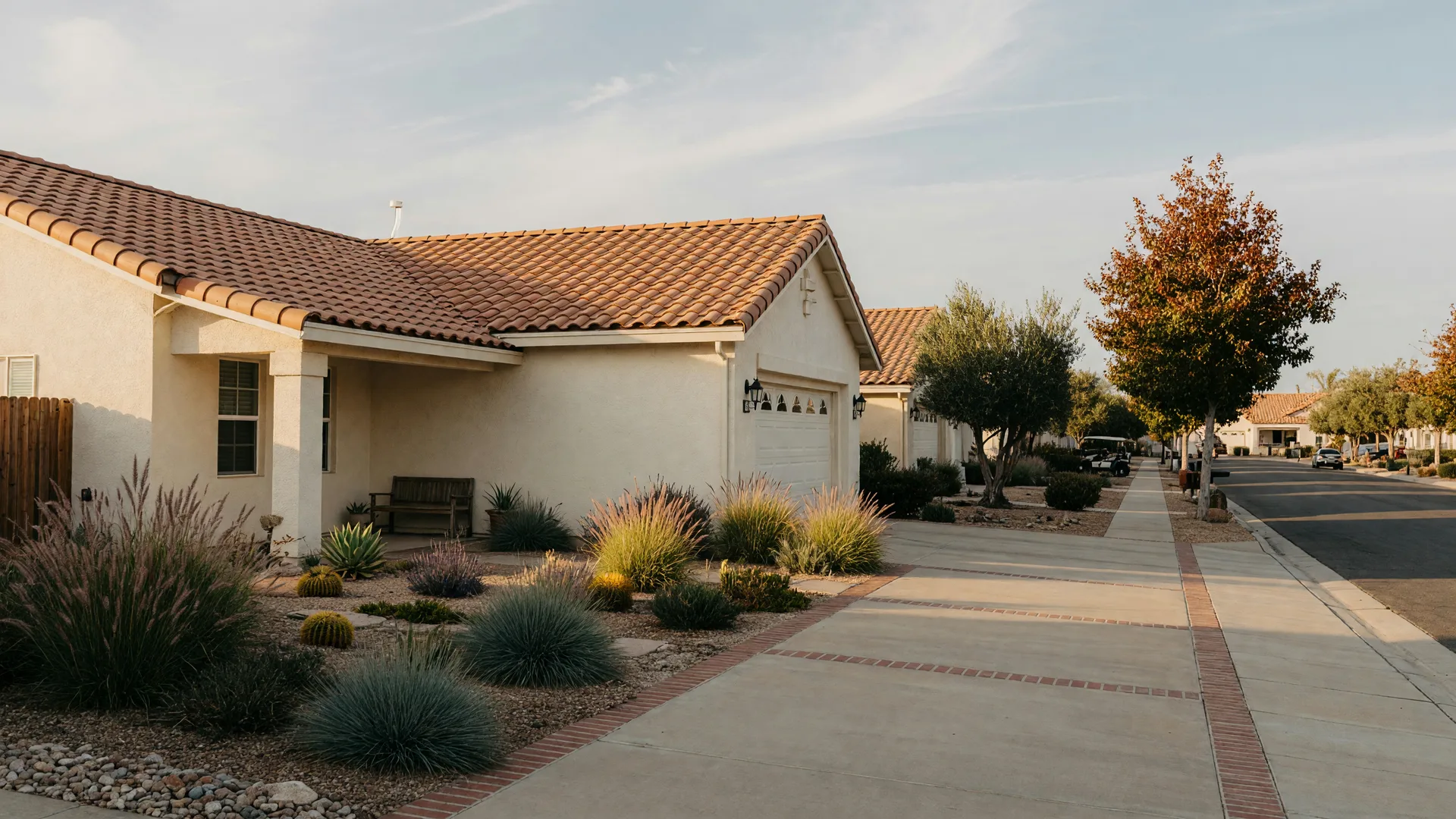
- Defensible space and ember-resistant landscaping. The 100 feet around your home is the buffer that decides whether the house survives an ember storm. Keep the roof and gutters clear, trim trees away from the roofline, and favor low, ember-resistant landscaping. Many 55+ community HOAs manage parts of this for you, which is a quiet advantage of the lifestyle.
Fire season planning connects to the other layers of the 55+ plan. Our guides to aging in place with support services and universal design features cover the home and care layers that the emergency plan protects, and our lifestyle pillar and the full blog hold the rest of the 55+ living guides.
Frequently Asked Questions
Do I need a medical alert device?
For most people aging in place, a medical alert device is a sensible layer of protection, but it is a personal decision. The devices come in two main forms: a wearable button you press for help, and automatic fall detection that calls for help even if you cannot press anything. The right answer depends on your health, whether you live alone, and how you spend your days. If you live alone or have a condition that could cause a sudden fall, a device with automatic fall detection is worth serious consideration. Talk with your family and your doctor about what fits your situation.
What should be in my go-bag?
A go-bag is a small bag kept by the door with the essentials for 72 hours away from home: medications with a list of what they are and the dosages, water and non-perishable snacks, a change of clothes and sturdy shoes, a flashlight with batteries, a phone charger and power bank, copies of important documents, cash, and a list of emergency contacts. Keep it light enough to carry and check it twice a year, especially the medication expirations and the batteries.
Do HOAs have emergency plans?
Many do, and the level of organization varies by community. Master-planned 55+ communities often have organized neighborhood watch clusters or street captains who conduct wellness checks during power safety shutoffs or extreme summer heat waves. Larger associations maintain emergency communication plans, published evacuation routes, and check-in procedures so residents can account for one another. Ask the HOA or the community manager for the emergency plan during your tour or escrow, and find out how the community will communicate with you in an emergency.
How do I get emergency alerts?
Sign up for your county official alert system, which sends emergency notifications to your phone, and do it as soon as you have a new address. Placer County uses Placer Alert, the official emergency mass notification system for Roseville, Lincoln, Rocklin, and Loomis. Sacramento County uses Sacramento Alert, powered by Everbridge, covering Sacramento, Folsom, and Elk Grove. El Dorado County uses Ready.edcgov.us, which is powered by CodeRED Alerts. Registration is free, and each county's website explains how to sign up.
Choose a Community That Looks Out for Its Neighbors
Gary and Rutsell know which communities run organized wellness checks and which HOAs publish real emergency plans, and they will help you ask the right questions before you buy. Call or text Gary at 916-595-4279, Rutsell at 916-695-2800, or send a message through our contact page.
Written by The Gary Lee Team
Gary Lee, REALTOR, CA DRE #01448722, and Rutsell Fabillar Lee, REALTOR, CA DRE #02067791, are the husband-and-wife team behind NorCal55Plus.com. The Gary Lee Team operates under eXp Realty of Northern California, Inc. Gary has served Northern California real estate clients since 2004 and specializes in 55+ active-adult communities, resale homes, new construction, relocation, and downsizing. Client services are offered in English, Tagalog, and Bisaya.
Call or text Gary at 916-595-4279 or Rutsell at 916-695-2800, or send a message through our contact page. We would love to help you find a community where you feel safe and at home.

Meet your specialists
Meet Gary & Rutsell, your Northern California 55+ REALTORS
Gary Lee has been a full-time California REALTOR® since 2004. Rutsell Lee is also a California REALTOR® and co-founder of The Gary Lee Team. Together they research Northern California 55+ communities, tour homes and amenities, and help buyers and sellers compare their options throughout Greater Sacramento and Northern California.
The Gary Lee Team · eXp Realty of Northern California, Inc.