Lifestyle · Health & Wellness
Fitness After 55: Pools, Walking Trails & Group Classes in Active-Adult Communities
The amenities are already paid for in your HOA dues. The question is which ones you will actually use. Written by Gary Lee, Northern California 55+ specialist.
By Gary Lee, Northern California 55+ Specialist | October 2026
Last verified:
The fitness story of a 55+ community is simple and powerful: the facilities are already paid for. In nearly all master-planned communities across South Placer and Sacramento, access to the gym, weight rooms, indoor and outdoor pools, and walking trails is fully covered by the monthly HOA dues. The only extras are specialized classes with outside instructors, which occasionally carry small per-session or punch-card fees in the $5 to $10 range. That means the barrier between you and daily movement is mostly just showing up.
This guide covers what the amenities actually include, what costs extra, and how to start a routine after 60. For the healthcare side of staying active, our healthcare networks guide covers the medical resources around the same communities.
The Amenities That Actually Get Used
Brochures list every amenity a community owns. The ones residents actually use, week in and week out, come down to three:
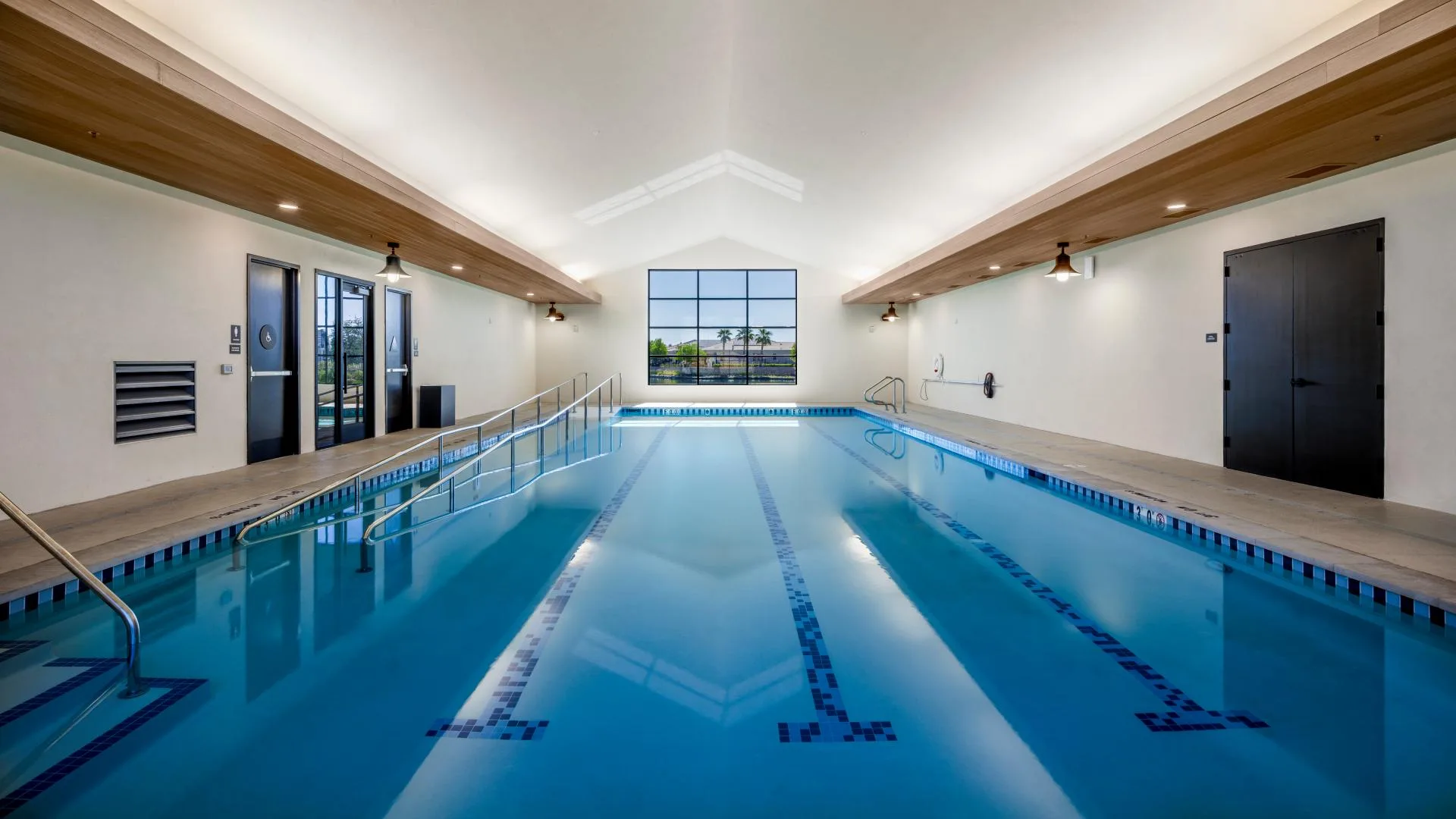
- Indoor and outdoor pools. Pools are the workhorse of 55+ fitness. Indoor pools run lap swim and water aerobics year-round, rain or shine, and outdoor pools carry the summer social life. Water exercise is famously gentle on joints, which makes it the entry point for many residents who have not exercised in years.
- Fitness centers. The gyms in 55+ communities are built for this age group: strength machines, cardio equipment, free weights, and often a dedicated studio for classes. They are typically staffed, clean, and quiet, and they are included in your dues.
- Miles of walking and biking trails. Paved trails wind through most master-planned communities, connecting homes to the clubhouse and the open space. A daily walk is the most sustainable exercise there is, and the trail system makes it effortless.
Pickleball deserves its own mention: the courts are often the busiest corner of the community, and the game is a social engine as much as a workout. Our pickleball social circuit guide explains why the courts are where so much of the connection happens.
HOA Amenity Access: What Your Dues Cover
The cleanest way to think about fitness costs in a 55+ community is this: in nearly all master-planned communities across South Placer and Sacramento, access to the gym, weight rooms, indoor/outdoor pools, and walking trails is fully covered by the monthly HOA dues. You are not paying per visit, and you do not need a separate gym membership.
The nuance is in specialized programming. Contracted yoga instructors, specialized water aerobics, and private personal training occasionally carry small per-session or monthly activity punch-card fees in the $5 to $10 per class range. These fees are managed by the resident activity council or parks association, and they exist because the community contracts an outside instructor for a specific class rather than running it with staff. The facility is included; the specialty class may cost a few dollars.
Two practical takeaways: first, ask on your tour which classes are included and which carry punch-card fees, because the answer varies by community. Second, read the HOA budget with the same eye, which our guide to reading a 55+ HOA reserve study walks through in detail.
Group Classes and the Social Factor
The most underrated fitness feature in a 55+ community is not a machine, it is the group. Water aerobics, yoga, pickleball clinics, and walking clubs all share the same secret: social accountability keeps people coming back. When the class knows your name and the walking group waits for you at the trailhead, skipping a session feels different.
- Water aerobics. The classic 55+ class, and for good reason: buoyancy supports the joints while the water provides resistance. Most communities run multiple sessions a week, and the class is as social as it is physical.
- Yoga. Chair yoga, gentle yoga, and balance-focused classes are standard offerings, and balance work is one of the most valuable things anyone over 60 can do. If the class uses a contracted instructor, it may carry the small per-class fee.
- Pickleball clinics. Beginner clinics and open play run constantly, and the game is easy to learn at any level. It is also the fastest way to meet people in most communities.
- Walking clubs. Scheduled morning walks turn the trail system into a daily social appointment. No skill required, no equipment beyond shoes, and the pace fits everyone.
If you are moving in alone, the fitness calendar is one of the best social on-ramps in the community. Our guide to moving in alone and building an instant community explains why the first 90 days matter and where connections actually form.
Starting a Routine After 60, and the Questions to Ask
If you have not exercised in years, the goal is not intensity, it is consistency. The standard advice applies: talk to your doctor first, start low-impact, and use the community's orientations and beginner classes to ease in. A short daily walk, a gentle water class, or a beginner yoga session is a perfect start, and the social accountability of a group keeps the habit alive.
On your community tour, ask these four questions so the fitness picture is clear before you buy:
- Are classes included or extra? Ask which group classes are covered by dues and which carry the per-session or punch-card fees. The answer varies by community, and it shapes your monthly cost.
- Are trainers or orientations available? Many communities offer fitness orientations, equipment walkthroughs, or staff trainers. Knowing the gym has a friendly human to show you the machines changes how quickly you will use it.
- What does the weekly calendar actually look like? Count the classes that interest you on a normal week. A packed calendar you will never use is worth less than three classes you will attend.
- How busy is the pool at the time you would swim? Visit at your time of day. The lap pool at 7 a.m. and the lap pool at 10 a.m. are different places.
Fitness connects to the rest of the lifestyle picture. Our guides to clubhouse culture and purpose, volunteering, and lifelong learning cover the social side of the same daily life, and our lifestyle pillar gathers the whole picture in one place.
Frequently Asked Questions
Is the gym included in HOA dues?
In nearly all master-planned communities across South Placer and Sacramento, yes: access to the gym, weight rooms, indoor and outdoor pools, and walking trails is fully covered by the monthly HOA dues. What is not always included is specialized programming. Contracted classes like yoga with an outside instructor, specialized water aerobics, and private personal training occasionally carry small per-session or monthly activity punch-card fees, typically in the $5 to $10 per class range, managed by the resident activity council or parks association. The amenity is included; the specialty class may be extra.
What fitness options do 55+ communities offer?
The standard package across Northern California 55+ communities is substantial: indoor and outdoor pools for lap swim and water aerobics, fitness centers with strength and cardio equipment, and miles of walking and biking trails. On top of the facilities, most communities run a full calendar of group options: water aerobics, yoga, pickleball clinics, walking clubs, and fitness classes of all kinds. The variety is the point, because the activity you will actually keep doing is the one you enjoy.
I haven't exercised in years. Where do I start?
Talk to your doctor first, especially if you have any health conditions or have been sedentary for a long time. Then start low-impact: a short daily walk on the community trails, a gentle water aerobics class, or a beginner yoga session. Most communities offer orientations and beginner-friendly classes, and the social accountability of a walking club or a class keeps you coming back. Start small, show up regularly, and let the routine build itself.
Do I need a gym membership?
No, and that is one of the best parts of 55+ community living. Because the fitness center, pools, and trails are covered by your monthly HOA dues, the gym is effectively included in your housing cost. You do not need a separate membership to use the community facilities. The only extras are the specialized classes with outside instructors, which carry small per-class fees in the $5 to $10 range when they are offered.
Find a Community Where You Will Actually Move
Gary and Rutsell know which communities have the strongest fitness culture and which classes cost extra, and they will help you match the amenities to the life you want. Call or text Gary at 916-595-4279, Rutsell at 916-695-2800, or send a message through our contact page.
Written by The Gary Lee Team
Gary Lee, REALTOR, CA DRE #01448722, and Rutsell Fabillar Lee, REALTOR, CA DRE #02067791, are the husband-and-wife team behind NorCal55Plus.com. The Gary Lee Team operates under eXp Realty of Northern California, Inc. Gary has served Northern California real estate clients since 2004 and specializes in 55+ active-adult communities, resale homes, new construction, relocation, and downsizing. Client services are offered in English, Tagalog, and Bisaya.
Call or text Gary at 916-595-4279 or Rutsell at 916-695-2800, or send a message through our contact page. We would love to help you find the community that keeps you moving.
Meet your specialists
Meet Gary & Rutsell, your Northern California 55+ REALTORS
Gary Lee has been a full-time California REALTOR® since 2004. Rutsell Lee is also a California REALTOR® and co-founder of The Gary Lee Team. Together they research Northern California 55+ communities, tour homes and amenities, and help buyers and sellers compare their options throughout Greater Sacramento and Northern California.
The Gary Lee Team · eXp Realty of Northern California, Inc.