
Lifestyle · Age in Place
Should You Age in Place or Move to a 55+ Community? An Honest Comparison
Staying in the home you know has real benefits worth honoring. So does a community built around the next chapter. Here is an honest way to think through both.
Last verified:
Should you stay in the home where you raised your family, or move into a 55+ community full of people you have not met yet? If that question keeps surfacing on quiet evenings, or every time you look at the yard, you are not alone. It is one of the biggest housing decisions of this chapter of life, and it deserves a clear-eyed answer, not a rushed one.
Why Gary & Rutsell wrote this guide
This guide comes from the conversation we have most often with buyers: whether their current home still fits, and whether a 55+ community would serve the next chapter better. The comparison is built on field research in Northern California 55+ communities, firsthand photos from those visits, and the CDC and National Institute on Aging sources linked in the article. We have kept the sales language out of it, because the Tuesday Test and the Stay-or-Move Scorecard speak for themselves.
From Gary & Rutsell
We work with buyers throughout Greater Sacramento and Northern California who are deciding between staying where they are, downsizing into a traditional neighborhood, or moving into a 55+ community. One thing we've learned: the clubhouse is rarely the real decision. The ordinary Tuesday is.
How NorCal55Plus researches 55+ communities
Gary and Rutsell Lee personally research Northern California 55+ communities through community visits, home tours, builder meetings, resident conversations, local market data and ongoing video coverage. Community rules, HOA fees, amenities and inventory change, so community-specific facts are verified against current sources whenever possible.
Last reviewed by Gary Lee and Rutsell Lee: September 2026
The honest short version
Age in place when your current home still works physically, financially and socially. Consider a 55+ community when home maintenance, stairs, isolation or the desire for built-in activities are becoming more important. The right answer depends less on your age than on how you want an ordinary week to look five to ten years from now.
Start with the two questions that matter most
Before any community tour, before any listing search, before you ask anyone what they think, answer these two questions on paper. They are the filters that make every comparison below meaningful.
First: what does your current home cost you in time, money, and energy every month? Not the occasional bad month, the average month. Count the mortgage, the taxes, and the insurance if you have them, but also the landscaper, the roof fund, the hours of yardwork, the trips to the hardware store, and the mental weight of a list that never quite gets to zero.
Second: what does a typical week look like, and who is in it? Count the calls with your sister, the grandkids' visits, the neighbors you actually see, the Thursday card game. Then count the empty evenings. Both answers are honest data about the life you are choosing, not the one you are leaving behind.
Keep those two answers beside you while you read. Every argument in this article has to pass them, and most decisions resolve themselves once you see both lists side by side.
And if you are not entirely sure what a 55+ community even is, our master guide on NorCal55Plus.com covers the basics of what a 55+ community is and how the age rules work , so the rest of this article stands on a solid foundation.
The NorCal55Plus Tuesday Test
Gary and Rutsell call this the Tuesday Test: don't choose a community based on what it looks like during a Saturday grand opening. Ask yourself what your ordinary Tuesday will look like there. The clubhouse is rarely the real decision. The ordinary Tuesday is.
The honest comparison: what each path actually costs
Here is the full comparison, with both sides given a fair hearing. Where a point only holds in general, we say so, and where it depends on your situation, we tell you what to check.
Maintenance and yard work: the cumulative weight of upkeep
A home you own is a home you maintain. In your forties the yardwork feels like a workout. Twenty years later the mower is heavier, the mulch bags are heavier, the ladder for the gutters is heavier, and the list of small repairs grows faster than you get to them. None of this is dramatic on any single Saturday. It is the cumulative weight of a dozen small tasks a month, slowly eating your weekends.
Maintenance responsibility varies widely by community and property type. Some associations maintain landscaping or portions of the exterior; others primarily maintain common areas and amenities while homeowners remain responsible for their own home and yard.
Here is the part nobody says out loud: upkeep is easiest the earlier in life you do it, and it does not get easier with the years. There is no universal age at which it becomes too much, bodies differ and so do houses, but the trend is honest. Ask yourself whether you want to be on that ladder in ten years. If the answer is a quiet no, you have your first real data point.
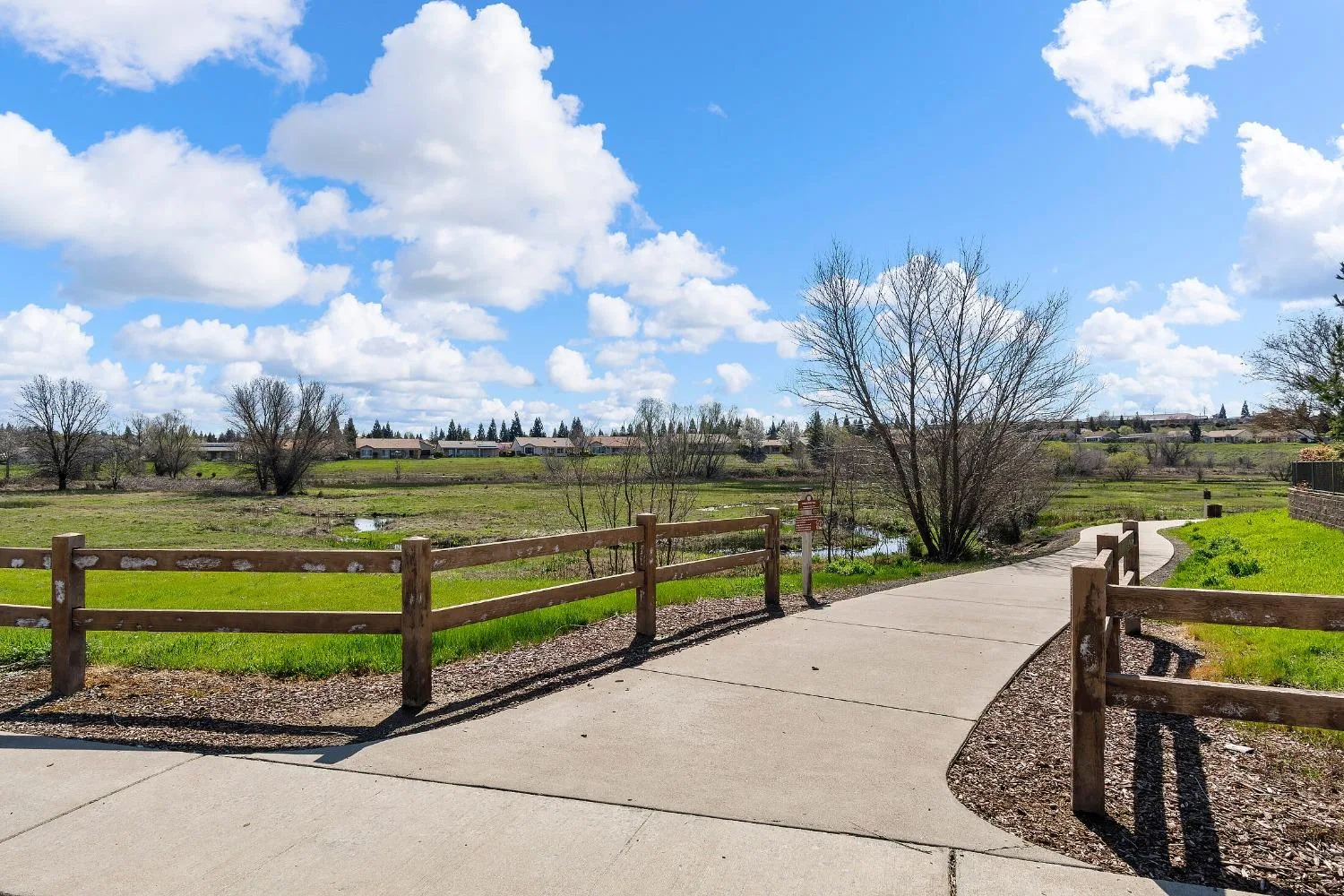
Stairs and single-level living
The split-level with the laundry downstairs works fine at fifty-eight and gets noticed at sixty-eight. Stairs are not a problem until the day they are, and that day rarely announces itself. We have seen it many times: a knee that complains, a hip that slows, a recovery that makes carrying laundry up and down simply not part of the plan anymore.
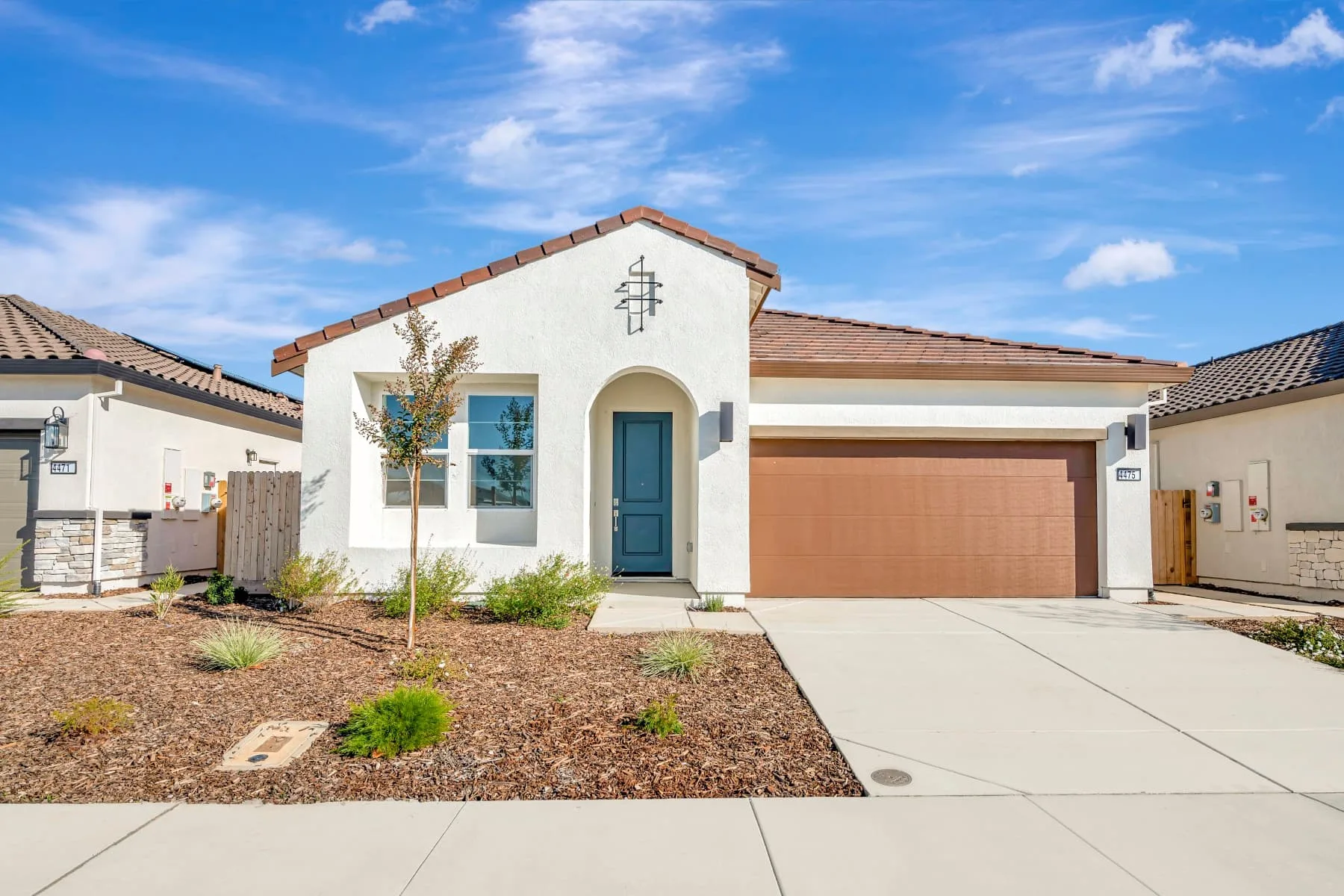
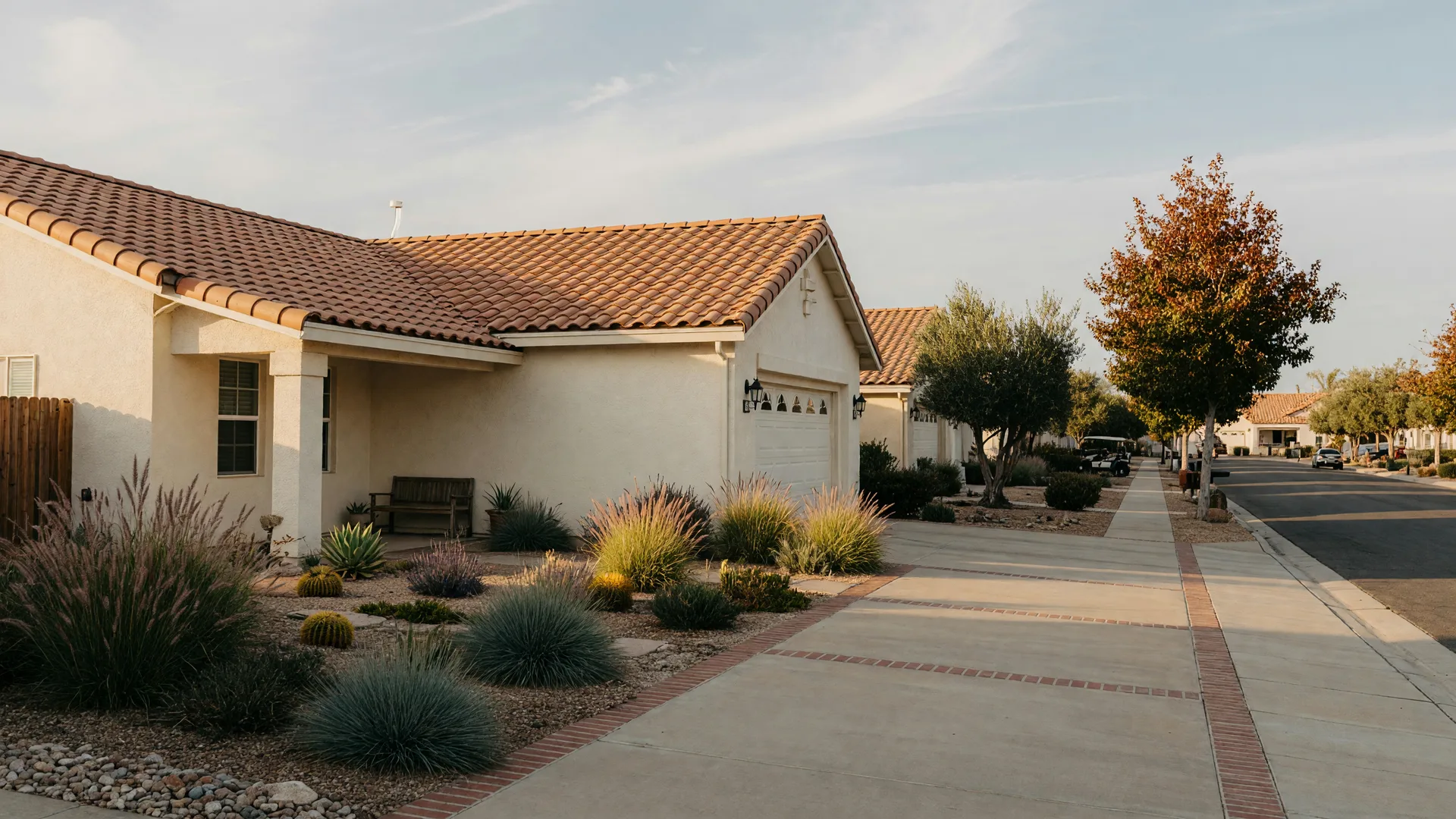
The honest question is not whether the stairs bother you today. It is whether you want them as a permanent feature of your life in ten years. Single-story plans are especially common in 55+ communities, although not every home or floor plan is single-level. Some plans add a loft or upstairs bonus space. Where a home is truly single-level, you do not need a stair lift installed later; it simply does not have the obstacle in the first place.
The fair counterweight: if your current home is already a single-story ranch you love, this argument may not move you. If the bedrooms are upstairs, it deserves a real answer.
Safety and health: the gentle but direct version
This is the subject people most want to skip, so we will be gentle and direct. For adults 65 and older, falls are the leading cause of injury according to the Centers for Disease Control and Prevention , which is why evaluating stairs, thresholds and bathrooms matters when you consider staying in place. The National Institute on Aging likewise publishes home-safety guidance for aging in place. The honest question is who would know. If neighbors are unlikely to notice and family lives hours away, a small event can turn into a long wait. That is not fear-mongering. It is the plain arithmetic of one person in a house.
A close-knit neighborhood can create more opportunities for neighbors to notice changes in someone's routine, but that varies by street and relationships and should never be treated as an emergency-monitoring system. Some communities offer check-in programs or emergency response services you can opt into. At the same time, the honest note matters: a 55+ community is not a care facility. No gate, no HOA, and no lodge provides nursing care or medical staff. It is an active-adult neighborhood, not a continuum-of-care campus.
Health needs change in ways none of us can predict, which is exactly why the practical question is about your support system, not about any diagnosis. If your needs already require daily help, the right conversation is with your family and your care providers, and the right setting might be a different type of community altogether. Where healthcare access matters to you, our guide to hospital and healthcare access near Sacramento's 55+ communities is a practical starting point.
Isolation versus connection
Empty-nest quiet is real quiet. For some it is peace; for others it slowly hardens into isolation: a Tuesday with no real conversation, a week when the only voices come from the television. Homes that once hummed with family can go silent quickly, and silence, left alone, has its own momentum. The honest question is whether your week has enough people in it to sustain you.
The club calendar in a 55+ community is a standing invitation: classes, clubs, dinners, coffee groups, pickleball in the morning and cards in the evening. Nobody takes attendance, and nobody tracks whether you join. The grace is that the possibility of connection is a short walk away instead of a long drive.
And introverts deserve a fair hearing. A 55+ community is not a nonstop party. Many residents choose a quieter level of participation, and active-adult living does not require joining clubs or attending events. The difference is not that you must be social. It is that the door swings both ways: quiet when you want it, company steps away when you change your mind.
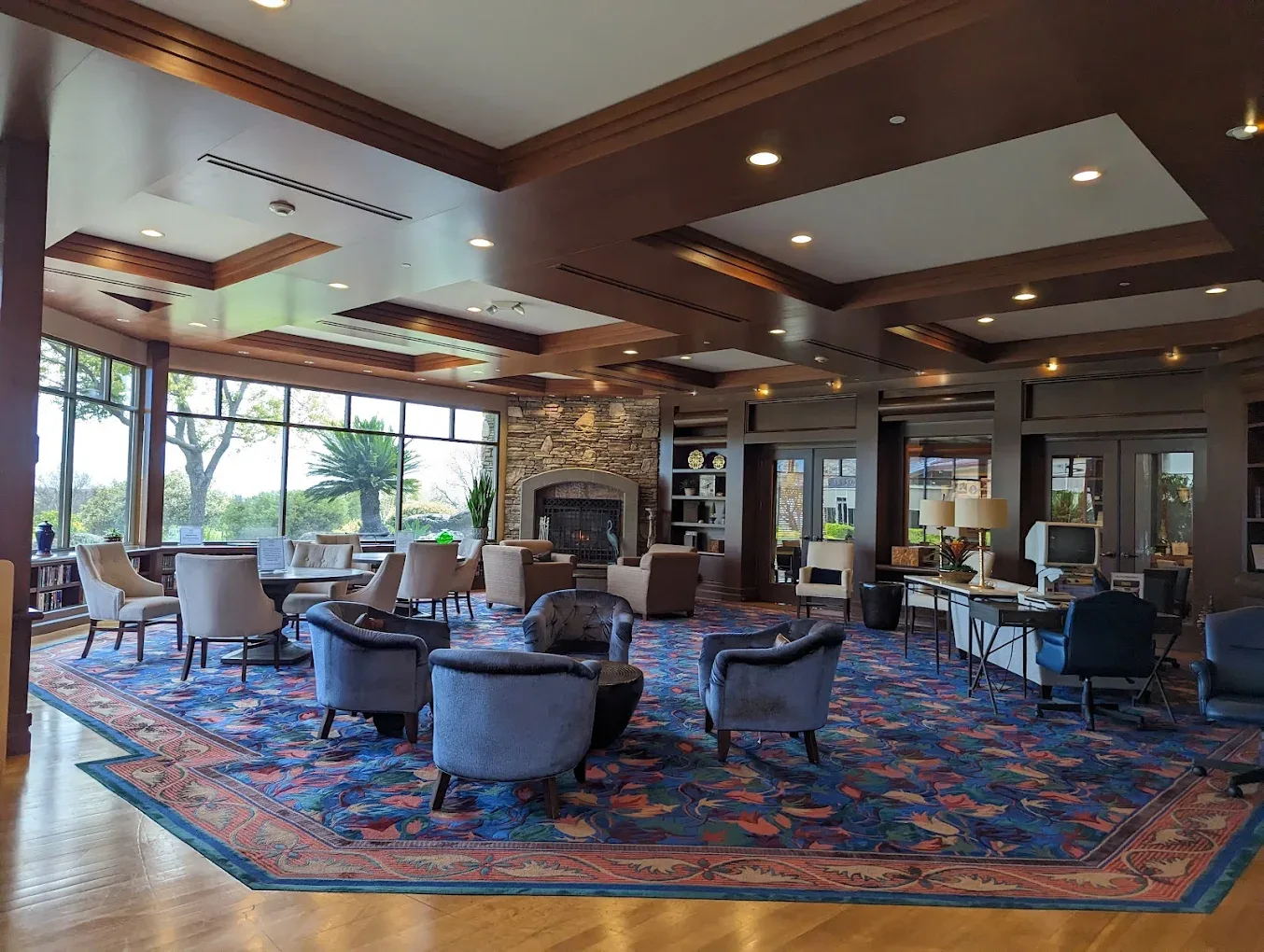
What community life actually offers
The resort side is the part most buyers picture first, and it is real: pools, spas, fitness centers, courts, golf in some communities, hobby rooms, and a full events calendar. Our guide to the 55+ lifestyle and amenities walks through what community life actually offers at a typical Northern California community. The useful way to read any amenity list is through your two opening questions: would you actually use it, and how often?

Accessibility and future-proofing
Future-proofing a house you keep is real work and real money: grab bars in the bathrooms, wider doorways, a zero-threshold shower, lever handles, better lighting on the stairs, sometimes a stair lift. Each item is reasonable alone; together they amount to a remodel, done while you are still living in the house, and the sticker cost is only half of it. The disruption is the other half. If you plan to stay a decade, that investment may be exactly right. If you plan to move anyway, ask yourself whether you want to pay twice.
Some newer active-adult homes incorporate accessibility-conscious features such as single-level layouts, wider circulation areas or low-threshold showers. Features vary substantially by builder and plan and should be verified home by home.
Finances: the honest math
Staying costs nothing in transaction terms. Your equity stays invested in your home, there is no selling cost, no moving truck, no new-construction premium, and your monthly picture is the one you already know. For some families the home itself is part of the retirement plan, and selling it later, not now, is the right timing.
Moving can free equity: the sale of a long-owned home often produces a meaningful lump sum that can fund the move, the new home, and a more comfortable margin. The costs are real, though. Sale commissions and closing costs, moving expenses, and any new-construction premium all come off the top, and HOA dues are the other side of the trade. They support the association services, amenities, common areas, and any maintenance responsibilities specifically included by that community, and they deserve a close read in the financial column of your decision.
One California-specific issue can dramatically change the math: Proposition 19. Eligible homeowners may be able to transfer a taxable value when purchasing another California home, subject to the law's requirements. Because the rules are specific and change, confirm current eligibility with a qualified tax advisor or real estate attorney before assuming what your next property-tax bill will be.
For a fuller picture of what community living actually costs, from dues to the line items people forget, our guide to the true cost of 55+ community living walks through the numbers.
Not ready to move? That's okay.
Start by comparing communities, HOA costs and current homes without making a commitment. Browse our community articles and comparisons and read what community living really costs at your own pace.
Family proximity
If your daughter lives close enough to drop by after school, and the grandkids' faces are a regular part of your week, that alone is a powerful argument for staying. No amenity replaces your actual family. Distance to the people you love is one of those facts you cannot negotiate, and no community brochure can bargain around it.
What a 55+ community offers instead is built-in opportunities to meet neighbors who may be in a similar stage of life: people with time, shared interests, and the same open evenings you have. It does not replace family; it complements them, and family visits usually work well in a single-story home with a guest room.
Write down how often you actually see the family members who matter most. If they are a close, regular presence, that weights the scale heavily toward staying. If visits are already few, the emotional pull of proximity may matter less than the pull of a full social week.
Emotional attachment: the heart of it
Leaving the home where you raised your family is a genuine loss, and it deserves to be named. The rooms hold the birthdays, the graduations, and the ordinary Tuesday dinners, and none of that moves in the moving truck. It is completely normal to grieve the decision even while you are certain it is right, and to feel guilty for leaving even when staying no longer serves you.
Give yourself permission to hold both truths: the fact that you love your home does not mean it is still the right home for the life ahead. And the home itself will be loved by the next family, which is how houses keep their meaning.
What '55+ living' can mean around Sacramento
The phrase '55+ community' covers a wide range. These are starting points depending on your priorities, not a ranking of the 'best' community. Each one is worth exploring on its own terms.
| Starting point | Community |
|---|---|
| Established community + golf | Sun City Roseville / Sun City Lincoln Hills |
| Newer construction + resort amenities | Regency at Folsom Ranch |
| Resort-style social lifestyle | Esplanade at Madeira Ranch |
| Rancho Cordova location | Four Seasons at The Ranch |
Three starting points cover the range most buyers mean by "55+ living" here:
- If maintenance and social scale appeal: Sun City Lincoln Hills is the region's largest active-adult community, with two lodge campuses, two 18-hole golf courses and a long social calendar. Coverage: Sun City Lincoln Hills pros and cons.
- If compactness and Roseville access appeal: Sun City Roseville is a smaller, tightly knit community minutes from Roseville shopping and its medical corridor. Coverage: Sun City Roseville pros and cons, plus the Roseville vs. Lincoln Hills comparison.
- If newer construction appeals: Regency at Folsom Ranch (Toll Brothers), Esplanade at Madeira Ranch (Taylor Morrison) and Four Seasons at The Ranch (K. Hovnanian) are the region's newer built 55+ communities. Coverage: Regency at Folsom Ranch video tour, the Esplanade vs. Four Seasons comparison, and the Lodge at Esplanade grand opening. CURRENT CONFIRMATION: construction, pricing and inventory change frequently, so confirm current status with each builder before you plan around it.
These are not interchangeable. They differ in age, scale, golf, HOA structure and lifestyle, which is where local knowledge matters.
How to test the community option without burning bridges
You do not have to decide from a brochure, and you should not. Testing the community option costs a few afternoons and changes everything.
- Rent first if you possibly can. If a community permits rentals and an appropriate home is available, renting can be one way to experience the lifestyle before buying. Minimum lease terms, rental caps, tenant age qualification, HOA approval and owner-occupancy rules all vary by community, so verify with the association before treating a rental as a test-drive.
- Visit on a weekday and a weekend. A Saturday open house shows a community at its best. A Tuesday morning shows the real pace: who is out walking, whether the clubhouse is buzzing or quiet, how the light falls. This is the Tuesday Test in practice. You want to meet the Tuesday community, because that is the one you would be joining.
- Go to an activity as a guest. Some associations or builders may allow prospective buyers to observe or attend certain activities when arranged in advance; policies vary. Where permitted, attending with a resident or through an approved guest program can tell you far more than walking through an empty clubhouse.
- Talk to residents, not just the sales office. When access is appropriate, resident perspectives can add useful context that a sales presentation cannot provide. Verify rules, fees, and policies separately in the governing documents.
- Check the waitlist reality. Waitlists mainly apply to new-construction phases rather than established resale communities. If you are buying a completed or resale home, availability comes down to current inventory. If you want a specific new floor plan, ask directly what availability really looks like, in writing if you can, before you fall in love with a plan that is two years out.
Each community also sets its own exact age and occupancy rules, so ask for those in plain terms while you are there. If you want the legal frame before you visit, our explainer on the HOPA rules explained covers how occupancy rules work in plain English.
Two honest portraits
These two pictures come from real conversations we have had with buyers. Many people land somewhere between those two extremes, but you will probably recognize yourself leaning one way.
Staying may fit you if
- you love your home and can say specifically why;
- you have family nearby and an active local life;
- you have help, or a budget for hired help, when the maintenance list gets long;
- and the quiet week genuinely feels like enough.
If that list describes you, staying can be the richest choice available, and moving for its own sake would be a mistake.
A 55+ community may fit you if
- the maintenance feels heavy and the list keeps growing;
- isolation is creeping in and you are going days without a real conversation;
- you notice the stairs more than you used to;
- and the idea of built-in activities with neighbors in your chapter genuinely lights you up.
If that list describes you, the community path is worth real investigation, and staying out of habit would be the riskier move.
These are examples, not rules. Real people blend them, and the honest answer can change over time.
If the downsizing decision itself is the heart of it, our downsizing and right-sizing guide walks through the practical side: what to keep, how to sort, how to plan the move. This article is about which path; that one is about doing the move well.
The house wasn't the problem. Tuesday was.
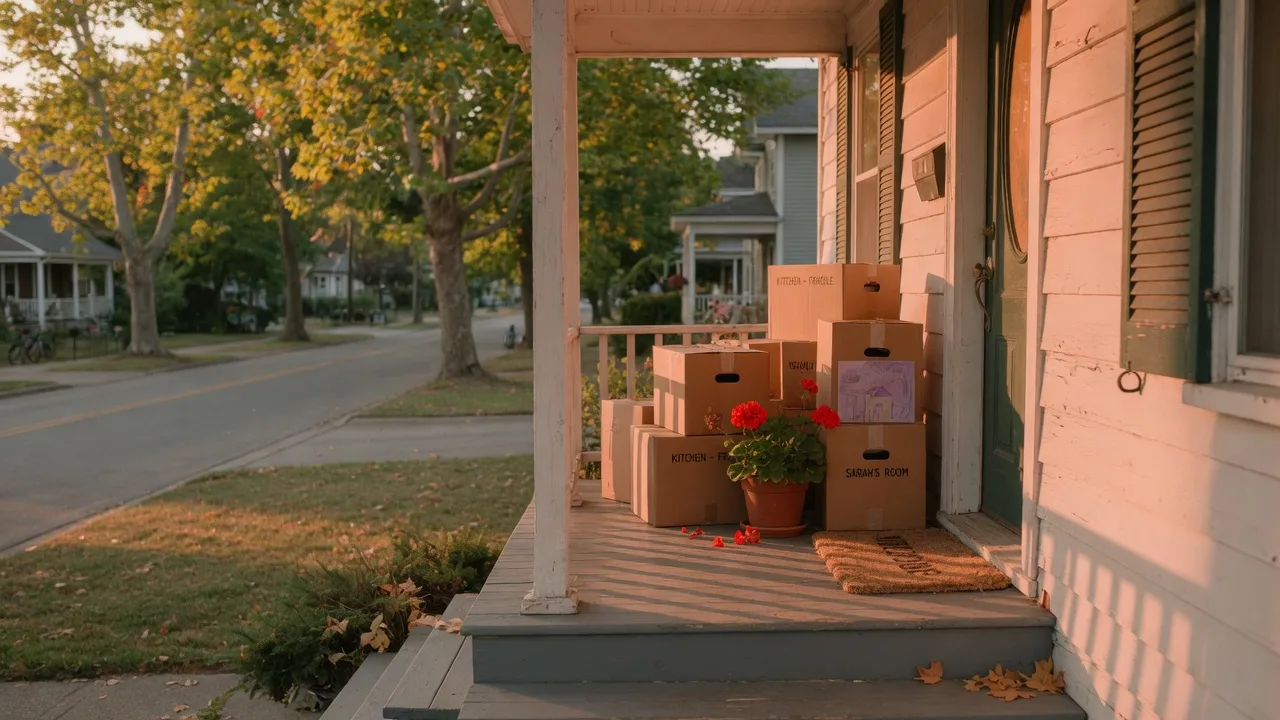
We often talk with couples who love their home. The mortgage isn't the problem. The neighborhood isn't the problem. Even the yard isn't really the problem. The problem is Tuesday: the children have moved, longtime neighbors have changed, and the house still works but the life around it doesn't look the way it did ten years earlier. We've also talked with people in the opposite position: a single-level home they love, family five minutes away, neighbors they enjoy. For them the honest answer can be to stay.
Illustrative example: your situation will differ, and that is exactly the point.
The NorCal55Plus Stay-or-Move Scorecard
Score each row from 1 to 5 in the Stay column and the Move column, then compare the totals. There are no right answers, only what is true for you.
| Consideration | Stay (1-5) | Move (1-5) |
|---|---|---|
| Current home maintenance manageable? | ||
| Current home works for future mobility? | ||
| Family nearby? | ||
| Strong local social network? | ||
| Want more activities? | ||
| Want less maintenance? | ||
| Comfortable with HOA dues and rules? | ||
| Current home financially efficient? | ||
| Community amenities likely to be used? | ||
| Which option gives you the better Tuesday? |
This is a starting point for your own thinking, not a recommendation.
Age in place or 55+ community: common questions
Is it better financially to age in place or move to a 55+ community?
It depends on the numbers for your specific home and the community you are considering. Staying avoids selling costs and keeps your equity invested, while a 55+ community adds HOA dues but may remove significant maintenance expenses. Work the real numbers for both before you decide, and talk to your own advisor for tax and financial specifics.
Do 55+ communities take care of home maintenance?
Not automatically. A 55+ community can reduce certain ownership burdens in some communities, but HOA responsibilities vary dramatically by property type and association. Dues commonly support shared amenities and common areas, but landscaping, roofing and exterior upkeep may still fall partly or entirely on you. Verify the specific HOA documents and CC&Rs with the association before assuming.
Are most homes in 55+ communities single story?
Single-story plans are especially common in Northern California 55+ communities, but not every home or floor plan is single-level; some add a loft or upstairs bonus space. Ask about specific floor plans and confirm the layout home by home.
Can children and grandchildren visit a 55+ community?
Yes, in most communities family and friends can visit. Visitor policies, guest limits and how long a guest may stay can differ, and some events may be resident-only. Check the community's visitor and guest rules so you know what to expect.
Can I rent in a 55+ community before buying?
Renting is possible in some communities, but not all, and rules vary. Check the HOA's rental and occupancy policies first, since many communities restrict short-term leasing or require owner occupancy. Talk to the association about what is permitted.
Does moving after age 55 affect California property taxes?
It can. Proposition 19 allows some eligible homeowners to transfer a taxable value when buying another California home, subject to specific requirements. Because the rules are detailed and change, confirm your situation with a qualified tax advisor or real estate attorney.
How do I know whether I'm ready for a 55+ community?
Look at your ordinary week, not the brochure. If maintenance, stairs or isolation are becoming the dominant part of your days, a 55+ community is worth exploring. If your home still works physically, financially and socially, staying can be the right answer. Give both the Tuesday Test before you decide.
Gary and Rutsell's honest take
We have helped buyers on both sides of this decision, and some of the happiest people we know made the choice to stay. Our goal was never to sell a move. It is to help you live the life you actually want five years from now. That life looks different for different families, and both answers can be the right one. Whatever you decide, decide it on purpose, not on default.
Not sure whether staying or moving makes more sense?
Gary and Rutsell can help you compare both options without assuming a move is the right answer. If your honest answer is starting to lean toward selling, our Why Sell With Us page on the main NorCal55Plus.com site covers the next steps for a 55+ move.
Take the NorCal55Plus Tuesday Test before you buy: visit on an ordinary weekday and see whether life there fits yours. Read the full test.
Written by Gary Lee and Rutsell Lee

Gary Lee has been a full-time California REALTOR since 2004 and specializes in Northern California 55+ communities, relocation, resale and new construction. He personally researches the communities featured on NorCal55Plus through community visits, builder meetings, home tours, resident conversations and local market analysis. DRE #01448722.

Rutsell Fabillar Lee is a California REALTOR and co-founder of The Gary Lee Team. She researches 55+ communities alongside Gary and helps buyers compare neighborhoods, amenities, housing choices and relocation priorities. She is fluent in English, Tagalog and Bisaya. DRE #02067791.
Sources
- CDC: Falls, Centers for Disease Control and Prevention.
- NIA: Home Safety and Aging in Place, National Institute on Aging.
Community information is periodically re-verified because HOA rules, amenities, fees and builder offerings can change.