
Buyer Education · Age Rules
Age Requirements and the HOPA Rules, Explained
A plain-English look at the age rules behind Northern California's 55+ communities, written by independent 55+ specialist Gary Lee.
In short, to live in a 55+ community, at least one resident of the home must be 55 or older. The federal Housing for Older Persons Act, or HOPA, allows a qualified community to require that age in at least 80% of its occupied units, and most Northern California 55+ communities follow that standard, each with its own specific occupancy rules and paperwork.
Key Takeaways
- To live in a 55+ community, at least one resident of the home must normally be 55 or older. That is the core rule most communities follow.
- Under HOPA’s 80% rule, up to 20% of a community’s occupied units can be home to residents younger than 55, if the community allows it.
- A community may choose to be stricter than federal law and require that all residents be 55 or older, or set a minimum age for younger occupants.
- Each community’s exact rule is in its own governing documents, so it must be verified with the community before you make an offer, never assumed.
- This is general federal guidance and community policy, not legal advice. Confirm every rule in writing with the community and, where needed, your attorney.
The rules below are general federal guidance and community policy, not legal advice for your specific purchase. Always confirm with the community, in writing, before you commit.
How old do you have to be to live in a 55+ community?
The simple answer is that at least one resident in the home needs to be 55 or older. In practice, a 55+ community enforces this at the household level: the qualifying resident is the one who is 55 or older, and that person's spouse, partner, or other occupants can be younger, depending on the community's own rules.
Most Northern California 55+ communities are age-restricted under HOPA, and their exact requirement is set out in the community's governing documents and confirmed through the application and HOA approval process. That is why the age question has a different, precise answer for each community, not one number that fits them all. Where a specific community's figure is not verified, the honest move is to confirm it directly with that community rather than assume.
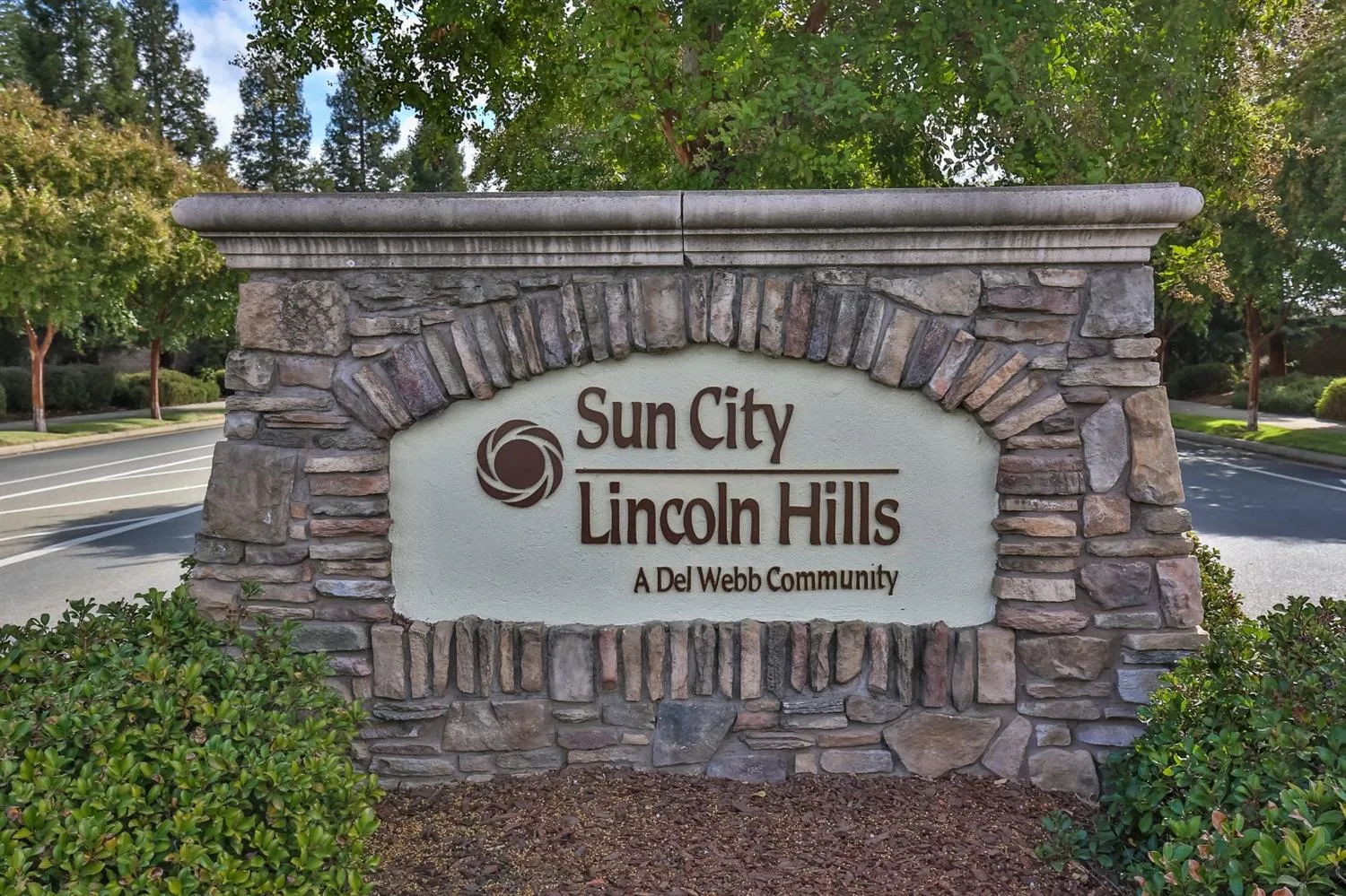
Del Webb's two well-known age-restricted developments in Placer County make the point nicely. Both Sun City Lincoln Hills and Sun City Roseville follow the 55+ standard under HOPA, yet each has its own occupancy form and application process. The federal floor is the same, but the rule that binds your closing date is the one spelled out in that community's own documents and HOA office, not a single statewide number.

What is HOPA and how does it work?
HOPA is the Housing for Older Persons Act, a 1995 update to the federal Fair Housing Act. It created a legal exemption that allows certain housing to be restricted to older residents without running afoul of fair housing law. In simple terms, HOPA gave 55+ and 62+ communities a way to be age-restricted legally.
For a 55+ community, HOPA sets three conditions to qualify for the exemption. At least 80% of the occupied units must have at least one resident 55 or older. The community must publish and follow policies showing it intends to operate as housing for people 55 or older. And it must comply with the rules for verifying occupancy ages. When those conditions are met, the community may limit occupancy by age.
HOPA is the floor, not the ceiling. A community is free to be stricter than the federal minimum, and many are, so you always confirm the community's own rule on top of what HOPA permits.
For the official federal framing of this exemption, HUD's legal opinion on exemptions for housing for older persons explains how the 55+ category works under the Fair Housing Act. Like everything here, treat it as general federal guidance rather than legal advice, and confirm the community's own rule with its HOA before you commit.
Do all residents have to be 55+, or just a percentage?
Under HOPA, a 55+ community qualifies when at least 80% of its occupied units have at least one resident who is 55 or older. That means, at most, 20% of occupied units may be home to households where no one is 55 or older, if the community allows it. It is a permissive allowance, not a requirement that every community fills the 20%.
Within the 80% of qualifying units, only one occupant needs to be 55 or older; the other residents in that home can be younger. Because the exact treatment of that remaining 20% and the minimum age for younger occupants are choices each board makes, the answer for a given community comes from that community's documents, which is where you verify it.

What are the exceptions?
There are a few situations where someone under 55 can be part of the picture. A spouse, partner, or other occupant who shares a home with a qualifying resident who is 55 or older is the most common one, and that is different from the 20% allowance for entirely younger households.
Communities may also grandfather residents who were already living there when a community becomes age-restricted, and they may accommodate a live-in caregiver or aide where needed under applicable fair housing rules. These situations are handled case by case and vary with each community, so they are exactly the kind of detail to confirm directly rather than assume. When a specific rule is not verified, I would rather mark it in progress and check with the community than tell you something uncertain.
How do I verify a community's age rules?
Ask, in writing, and read the actual documents. The age requirement lives in a community's CC&Rs, HOA bylaws, and application forms, and it is enforced when you apply, before you close. A good 55+ specialist will walk you through the specific requirement for the community you are considering and make sure the age-restriction paperwork is completed at closing so there are no surprises later.
You can also confirm the exact rule with the HOA or community management office directly. This is one more reason to work with an agent who knows these communities: the age rule is a contract detail, and verifying it is part of a clean purchase, not something to learn after moving day.
The age rule is really one part of a larger fit. Once you know the requirement works for your household, the next questions are practical: what the everyday rhythm feels like and whether the home is the right size for this chapter. If you are early in the process, our look at a day in the life at a 55+ resort community and our guide to downsizing and right-sizing can help you picture both before you visit.
Browse the 55+ community guides
For the specific communities themselves, head to our directory of Northern California 55+ communities , where each active-adult community covered on the primary site has its own guide. This post focuses on the age rules that apply across them.

Written by Gary Lee
DRE #01448722 · Serving Northern California real estate clients since 2004
Gary Lee is a Northern California REALTOR® with eXp Realty of Northern California, Inc. He has served Northern California real estate clients since 2004 and specializes in 55+ and active-adult communities throughout Greater Sacramento and Northern California. Today he works alongside his wife and business partner, Rutsell Lee, through The Gary Lee Team and NorCal55Plus.com, personally researching 55+ and active-adult communities across the region, with a focus on amenities, HOA considerations, home styles, resale inventory, new construction, location differences, community rules, and the everyday lifestyle each community offers.
"My firm advice on age rules is simple: never assume, always verify. The federal rules give you the big picture, but the rule that matters on your closing date is the one in that community's documents. I have seen buyers fall in love with a home and then scramble on the age paperwork, and a good specialist prevents that. Ask me the specific question for the specific community, and I will get you a clear answer."