Sun City Lincoln Hills
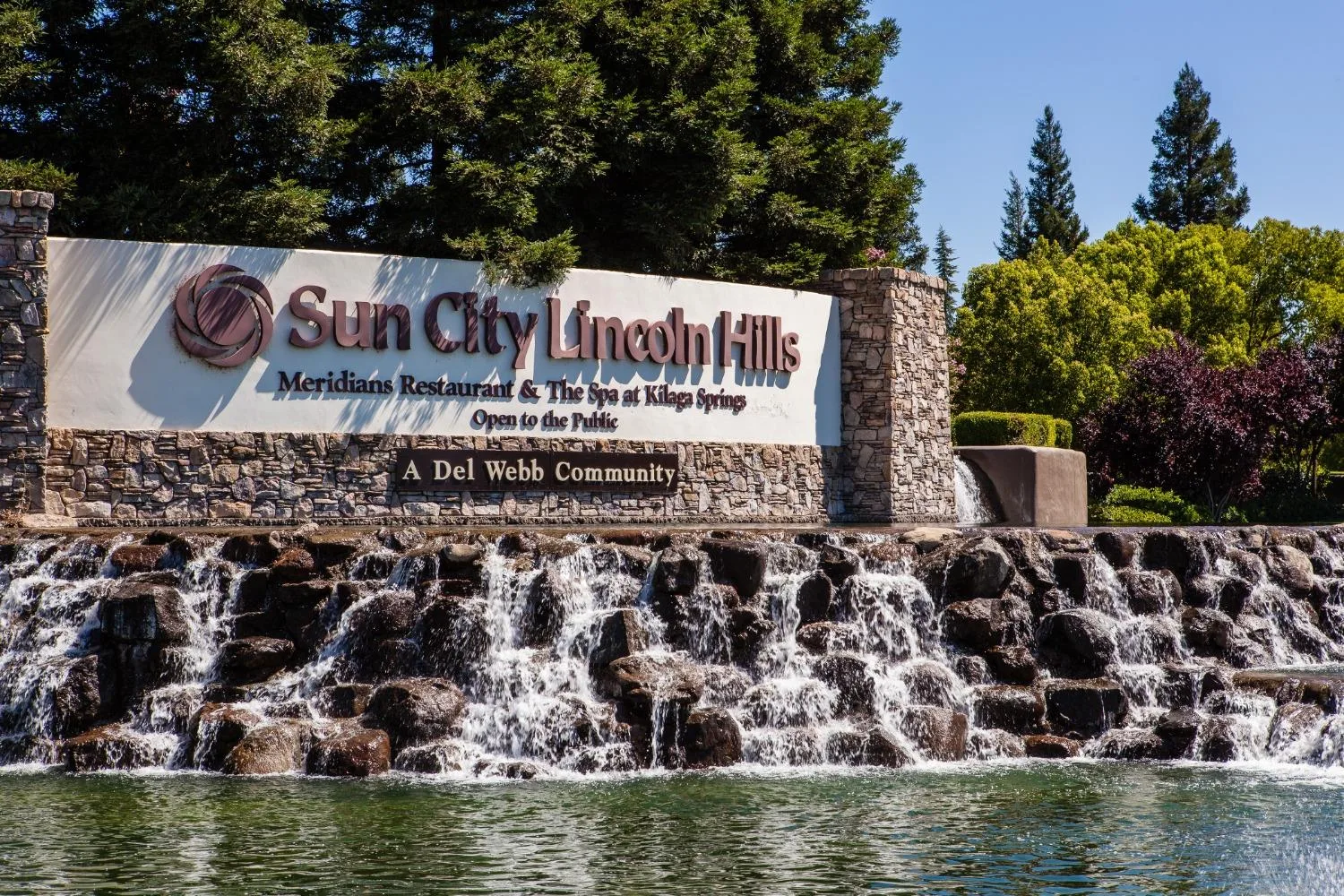
The big one: 36 holes of golf, two lodge campuses, and a Lincoln, California setting off Highway 65, the northern end of Placer County. Read our complete Sun City Lincoln Hills community guide for the full picture.
Search the NorCal55Plus Library
Lifeplanning · Relocation
What You Gain, What You Give Up, Where to Look, and What Bay Area Retirees Should Know Before Moving. Reviewed September 2026, verify current.
Last verified:
You have spent forty years building a life in the Bay Area, and now your daughter in Roseville keeps sending you listings of single-story homes with golf carts in the garage. What do you actually give up, and what do you actually get, if you make the move?
For many Bay Area homeowners, it can be. Sacramento-area 55+ communities often offer lower home prices, single-story housing, larger homes, resort-style amenities and easier access to adult children living in Northern California. The main tradeoffs: hotter summers, distance from the coast, and leaving established social, medical and cultural routines.
We regularly work with homeowners relocating from the Peninsula, East Bay and South Bay into 55+ communities throughout Placer, Sacramento and El Dorado counties. We have toured the communities, followed the resale markets, met with builders and helped buyers compare the move in real life, not from a national retirement-community database.
Why this matters: this is a relocation decision, not just a housing decision. It costs real money, real emotion, and real distance from old patterns, and it deserves the same careful comparison you would give any big life change. We wrote this guide so the questions you are asking at 2 a.m. get answered in daylight, with numbers and honesty.
The home-price gap is the first reason many buyers cite, and it is a big one. The California Association of REALTORS reported a median single-family home price of $1,450,000 for the nine-county San Francisco Bay Area in May 2026, compared with county-level medians of $560,500 in Sacramento County, $685,000 in Placer County, and $740,000 in El Dorado County from the same report. That is a gap of roughly two to three times, depending on which part of the region you compare. The exact gap depends on where in the Sacramento region you are comparing. Figures vary by source and month, so treat them as a snapshot and verify current numbers before you plan around them.
What that gap can do for a seller: equity. For some long-time Bay Area owners, substantial equity can make a Sacramento-area move possible while preserving part of the sale proceeds. The actual result depends on the sale price, replacement-home cost, taxes, transaction expenses,and any remaining mortgage balance. We have also seen buyers go from a townhome in the East Bay to a single-story detached home with an attached garage anda patio,with money left over,but that is not everyone's outcome,so run your own numbers before you plan around them.
The rest of the list is quieter but just as real: space, single-story floor plans with the laundry on the main level, less freeway noise, a calmer pace, and above all proximity. When adult children and grandchildren live in Placer or Sacramento counties, that proximity is the amenity that matters most, and no community amenity can replace it.
The coast is the first thing Bay Area people miss. Foggy mornings, the beach 30 minutes away, the particular light, those are real losses, and no inland community claims to replace them. Greater Sacramento summers are hotter and drier, and winter is genuinely colder at night. The mountains are closer, but the ocean is not.
Cultural density is the second loss. The Bay Area's range of restaurants, museums, theaters, and international grocery stores is hard to match. Sacramento has a strong food scene and a real cultural calendar, and Folsom and Roseville have grown fast, but the density of options is different. If your week is built on a specific theater, a beloved doctor, or a standing Saturday at the same deli, those do not move with you.
Old patterns are the sneakiest loss: the neighbors who know your dog, the barber who knows your hair, the route you could drive asleep. Rebuilding those takes a year or more, and we think it is dishonest to pretend otherwise. The communities we cover are good at welcoming new people, but rhythm takes time.
Bay Area routes into Greater Sacramento vary by starting point. I-80 is the primary connection from San Francisco and much of the East Bay toward Sacramento, Roseville and Lincoln. Buyers coming from the South Bay or Tri-Valley may use I-680 or I-580 before connecting into the Sacramento region. For Elk Grove: I-5 or Highway 99 may be the more relevant north-south route depending on the neighborhood.
In plain terms: if your family is in Rocklin or Roseville, you will likely spend your time on I-80. If they are in Folsom or El Dorado Hills, US-50. If they are in or near Elk Grove, I-5 or Route 99. Test the actual corridors at the times you would really drive them, a weekday morning and a Friday evening, and decide with those experiences, not with a map.
Directionally, North Placer communities like Sun City Lincoln Hills and Sun City Roseville sit north of the Sacramento city core, Folsom and El Dorado Hills sit east, and Elk Grove and the Rancho Cordova area sit south and east of the city. Where your family is should be the first filter, before amenities, before golf.
A simple way to hold the geography in your head: the Bay Area feeds into Greater Sacramento along four main corridors, and each one lands you near a different set of 55+ communities.
I-80
San Francisco and the East Bay into Sacramento, Roseville, Rocklin, and Lincoln.
Sun City Roseville · Sun City Lincoln Hills
I-680 / I-580
South Bay and Tri-Valley connections feeding into the Sacramento region before the final stretch.
Roseville · Folsom · El Dorado Hills
US-50
The Folsom and El Dorado Hills corridor from the east, with the Sierra foothills just beyond.
Regency at Folsom Ranch · Heritage El Dorado Hills
I-5 / Highway 99
The north-south routes along the south Sacramento valley side, neighborhood by neighborhood.
Elk Grove · Rancho Cordova
This is a simple branded orientation graphic, not a driving-time tool. Actual times change with traffic, construction, and time of day; test your own route before you commit.
Start with family location, not the clubhouse. The community amenity you will actually use most is proximity to the people you want to see. So the first filter is geography: where do your children, grandchildren, and dearest friends actually live, and how would you drive to them on a normal weekend, not a holiday weekend? Once the corridor is settled, the clubhouses, pools, and golf courses that live along that corridor become the shortlist.
Buyers often fall in love with an amenity first: a golf course, a pool complex, a clubhouse render. The corridor is what you will drive on every visit,so measure it against the factors that actually recur: family distance, healthcare systems, airport access, shopping, climate, insurance,and daily driving. That is why this guide's first rule deliberately reverses the usual order.
Think of these as starting points, not rankings: every community below has a full master guide on NorCal55Plus.com, and the living site's comparison articles where they exist.
| If you want | Start with |
|---|---|
| Large established community plus golf | Sun City Lincoln Hills |
| Roseville location plus established amenities | Sun City Roseville, and our head-to-head comparison. |
| New luxury construction plus Folsom | Regency at Folsom Ranch, with our video tour and comparison. |
| El Dorado Hills location | Heritage El Dorado Hills, and our Heritage versus Regency comparison. |
| Resort-style new construction plus Elk Grove | Esplanade at Madeira Ranch. |
| New construction plus Rancho Cordova value | Four Seasons at The Ranch, and our side-by-side comparison. |
If you want Gary and Rutsell to represent you when purchasing new construction, contact them before your first builder visit. Builder registration and representation policies vary, and waiting until after you register directly with the builder can affect whether your agent can participate.
Each of these has a full master guide on NorCal55Plus.com; these check-ins are the one-paragraph versions to orient you, and the master guides carry the deep detail.
The big one: 36 holes of golf, two lodge campuses, and a Lincoln, California setting off Highway 65, the northern end of Placer County. Read our complete Sun City Lincoln Hills community guide for the full picture.
The central one: mature neighborhoods close to Roseville shopping and its medical corridor, with a heated indoor pool with 75-foot swim lanes at Timber Creek Fitness Center and 27 holes. Start with our complete Sun City Roseville community guide , and if you are torn between the two Sun Cities, our Roseville vs. Lincoln Hills comparison lays it out side by side.
A gated 55+ active-adult community in Folsom with 919 homes across about 275 acres, newer Toll Brothers construction with an 18,000-square-foot clubhouse and indoor lap pool, plus trails and proximity to Highway 50. A strong fit for Bay Area buyers focused on newer construction. See our video tour inside Regency at Folsom Ranch .
Lennar's gated 55+ community off Latrobe Road in El Dorado Hills, with newer construction, tennis, and pickleball courts, and its own clubhouse. CURRENT CONFIRMATION: an earlier Lennar source described a retractable glass enclosure at Heritage; we could not confirm that description against Lennar's current public materials as of September 2026. It is positioned for buyers who want an El Dorado Hills address near the Highway 50 corridor. Read the Heritage El Dorado Hills community guide on the primary site.
Esplanade is Taylor Morrison's gated 55+ community in Elk Grove, southern Sacramento County, and Four Seasons at The Ranch is K. Hovnanian's gated 55+ community in eastern Rancho Cordova. Read the Esplanade at Madeira Ranch community guide and the Four Seasons at The Ranch community guide , both on the primary site, and our Esplanade versus Four Seasons comparison .
The Sacramento County 55+ community directory on NorCal55Plus.com is a good sweep of the rest of the field before you shortlist.
The gap is real and the equity unlock is real, but the full math includes more than the sale price. HOA dues, property taxes, insurance, utilities, and the cost of the move itself all need a column. Median figures above come from the California Association of Realtors (May 2026 report) and were reviewed September 2026, verify current before you rely on any of them.
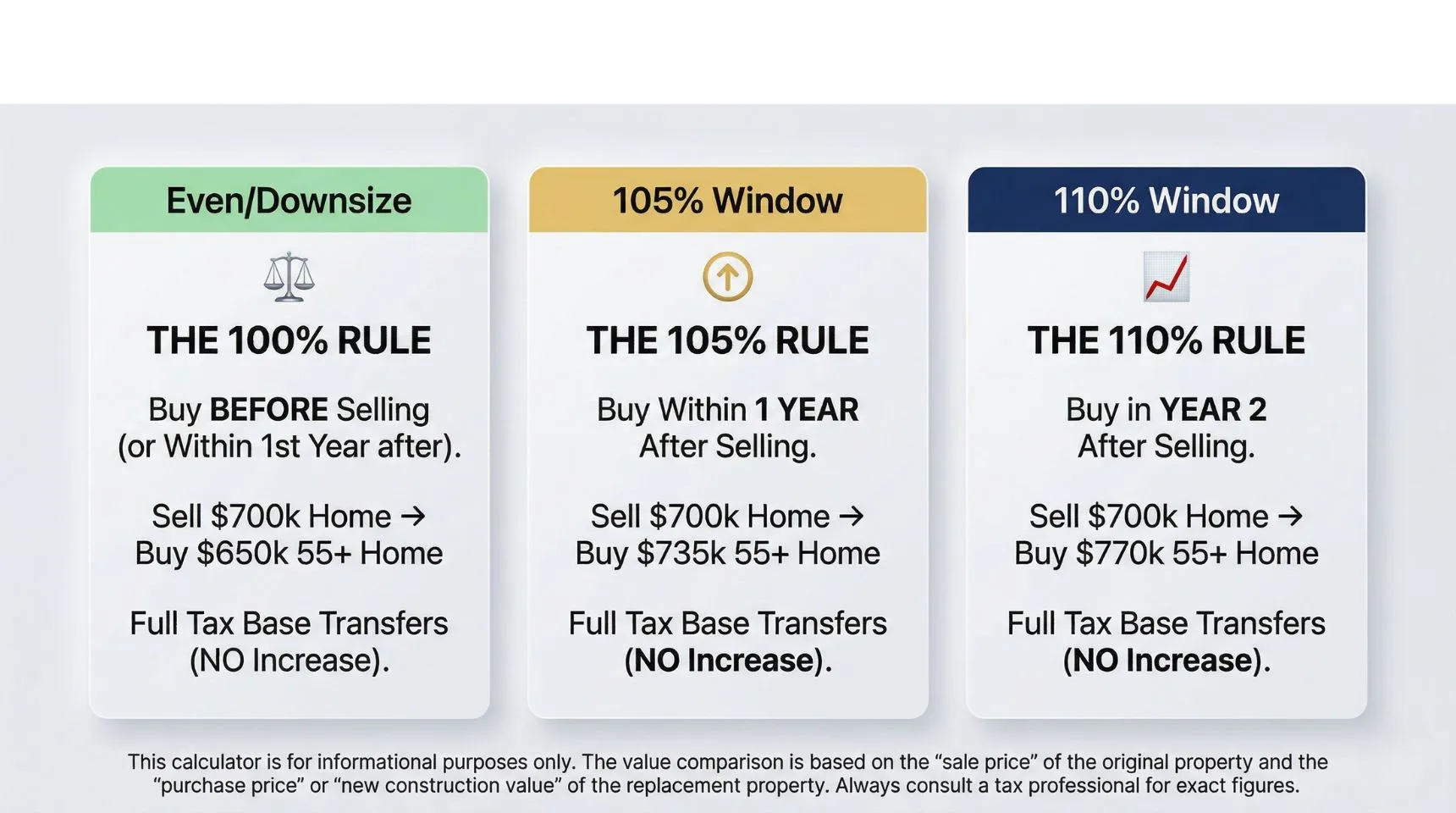
In California, selling and buying can change your property tax base. Certain eligible homeowners may transfer a taxable value under state provisions such as Proposition 19, which has specific qualifications. Replacement property value, timing, and county-assessor application requirements matter, and professional tax advice may be appropriate. Our Mello-Roos, Property Taxes & Prop 19 Guide on NorCal55Plus.com explains the mechanics; we are not tax advisors, and this is not tax advice.
A longtime Bay Area homeowner may also need to consider federal and California tax consequences associated with a highly appreciated property. Those calculations are outside the role of a real estate agent, so talk with your CPA or tax advisor before assuming all sale proceeds are available for the next purchase.

Bay Area homeowners may leave Kaiser relationships, specialists, Stanford, UCSF, John Muir, or Sutter physicians, and established pharmacies behind. Healthcare continuity is a real part of the move: which systems does your new community sit near, and how would you reach your specialists? Our hospital and healthcare access guide maps the major systems around Greater Sacramento's 55+ communities.
The single most honest piece of advice we give relocated buyers: do not make the first visit the day you decide. Test the move first.
Estimate net proceeds from your Bay Area sale before you tour anything.
Review Prop 19 eligibility with your tax advisor, ideally before you make an offer.
Compare insurance costs homeowners, fire, and flood quotes between your current and target counties.
Calculate HOA dues for the exact property, including any sub-association or special district fees.
Decide how close to family you really want to be, then choose the corridor that gets you there.
Test summer weather in July, and winter nights in January, at the actual community.
Drive the family route mornings and Friday evenings, not midday on a holiday.
Identify healthcare providers near each shortlisted community, system by system.
Visit communities on weekdays to see ordinary activity, not just the weekend crowd.
Check new-construction representation rules before your first builder visits.
Review HOA age, rental, and guest rules especially if you plan rentals, grandkid visits, or RVs.
Compare resale vs new construction timelines, options, and finished costs for the same budget.
It is not one client; it is a pattern we have seen repeatedly. A Bay Area homeowner sells a smaller property, a townhome, an older single-family home, or a house sized for a family that has grown, and finds single-story living, an attached garage, a private patio, and community access while potentially keeping sale proceeds for other priorities. The math works for many sellers, but everyone's numbers differ. The real starting point is a realistic net-proceeds estimate plus a corridor that actually fits the family, not a clubhouse photograph.
After the first year, conversations with relocated buyers settle into a few recurring themes, and honesty means naming them all:
We have helped families make this exact move, from the Peninsula, the East Bay, and the South Bay into Placer, Sacramento, and El Dorado county communities. The pattern we see is consistent: the first year is a recalibration, hotter summers, quieter nights, closer grandkids, and a house that finally fits. A recurring theme in our relocation conversations is that proximity to family becomes more important after the move than buyers sometimes expected beforehand. A smaller number are honest that they miss the coast more than they expected. Both reactions are legitimate, which is exactly why we push the test-first approach.
Affordability is usually the first reason: single-story homes with an attached garage, resort-style amenities, and proximity to adult children living in Placer or Sacramento counties often cost meaningfully less than a comparable Bay Area home.
Housing costs are generally lower across Sacramento, Placer, and El Dorado counties, but property taxes, insurance, HOA dues, and moving costs narrow the gap. Compare the county medians and verify current figures before planning around them.
Buyers typically start with Sun City Lincoln Hills, Sun City Roseville, Regency at Folsom Ranch, Heritage El Dorado Hills, Esplanade at Madeira Ranch, and Four Seasons at The Ranch, depending on their corridor, budget, and amenity priorities.
Match the community to where your family actually lives first, and then weigh golf, pools, clubhouse, and new-construction priorities against price and real drive times.
Possibly, under Proposition 19 for certain eligible homeowners. Qualifications, timing, and county-assessor application requirements matter, so review the rules and talk with a tax advisor before assuming a transfer applies.
Not necessarily. Many buyers coordinate both transactions, so compare net proceeds, bridge financing, and current market conditions with your agent before deciding the sequence.
If you want your own representation, contact your agent before your first builder visit. Builder registration and broker-cooperation policies can affect whether your REALTOR can represent you after you register directly.
This guide sits beside the rest of our buyer-focused editorial. All figures reviewed September 2026, verify current before you act.
Gary and Rutsell can help you compare corridors the way this guide does, community by community, so you arrive at the sales offices with a shortlist instead of a swirl of listings. Call or text Gary 916-595-4279 · Rutsell 916-695-2800, or send a message through our contact page. For sellers making the Bay Area to Sacramento move, our Seamless Sync Guarantee on the main site keeps the sale of your current home and the purchase of your next one on a single timeline.
Take the NorCal55Plus Tuesday Test before you buy: visit on an ordinary weekday and see whether life there fits yours. Read the full test.
DRE #01448722 · Brokered by eXp Realty of Northern California, Inc.
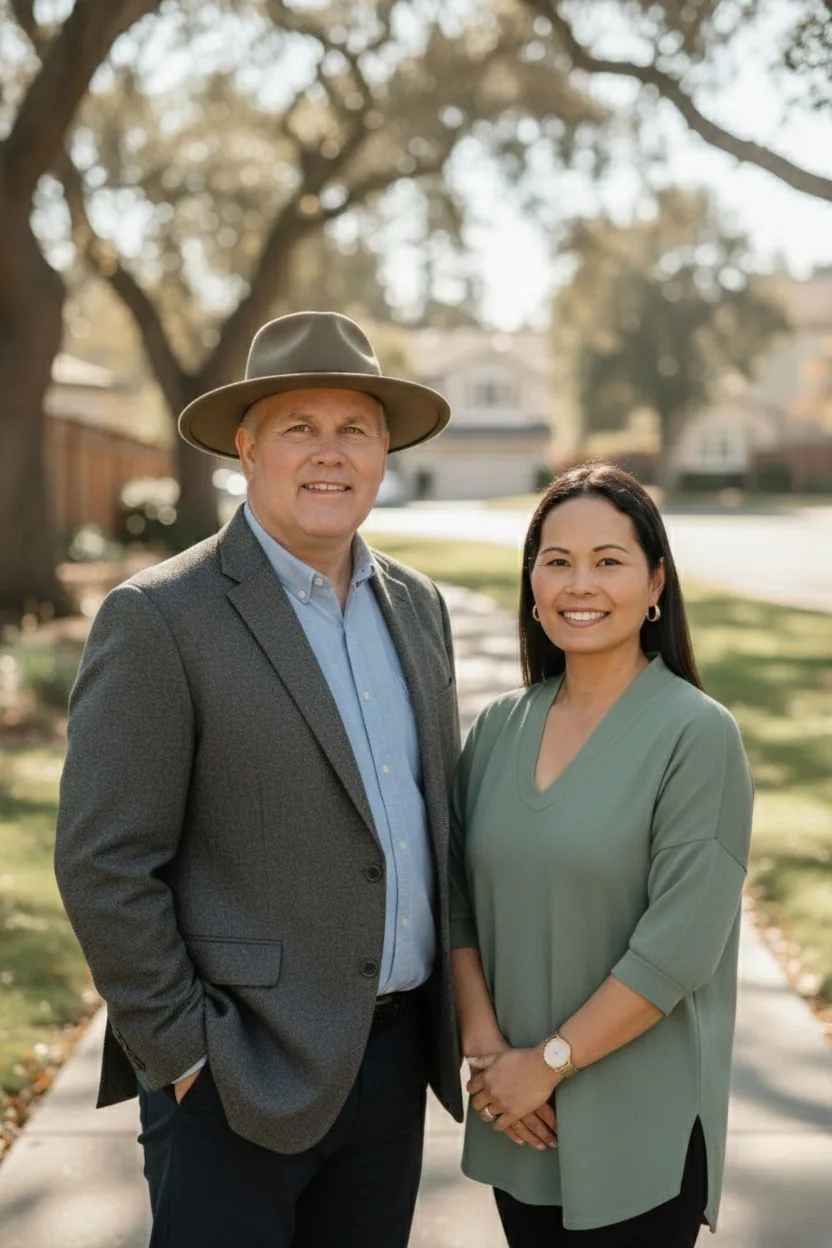
Gary Lee has been a full-time California REALTOR since 2004 and specializes in Northern California 55+ communities, relocation, resale and new construction. He personally researches the communities featured on NorCal55Plus through community visits, builder meetings, home tours, resident conversations and local market analysis. DRE #01448722.

DRE #02067791 · Brokered by eXp Realty of Northern California, Inc.
Rutsell Fabillar Lee is a California REALTOR and co-founder of The Gary Lee Team. She researches 55+ communities alongside Gary and helps buyers compare neighborhoods, amenities, housing choices and relocation priorities. She is fluent in English, Tagalog and Bisaya. DRE #02067791.
Figures in this article were reviewed September 2026. Median home prices come from the California Association of REALTORS May 2026 report and change monthly; verify current figures before acting. Community details come from each community's official association or builder materials, and we recommend verifying current rules, fees, and availability directly with the seller or association before purchase.
Our own community guides are further reading, not proof of an external fact; verify anything you will act on with the primary sources above.
Gary Lee, CA DRE #01448722 · Rutsell Fabillar Lee, CA DRE #02067791 · Brokered by eXp Realty of Northern California, Inc. All information deemed reliable but not guaranteed. Figures reviewed September 2026; verify current with each association or seller before purchase. Equal Housing Opportunity.
More guides that pick up where this one leaves off, matched to the subject you are exploring.

Buyer Education12 min read
What the Family Opportunity Mortgage concept is, the broader conventional, FHA, Fannie Mae and Freddie Mac options, co-borrower and gift-fund arrangements, and what lenders want, for adult children helping a parent 55+ buy a home in the Greater Sacramento area. Program terms vary by lender; confirm with a qualified lender before relying on them. Reviewed October 2026. By Gary and Rutsell Lee.
Read Article
Community Spotlights11 min read
An inside look at Trilogy at Bickford Ranch in Lincoln, California: the newest luxury 55+ community in Placer County, its resort amenities, new-home reality, and what buyers should know. By Gary and Rutsell Lee.
Read Article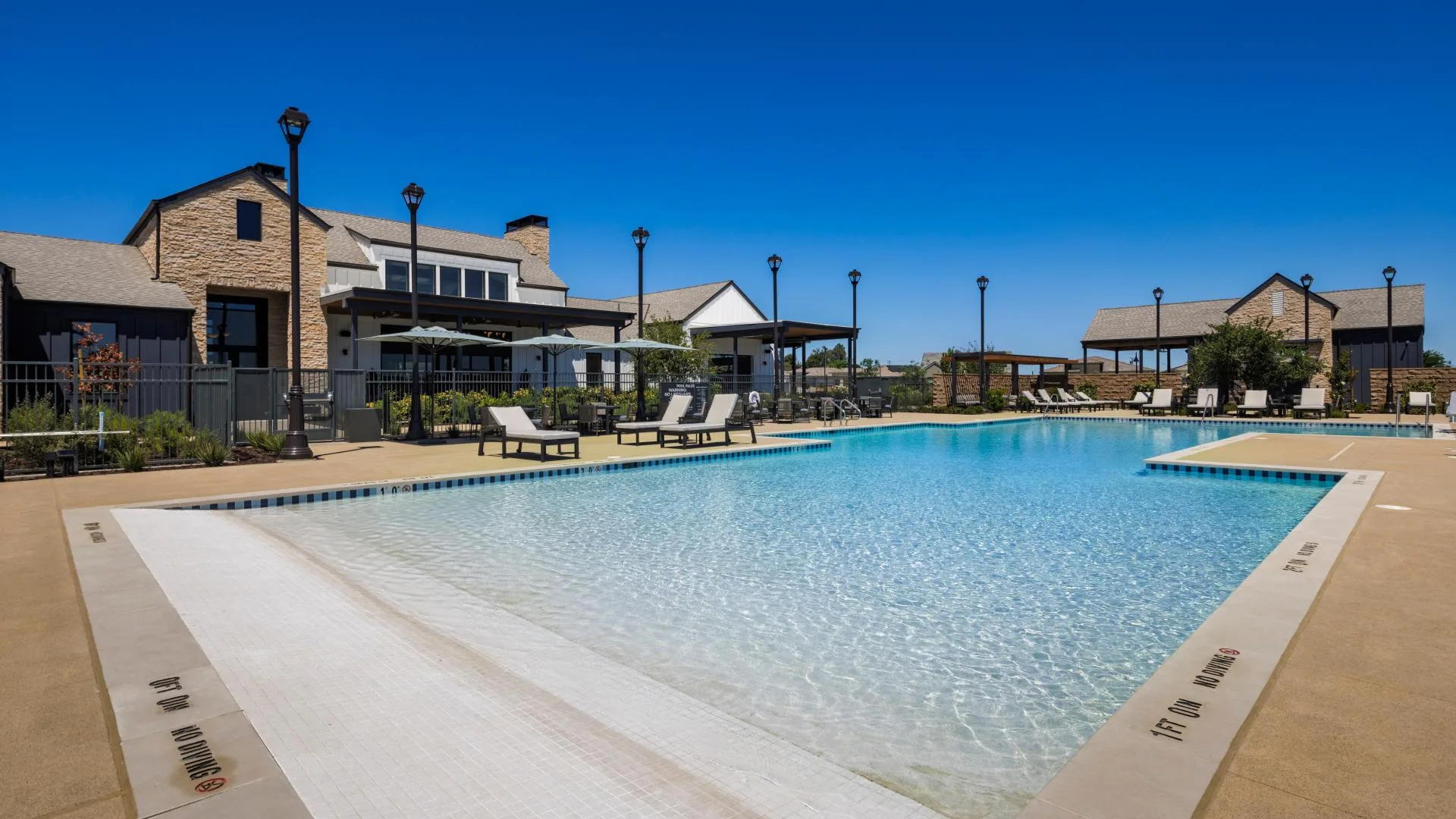
Lifestyle13 min read
An honest, decision-focused comparison of staying in your longtime home versus moving into a 55+ community: maintenance, stairs, isolation, money, family, and heart. By Gary and Rutsell Lee.
Read Article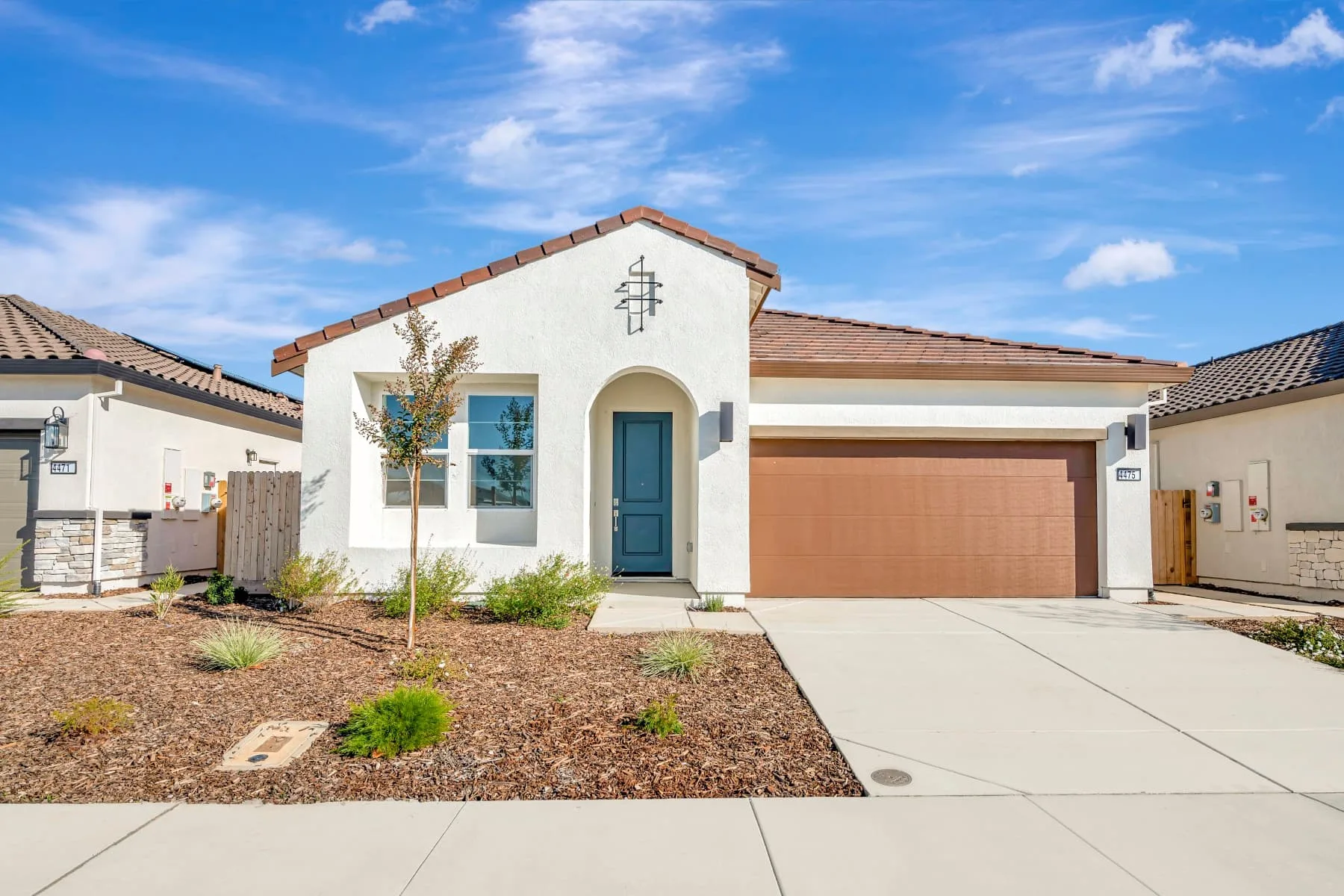
Community Spotlights
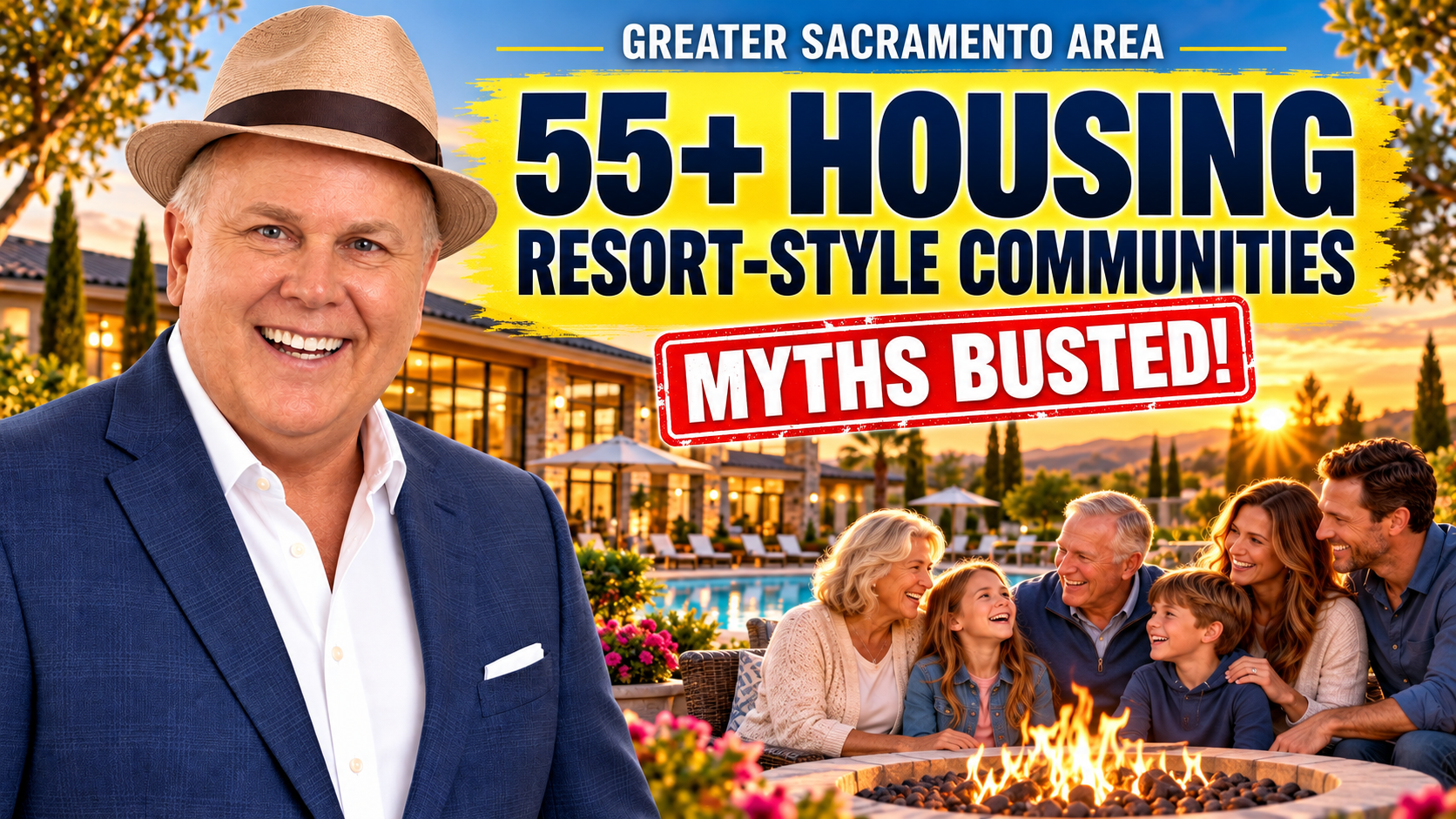
Esplanade at Madeira Ranch vs. Esplanade at Turkey Creek
18 min read
Video Companions
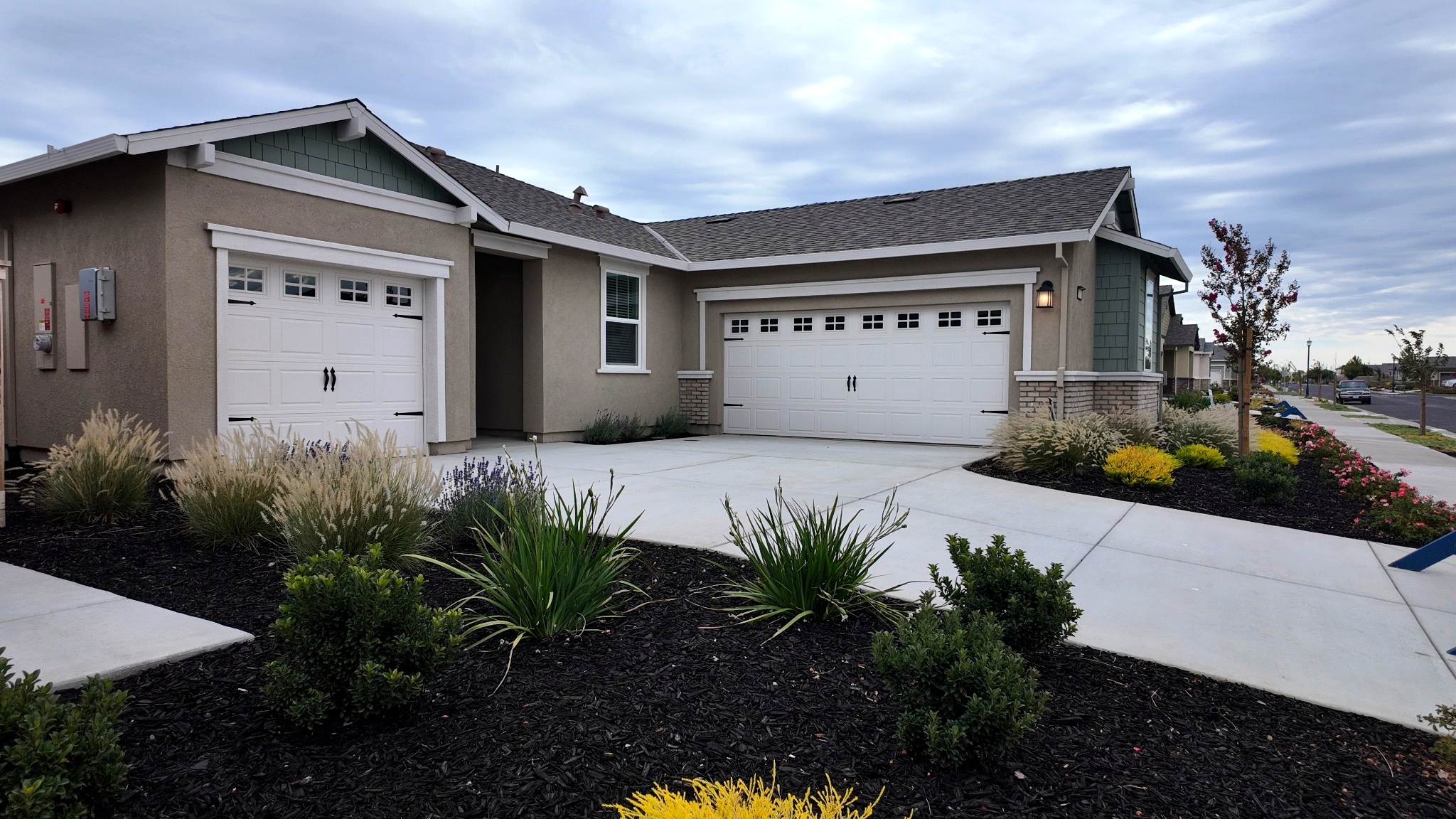
55+ Community Myths Debunked: What a Recent Sacramento Video Got Wrong About Resort-Style Living
15 min read
Builder Homes of the Week
The Sullivan at Summit at Liberty: A 3-Bedroom Floor Plan With a Rare 3-Car Garage
11 min read
Explore video tours, neighborhood reviews, and verified MLS listings across Placer, Sacramento, and El Dorado counties.
Browse All 55+ Active Adult ListingsThe Gary Lee Team is here to help. Text us, request a callback, or ask for more info.
We'll reply by text or phone. No spam, unsubscribe anytime.
Thanks! The Gary Lee Team will reach out right away.