No one sells fear here. These are ten honest, checkable signs that your home may be
working against the life you want, each with a balanced reframe and one small action you
can take.
Last reviewed September 2026 · Verify current details with your own advisors before deciding
Last verified:
Share This Article
Pass this article along to a friend, family member, or neighbor planning their next chapter.
The house still fits the family pictures on the wall, but does it fit your actual life?
If that question keeps coming back on quiet evenings, this list is for you. No
fear-mongering, no pressure, just ten honest signals and one small action each.
The direct answer
How do you know when it's time to downsize? There's no single right answer, but ten
common signals stand out, and none is a verdict on its own. The strongest reason to
consider it is when the home you have no longer fits the life you actually live.
Gary Lee has been a full-time California REALTOR since 2004. Today, Gary and Rutsell
Lee work together helping Northern California buyers and sellers navigate 55+
communities, downsizing, relocation, resale and new construction. Their perspective
comes from actual home tours, community research and conversations with people working
through these same decisions.
Meet your specialists
Meet Gary & Rutsell, your Northern California 55+ REALTORS
Gary Lee has been a full-time California REALTOR® since 2004.
Rutsell Lee is also a
California REALTOR® and co-founder of The Gary Lee Team. Together they research Northern
California 55+ communities, tour homes and amenities, and help buyers and sellers compare
their options throughout Greater Sacramento and Northern California.
The Gary Lee Team · eXp Realty of Northern California, Inc.
This guide is for people actively weighing whether to move now. It is a thinking tool for
that conversation, not a push for anyone who is not ready. If downsizing is only a
someday thought, or if you love your current home and it still fits, this list does not
demand anything of you. That is a perfectly good answer too.
The NorCal55Plus Stay-or-Move Scorecard
For each of the ten signs below, pick the answer that fits you best. This is a
conversation starter, not a verdict. There is no pass or fail here and no magic number
that says you must move. Use the Print / Save PDF button to print the scorecard as a
one-page worksheet.
A story that often changes the conversation
One homeowner Gary and Rutsell met had three empty bedrooms but insisted the house
wasn't too large. The thing that finally changed her mind wasn't square footage. It was
realizing she had stopped traveling because she worried about the yard, sprinklers and
house every time she left. This is an illustrative example based on conversations Gary
and Rutsell commonly have with homeowners, not a specific named client.
1. Rooms you rarely use
A guest bedroom or formal dining room you have stepped into once or less in the past month.
2. Stairs you avoid
You plan your route around the stairs, or you find carrying laundry and household items between floors more tiring than it used to be.
3. Maintenance that keeps piling up
A to-do list with items that are months old, or chores you find yourself hiring out more every year.
4. Travel that comes with worry
You picture a trip, then picture the pipes, the sprinklers, the mail, and the break-in risk, and the trip quietly gets smaller.
5. Isolation in a family-sized home
You can go days without a real in-person conversation in a home sized for a family that no longer lives there.
6. Healthcare that feels far
A specialist appointment means a drive that feels longer every year, and you find yourself postponing care because of the trip.
7. Major repairs that feel unwise
The roof, furnace, or sewer line is near the end of its age, and writing that big check in this house feels wrong.
8. Equity that sits unused
The house has appreciated for years while you stretch a fixed budget and skip things you would enjoy.
9. Weekends that are all maintenance
Your weekends are yard, gutters, garage, and the hardware store, and the hobbies you planned for retirement keep waiting.
10. No clear plan for the next decade
You know today is fine but have no real picture of where you want to be in ten years, so the house stays the default.
Your score: 0 of 20 possible
A higher score just means more of these signals are landing for you right now. Treat it
as a reason to have a real conversation, not as a verdict on its own.
The ten signs
1
Rooms you rarely use
The checkable sign: A guest bedroom or formal dining room you have stepped into once or less in the past month.
What it does and doesn't mean: What it does: it tells you that you are heating, cleaning, and insuring space you are not really living in. What it does not mean: it is not a verdict. A spare room you keep for family visits can be worth every dollar to you.
One small action: Try the Seven-Day Room Test: for one ordinary week, put a check mark next to every room you genuinely use. Don’t count walking through it to reach somewhere else. At the end of seven days, look at how much of the house is actually serving your current life.
2
Stairs you avoid
The checkable sign: You plan your route around the stairs, or you find carrying laundry and household items between floors more tiring than it used to be.
What it does and doesn't mean: What it does: avoiding stairs is a checkable sign that a single-level floor plan might suit you better. What it does not mean: stairs are not automatically a problem, and many people manage them happily for years.
One small action: Count your unavoidable stair trips in a typical week. If the number surprises you, single-story living deserves a real look.
3
Maintenance that keeps piling up
The checkable sign: A to-do list with items that are months old, or chores you find yourself hiring out more every year.
What it does and doesn't mean: What it does: it shows the workload is real and growing. What it does not mean: it is not laziness. A home you love can still be more upkeep than you want to sign up for again.
One small action: Write the maintenance list in one column and the cost of hiring it all out in another, then decide which life you would rather pay for.
4
Travel that comes with worry
The checkable sign: You picture a trip, then picture the pipes, the sprinklers, the mail, and the break-in risk, and the trip quietly gets smaller.
What it does and doesn't mean: What it does: it shows the house is working against the kind of life you actually want. What it does not mean: it is not a reason to sell on its own. A trusted house-sitter or good neighbors solve a great deal.
One small action: Try one shorter trip with a house-sitter or neighbor and notice whether it feels lighter. That feeling is real data.
5
Isolation in a family-sized home
The checkable sign: You can go days without a real in-person conversation in a home sized for a family that no longer lives there.
What it does and doesn't mean: What it does: isolation is a slow current, and it is one of the recurring concerns Gary and Rutsell hear from people who begin considering a move. What it does not mean: it is not a failure, and moving is not the only answer. Clubs, classes, and visits matter too.
One small action: Count your real in-person conversations in a week. If the number is low and you want it higher, a community is a fair option to explore.
6
Healthcare that feels far
The checkable sign: A specialist appointment means a drive that feels longer every year, and you find yourself postponing care because of the trip.
What it does and doesn't mean: What it does: proximity to care is often the whole reason a corridor or community wins for buyers. What it does not mean: we are not giving medical advice. Only your doctor can speak to your care needs.
One small action: Run the NorCal55Plus Medical Map Test: before you visit any community, map your actual doctors and specialists to the communities on your list instead of waiting until after you fall in love with a home. See our guide: Hospital and Healthcare Access Near Sacramento 55+ Communities.
Hospital and Healthcare Access Near Sacramento 55+ Communities
7
Major repairs that feel unwise
The checkable sign: The roof, furnace, or sewer line is near the end of its age, and writing that big check in this house feels wrong.
What it does and doesn't mean: What it does: a big-ticket repair is often the moment people question whether their money is better placed elsewhere. What it does not mean: skipping a needed repair is not frugal if it puts your home or your equity at risk.
One small action: Get one professional estimate for the big item and let a real number replace the anxious guess.
8
Equity that sits unused
The checkable sign: The house has appreciated for years while you stretch a fixed budget and skip things you would enjoy.
What it does and doesn't mean: What it does: home equity can be a meaningful financial resource, but whether accessing it through a sale makes sense depends on your broader financial, tax and estate plan. What it does not mean: we are not giving financial or tax advice. Run the numbers with a tax advisor and a planner before you decide.
One small action: Work through the honest math with an advisor, sale costs included, and see what the equity could actually do for you. Downsizing does not automatically save money: replacement-home price, HOA dues, property taxes, insurance, moving expenses, and transaction costs can all change the result.
9
Weekends that are all maintenance
The checkable sign: Your weekends are yard, gutters, garage, and the hardware store, and the hobbies you planned for retirement keep waiting.
What it does and doesn't mean: What it does: it shows how your time is actually being spent. What it does not mean: it is not a judgement on your choices. Some people genuinely love the work, and that is a perfectly good answer too.
One small action: Log a month of maintenance hours. Most people are surprised by the total, and a number beats a feeling.
10
No clear plan for the next decade
The checkable sign: You know today is fine but have no real picture of where you want to be in ten years, so the house stays the default.
What it does and doesn't mean: What it does: a default is still a decision, just an unexamined one. What it does not mean: you do not need an elaborate plan. Even a rough idea of your next chapter helps.
One small action: Write two versions of your ideal ordinary week, one for today and one ten years out, and see which home makes both more possible.
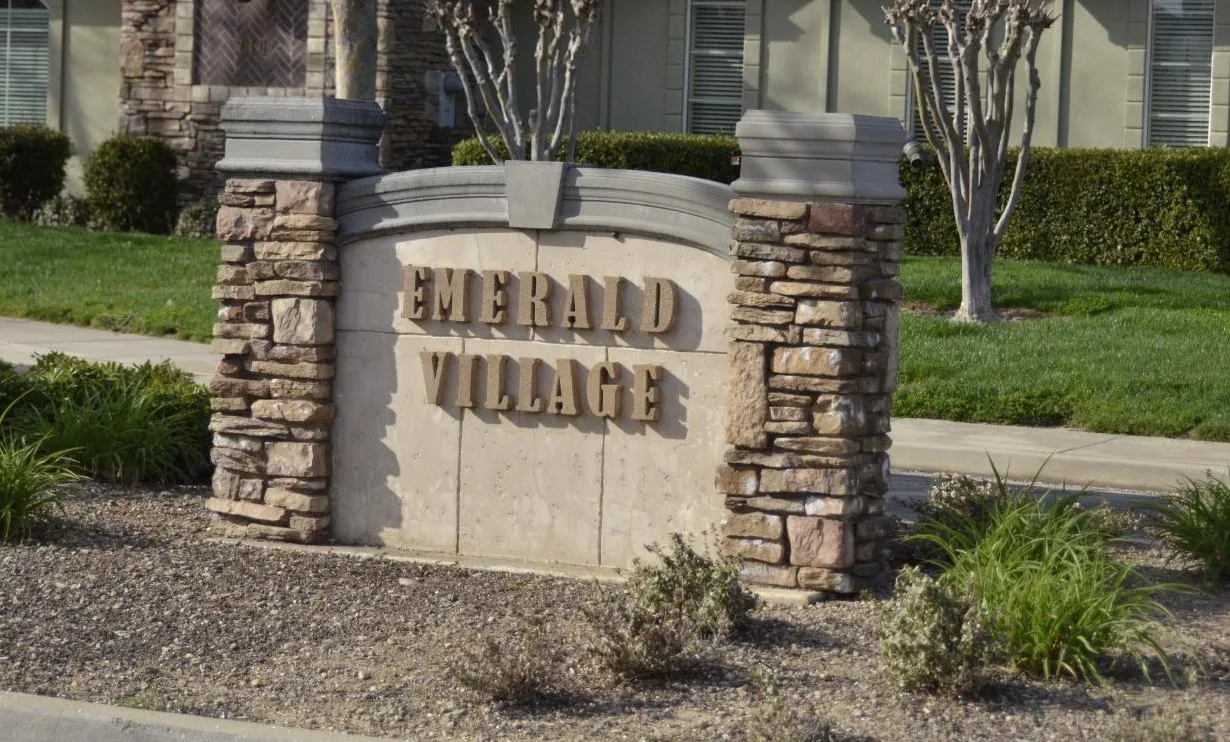
Sometimes the sign is not about the house at all; it is about the paths you would rather
be walking. Photographed by the NorCal55Plus team during a community research visit.
Right-sizing is not the same as going smaller
Downsizing doesn't have to mean tiny. It can mean trading the home you had for the home
that fits the next chapter, sometimes in a 55+ community, sometimes a single-story resale,
sometimes a smaller yard in a walkable town.
The goal is not fewer square feet for its own sake. It is a home that matches how you
actually spend your days. For some people that is a roomier single-level floor plan, not a
cramped one. For others it is a low-maintenance community where the weekends are yours
again.
What about a 55+ community?
Many people who downsize land in a 55+ community, and it can be a great fit: built-in
opportunities for activities and social connection, common single-story floor plans,
and sometimes a lighter maintenance load. But these communities fit some people, not
all. They come with HOA dues, rules, and a specific way of living, and they are not the
right answer for everyone. We help people compare honestly rather than pushing a
one-size-fits-all move.
A common assumption is that 55+ means little exterior maintenance, but the reality is
more specific. Many 55+ communities offer single-story housing, shared amenities and
opportunities for organized social life, but maintenance responsibility varies widely.
Some associations maintain portions of landscaping or exterior areas, while others
leave the home and yard largely to the owner. Single-story plans are especially common
in 55+ communities, although not every home or floor plan is single-level. Ask exactly
what the HOA does and does not cover before you buy.
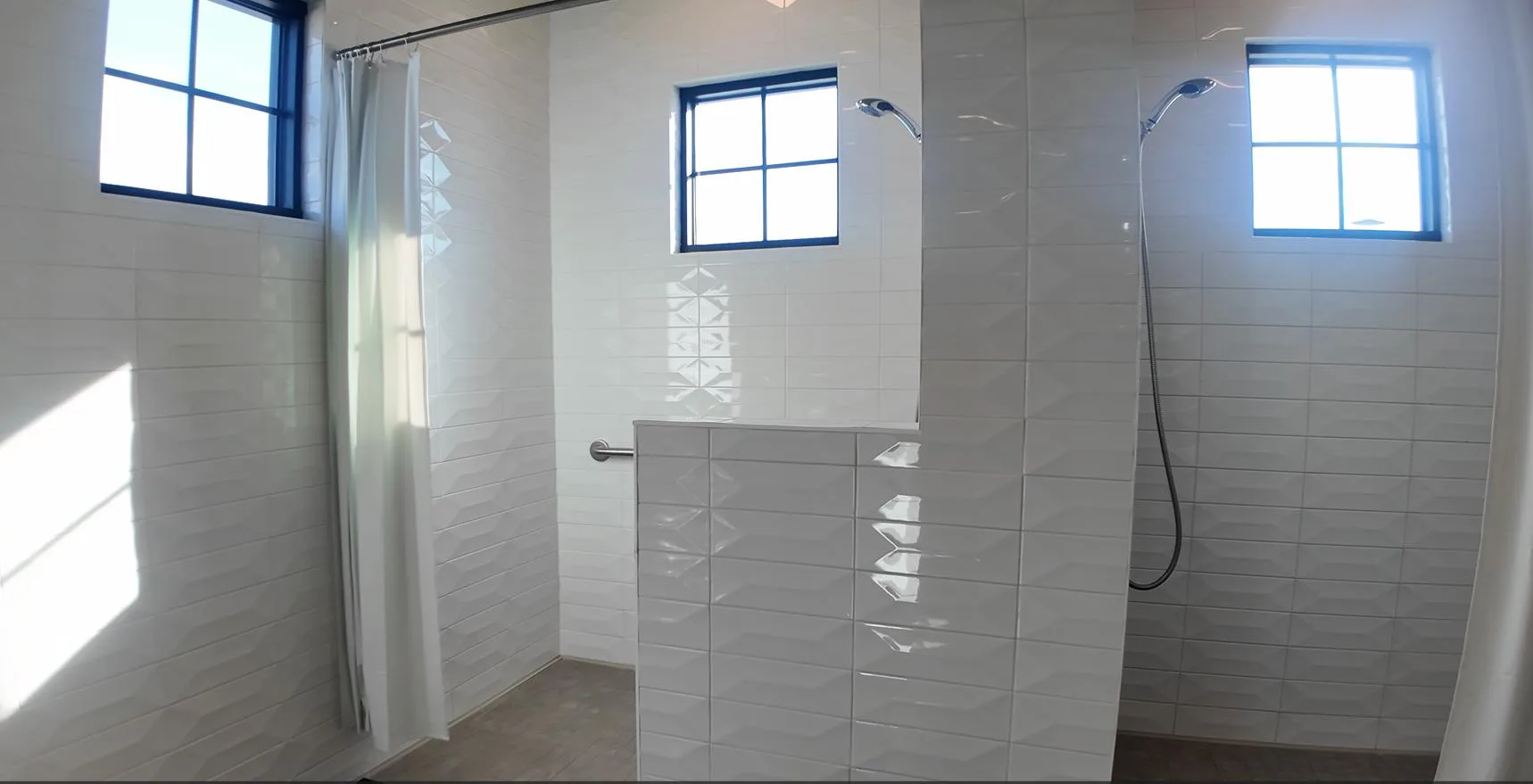
An accessible walk-in shower, one of the features that makes single-level 55+ living
genuinely easier for many buyers. Photographed by the NorCal55Plus team during a
community research visit.
These are signs, not commands
Nobody on this list is a verdict. A room you rarely enter is not a reason to move, and a
heavy yard is not an emergency. The value of the list is cumulative: when several of these
land at once, or when one has been landing for years, that is the moment to talk it
through on purpose instead of letting the default decide for you. And if none of this list
feels like you, that is an answer too, and a perfectly good one.
One thing Gary and Rutsell see repeatedly is that people rarely call because of one
dramatic problem. More often, three or four small frustrations have quietly
accumulated, the stairs, the unused rooms, the yard and the drive to appointments.
When those frustrations add up, our
Why Sell With Us
guide on the main NorCal55Plus.com site walks through how the seller side of that move works.
Questions people ask us about downsizing
How do I know if it’s time to downsize?
There is no single right answer, but the strongest reason is when the home you have no longer fits the life you actually live. The ten signs above are checkable signals, not commands. When several land at once, that is a good moment to talk it through with someone who does this work every day, not to make a snap decision.
Is it better to downsize before or after retirement?
There is no universal answer. Many people move as they approach retirement so the next chapter starts in the home they intend to stay in, while others wait until they retire to see where their routine really lands. Your own timing, finances, and health should guide it. Talk to a tax advisor and a financial planner about the timing that fits you.
Will moving to a 55+ community feel too isolated?
Not for many people, but it is a real question and a fair one. 55+ communities fit some people beautifully and others not at all. The best way to know is to visit and, when appropriate and available, learn from residents about their everyday experience, while verifying actual association rules in the governing documents. We help people compare communities, and we never push anyone who is not ready.
What should I do with everything I’ve accumulated?
Start small and sort in stages: what you use, what you love, what family wants, and what you can donate, sell, or recycle. There is no deadline that demands you do it all at once. For the emotional side, many people find it easier with help from family or a professional organizer.
How long does selling and moving take?
It varies widely with the market, the home, and the community. In a typical Northern California market a sale can close in a matter of weeks to a few months, and a move adds its own timeline. Because the answer depends on your situation, a real conversation with an agent gives you a realistic picture for your own home.
Is it worth hiring a realtor for a smaller home?
Whether you use an agent is your decision. In a 55+ purchase, an experienced local agent can be particularly useful for comparing HOA rules, fees, resale history and age and occupancy requirements. Buyer-agent compensation is negotiable and should be clearly addressed in the written buyer representation agreement. Depending on the transaction, a seller or listing broker may contribute toward buyer-agent compensation, or the buyer may have responsibility for some or all of it. Gary and Rutsell explain the compensation structure before touring so buyers understand it upfront.
Talk It Through, No Pressure
Talk through whether moving makes sense. Call or text Gary
916-595-4279
· Rutsell
916-695-2800,
or send a message through our
contact page.
We have had this conversation repeatedly with people weighing their next move, and the
honest version never starts with
"you should move."
DRE #01448722 · Brokered by eXp Realty of Northern California, Inc.
Gary Lee has been a full-time California REALTOR since 2004 and specializes in
Northern California 55+ communities, relocation, resale and new construction. He
personally researches the communities featured on NorCal55Plus through community
visits, builder meetings, home tours, resident conversations and local market
analysis. DRE #01448722.
Rutsell Fabillar Lee
DRE #02067791 · Brokered by eXp Realty of Northern California, Inc.
Rutsell Fabillar Lee is a California REALTOR and co-founder of The Gary Lee Team.
She researches 55+ communities alongside Gary and helps buyers compare
neighborhoods, amenities, housing choices and relocation priorities. She is fluent
in English, Tagalog and Bisaya. DRE #02067791.
Sources and Official References
This article is editorial guidance from the team's experience with families, not medical,
legal, or financial advice. For advice on your health, taxes, or legal documents, talk to
your own doctor, tax advisor, or attorney. Any community or market figures are dated,
attributed, and sourced, reviewed September 2026, and should be verified current before
any decision. We do not cite our own guides as proof of a claim.
Reviewed September 2026. Gary Lee, CA DRE #01448722 · Rutsell Fabillar Lee, CA DRE
#02067791 · Brokered by eXp Realty of Northern California, Inc. Equal Housing Opportunity.
Share This Article
Pass this article along to a friend, family member, or neighbor planning their next chapter.