Lifestyle · Recreation & Connection
The Pickleball Social Circuit: Where New Connections Are Made
How a small court and a slow ball became the fastest way to meet people in a 55+ community, written by independent 55+ specialist Gary Lee.
By Gary Lee, Northern California 55+ Specialist | October 2026
Last verified:
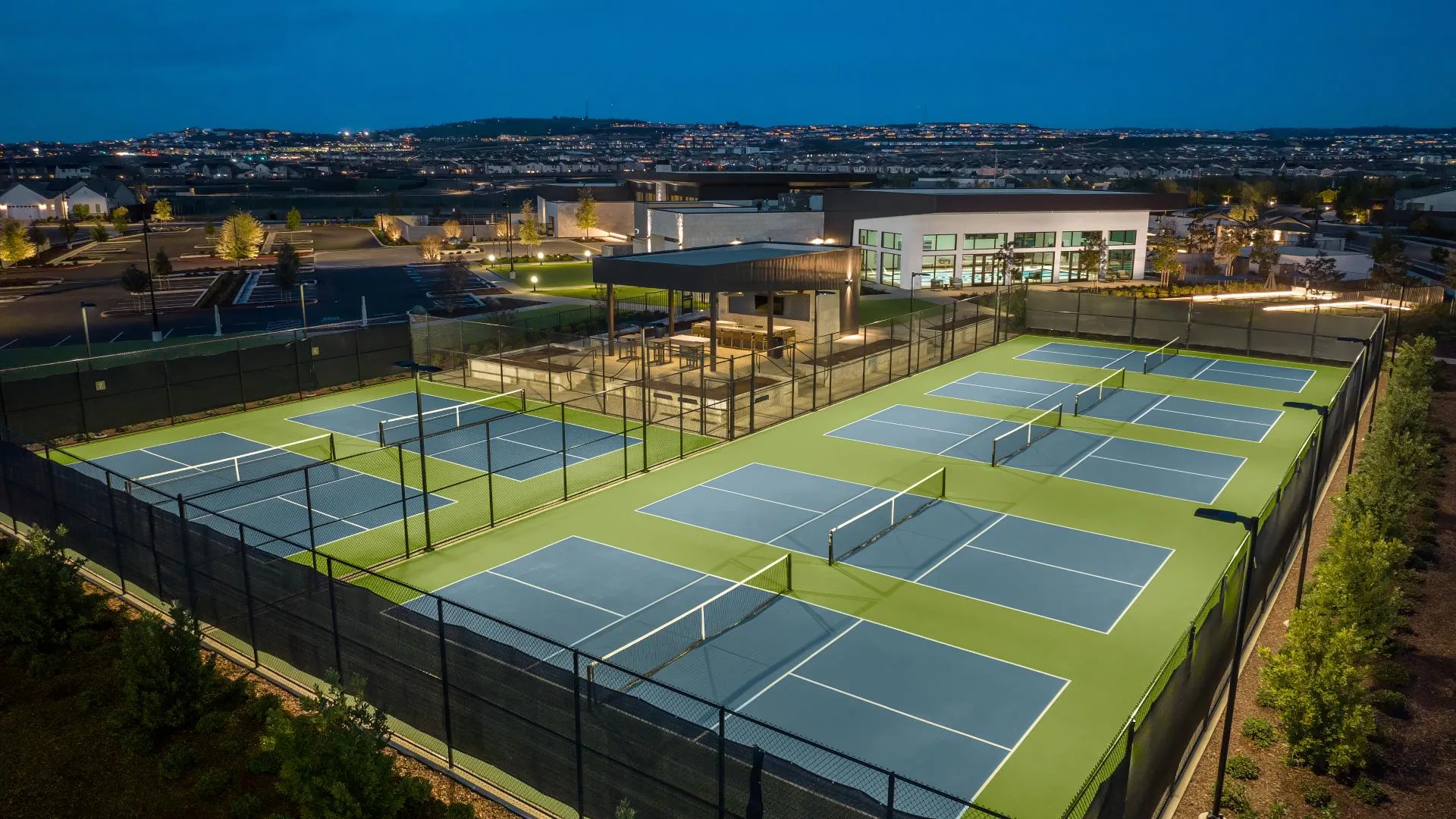
Pickleball is the social engine of Northern California's 55+ communities, and not by accident. The court is small, the games are short, and the rotation system puts you on the court with someone new every few minutes. In the active-adult hubs of Placer and Sacramento counties, the courts have become the main social pipeline for new residents, the place where a newcomer becomes a regular within weeks.
This guide keeps court descriptions general on purpose, because every community runs its courts a little differently. For community-by-community detail, our guide to the best 55+ communities near Sacramento for pickleball covers the specifics.
Why Pickleball Is the Hub
Every community has a pool, and most have a fitness center, but pickleball has something neither of those quite delivers: a built-in social rotation. Three features make it the hub:
- Low barrier to entry. You can play your first game the day you arrive. No athletic history, no team tryout, no equipment purchase required. The paddle is light, the court is a quarter the size of a tennis court, and the ball moves at a pace your body can keep up with.
- Short games. A typical game runs 15 to 20 minutes to 11 points. That means the rotation turns over constantly, and within a single morning you can play with five, six, or seven different partners.
- Built-in rotation of partners. Open play runs on a paddle queue: you drop your paddle in the rack, and when your turn comes you step on with whoever is next. You cannot hide in a fixed foursome, and that is exactly why the courts are where everyone gets to know everyone.
Add the fact that play happens at set times every morning, and you have a daily appointment with the same community, every single day. That consistency is what turns a sport into a social life.
How the Social Circuit Works
In Northern California's active-adult hubs, morning open play and beginner paddle rotations are standard practice and serve as the main social pipeline for new residents. The rhythm is remarkably consistent across Placer and Sacramento counties:
- Morning open play. Courts fill early, often by 8 or 9 a.m., with regulars who have played together for years. Newcomers are expected, welcomed, and rotated in. The paddle queue is the great equalizer: it decides who plays next, so nobody is left standing on the sideline.
- Beginner paddle rotations. Many communities run dedicated beginner sessions where the paddle queue is limited to newer players. This is the single best entry point: you learn with people at your level, and those people become your first circle.
- The weekly calendar. Clinics, ladder leagues, mixers, and socials fill the rest of the week. The community app or bulletin board is the source of truth, and the recreation desk can point a new resident to the friendliest session.
The social circuit is not just the games. It is the courtside chairs between games, the water cooler conversations, and the standing invitation to lunch after the morning session. For a solo resident, this is the fastest on-ramp to a community in the entire development. Our guide to moving in alone and building an instant community explains why the first 90 days matter so much, and the pickleball courts are where many of those first 90 days get spent.
Getting Started
You do not need to be an athlete to start, and you do not need to buy anything before your first session. Here is the usual path:
- Paddles. Use a loaner for your first few sessions. If you catch the bug, a mid-range paddle is a modest investment, and the community pro or pro shop can fit one to your hand.
- Lessons and beginner clinics. One clinic is enough to learn the serve, the dink, and the rules of scoring. Most communities run them regularly, and they are also a low-pressure way to meet other new players.
- Etiquette of joining a game. The rule is simple: put your paddle in the queue and wait for your turn. Watch a game or two first to learn the local rotation, and introduce yourself when you step on. Court regulars are famously welcoming to newcomers, in part because everyone remembers being new.
If you are comparing communities with pickleball in mind, ask three questions on your tour: how many courts, when is open play, and is there a beginner rotation. The answers tell you whether the courts are a real social hub or a quiet amenity, and our pickleball community roundup gives you a head start on which communities take the game seriously.
Beyond the Court
The friendships that start at the net do not stay at the net. In most communities, the morning session flows naturally into coffee, and the coffee flows into dinners, and the dinners flow into something bigger: team travel.
Pickleball travel is a real phenomenon in Northern California's active-adult communities. Groups organize trips to tournaments, resort communities, and regional play days, and the van ride is half the fun. What begins as a rotation of partners becomes a circle of friends with standing plans, and for many residents, that circle is the community they actually live in.
The courts also connect you to the community beyond the game: the same people at the courts are on the committees, at the clubhouse, and at the pool. One sport, one paddle in the queue, and you are plugged into the whole social circuit. For more on how community culture varies, our guide to resort-style clubhouse culture versus quiet retreats helps you match a community's social rhythm to your own.
And if you are still deciding whether active-adult living is for you at all, our myth-busting guide to 55+ community living separates what is real from what is rumor.
Frequently Asked Questions
Is pickleball easy to learn?
Yes, and that is the point. The court is small, the paddle is light, and the ball moves slowly, so beginners can rally within the first session. Most communities offer beginner clinics and lessons, and the standard advice is to take one clinic, then join open play. Within a few weeks most players are comfortable enough to rotate into regular games.
Do I need my own paddle?
No. Nearly every 55+ community has loaner paddles at the courts, and beginner clinics supply equipment. If you decide you love the game, a mid-range paddle in the $50 to $100 range is a reasonable first purchase, and local pro shops and community pros can help you pick one that fits your grip and swing.
How do I find games?
The easiest way is to show up at morning open play, which is standard practice at active-adult hubs across Placer and Sacramento counties. Courts run a rotation system, so you put your paddle in the queue and get rotated in with different partners. Ask the community recreation desk about open play times, beginner paddle rotations, and clinics, and check the community app or bulletin board for the weekly court schedule.
Is pickleball really that social?
More than almost any other sport. Games are short, partners rotate constantly, and the time between games is spent courtside talking. In Northern California active-adult communities, the courts function as the main social pipeline for new residents, and the friendships regularly move off the court to coffee, dinners, and team travel. Many players say they came for the exercise and stayed for the people.
Find the Community With the Friendliest Courts
Gary and Rutsell know which communities across Placer and Sacramento counties have the courts, the clinics, and the culture you are looking for. Call or text Gary at 916-595-4279, Rutsell at 916-695-2800, or send a message through our contact page.
Written by The Gary Lee Team
Gary Lee, REALTOR, CA DRE #01448722, and Rutsell Fabillar Lee, REALTOR, CA DRE #02067791, are the husband-and-wife team behind NorCal55Plus.com. The Gary Lee Team operates under eXp Realty of Northern California, Inc. Gary has served Northern California real estate clients since 2004 and specializes in 55+ active-adult communities, resale homes, new construction, relocation, and downsizing. Client services are offered in English, Tagalog, and Bisaya.
Call or text Gary at 916-595-4279 or Rutsell at 916-695-2800, or send a message through our contact page. Whether you are a seasoned player or have never held a paddle, we would love to help you find your courts.

Meet your specialists
Meet Gary & Rutsell, your Northern California 55+ REALTORS
Gary Lee has been a full-time California REALTOR® since 2004. Rutsell Lee is also a California REALTOR® and co-founder of The Gary Lee Team. Together they research Northern California 55+ communities, tour homes and amenities, and help buyers and sellers compare their options throughout Greater Sacramento and Northern California.
The Gary Lee Team · eXp Realty of Northern California, Inc.