Buyer Education · Estate & Inheritance
Estate Planning & Living Trusts in a 55+ Community
How the way you hold title shapes what happens to your home, written by independent 55+ specialist Gary Lee.
By Gary Lee, Northern California 55+ Specialist | October 2026
Last verified:
The way you hold title to your home, joint tenancy, community property, or a living trust, decides what happens when an owner passes away. A living trust can avoid probate: you transfer title to the trust, stay in control as trustee while alive, and beneficiaries take over after death. California also offers transfer-on-death deeds for real estate. In a 55+ community, an estate plan must also fit the community's occupancy and inheritance rules, and Prop 19 changed the tax picture for inherited homes in 2021.
This guide is general education about estate planning, not legal or tax advice. Every family's situation is different, and the right plan is built with a California estate attorney and a CPA.
Why Titling Matters
When you buy a home, the deed names who owns it, and that choice has consequences that play out decades later. Joint tenancy, community property, community property with right of survivorship, a trust, or simply holding the home in one name, each behaves differently when an owner passes away. Some arrangements pass the home automatically to the survivor; others send the home through probate, which costs time and money.
For a 55+ community home, titling also interacts with the community's occupancy rules. The person who inherits or receives the home may not be able to live in it, so the plan should account for what the family will actually do with the property. That is why the titling conversation and the community rules conversation belong together.
Living Trusts: Control Now, Smooth Transfer Later
A living trust is a legal arrangement where you transfer title of the home to the trust, remain in control as trustee while you are alive, and name beneficiaries who take over after your death. Because the trust owns the home, the home passes to the beneficiaries without going through probate, which means no probate delays and no probate court costs on that asset.
For many 55+ homeowners, a living trust is attractive precisely because it is invisible in daily life: you keep living in the home, you keep the mortgage and the tax treatment, and you keep the right to sell or change the plan. The trust only steps in after death, when its job is to move the home to the people you named, quietly and on your schedule.
A trust is not the only tool, and it is not automatically the right one for everyone. It is one option, and it deserves a conversation with an estate attorney who can weigh your whole picture.
Alternatives to a Living Trust
California offers several ways to pass a home without a trust:
- Transfer-on-death (TOD) deeds for real estate. Authorized by California Probate Code section 5600 and following, a TOD deed names a beneficiary who receives the home at your death without probate. You keep full control while alive, and the deed can be revoked. It has specific execution and recording requirements, so it is best set up with an attorney.
- Joint tenancy. With right of survivorship, the surviving owner automatically inherits the deceased owner's share. Simple, but it can have estate and tax trade-offs and can create issues if you want a different beneficiary later.
- Community property with right of survivorship. Available to married couples in California, it passes the home to the surviving spouse automatically and can offer a step-up in basis on the deceased spouse's share.
Each option has trade-offs around control, probate, taxes, and who ends up with the home. There is no universal best answer, which is exactly why the decision belongs with an estate attorney who knows California law and your family.
The 55+ Community Angle
A 55+ community adds one more layer: the occupancy rules. Heirs should understand HOPA occupancy rules and the community's rental and inheritance rules before a plan is set. As our guide to surviving spouses and inheritance under HOPA and CC&Rs explains, an heir can hold title but may not be able to move in, and a surviving spouse is protected by HOPA.
A clear plan prevents a forced sale or a vacant home in limbo. If the family knows, before the need arises, whether the home will be sold, rented to an age-qualified tenant, or passed to a qualifying family member, the transition is calm instead of rushed. That clarity is worth building into the estate plan itself, along with the community's rental rules, which our guide to rental restrictions in 55+ developments covers in detail.
The Prop 19 Caution
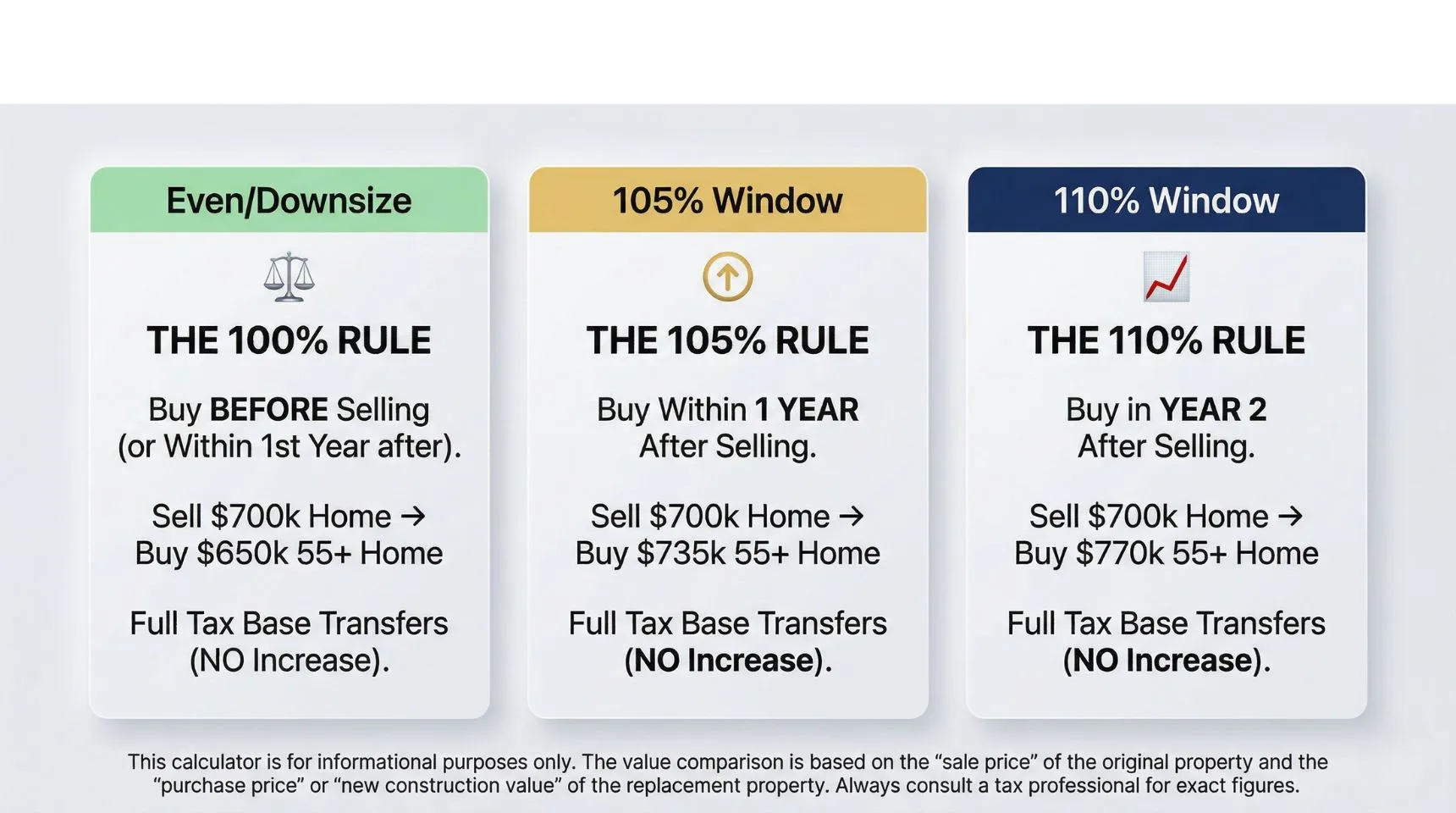
Proposition 19 is a California property tax measure, and it touches estate planning in two ways. For homeowners 55 and older, Prop 19 allows you to transfer your tax base to a replacement home, which is a powerful tool when you downsize or relocate. For inheritance, the rules changed significantly in 2021: a child who inherits a home generally must use it as their primary residence within one year to retain the parent's tax base, and the exemption is subject to a $1 million cap. Homes above that cap, or children who do not move in, face a reassessment.
This is general and educational, because the details depend on the home's assessed value, the child's situation, and the county assessor's rules. Direct readers to consult their estate planner and CPA, and we do the same for you: Prop 19 planning is exactly the kind of decision that should be made with professionals who can run your actual numbers. Our guide to Proposition 19 when moving into a 55+ community covers the transfer side of the measure in more depth.
This is general education, not legal or tax advice. For your specific family and home, consult a qualified California estate attorney and a CPA, and confirm the community's current rules in writing.
Frequently Asked Questions
Do I need a living trust to pass on my home?
No, a living trust is one option, not a requirement. A living trust lets you transfer title to the trust, remain in control as trustee while you are alive, and have beneficiaries take over after your death without probate delays. Alternatives include California transfer-on-death deeds for real estate and joint tenancy or community property with right of survivorship. Each has trade-offs, so the right choice depends on your family, your assets, and your goals, and it deserves a conversation with a California estate attorney.
What is a TOD deed?
A transfer-on-death deed, authorized in California by Probate Code section 5600 and following, lets you name a beneficiary who receives the home when you pass away, without going through probate. You keep full ownership and control while you are alive, and the deed only takes effect at death. TOD deeds have specific execution and recording requirements and can be revoked, so they are best set up with an attorney who can confirm the deed is valid and fits your overall plan.
How does Prop 19 affect inherited homes?
Prop 19 allows homeowners 55+ to transfer their tax base to a replacement home, and it also changed the rules for inheriting property significantly in 2021, requiring the child to use the home as their primary residence within one year to retain the base, subject to the $1M cap. The details depend on the home’s assessed value, the child’s situation, and the county assessor’s rules. This is general education, not tax advice: consult your estate planner and CPA for your specific family.
Can my heirs live in my 55+ community home?
Only if they meet the community’s age and occupancy rules. HOPA regulates occupancy, not ownership, so an heir can hold title, but moving in is governed by the community’s CC&Rs. A surviving spouse is protected under HOPA, while a non-age-qualified heir usually needs to sell the home or rent it to an age-qualified tenant if the community allows rentals. A clear estate plan, reviewed against the community’s rules, prevents a forced sale or a vacant home in limbo.
Plan the Move, Then Plan What Happens Next
Gary and Rutsell help buyers and sellers think through the community rules side of estate planning, and they can connect you with the professionals who build the legal plan. Call or text Gary at 916-595-4279, Rutsell at 916-695-2800, or send a message through our contact page.
Written by The Gary Lee Team
Gary Lee, REALTOR, CA DRE #01448722, and Rutsell Fabillar Lee, REALTOR, CA DRE #02067791, are the husband-and-wife team behind NorCal55Plus.com. The Gary Lee Team operates under eXp Realty of Northern California, Inc. Gary has served Northern California real estate clients since 2004 and specializes in 55+ active-adult communities, resale homes, new construction, relocation, and downsizing. Client services are offered in English, Tagalog, and Bisaya.
Call or text Gary at 916-595-4279 or Rutsell at 916-695-2800, or send a message through our contact page. Whether you are planning a purchase or planning an estate, we would love to help.
Meet your specialists
Meet Gary & Rutsell, your Northern California 55+ REALTORS
Gary Lee has been a full-time California REALTOR® since 2004. Rutsell Lee is also a California REALTOR® and co-founder of The Gary Lee Team. Together they research Northern California 55+ communities, tour homes and amenities, and help buyers and sellers compare their options throughout Greater Sacramento and Northern California.
The Gary Lee Team · eXp Realty of Northern California, Inc.