Buyer Education · Financing a 55+ Home
Using a Reverse Mortgage to Purchase a 55+ Home: What Northern California Buyers Need to Know
Reverse mortgage purchase programs are real and usable in 55+ communities, and they are also loans with real obligations. This guide explains, in plain language, how a HECM for Purchase works, what still must be paid, and what to verify before you ever sign.
Last reviewed September 2026 · General consumer education, not legal, tax, or financial advice
Last verified:
What if you could buy your dream single-story home in a premier Northern California 55+ community, keep substantial cash reserves in the bank, and never make a mandatory monthly mortgage payment again?
It’s called a HECM for Purchase (Home Equity Conversion Mortgage), and when structured correctly, it is one of the most powerful financial tools available for buyers age 62 and older. Yet most buyers—and most agents—have no idea how it actually works.
Navigating a reverse mortgage purchase requires an advocate who understands the intricate lending guidelines, HOA approvals, builder incentives, and local market valuations. With over 22 years of full-time Northern California real estate experience, I help buyers structure these transitions smoothly—whether you are purchasing a brand-new construction build, buying an established resale, or coordinating the sale of your current family home.
Considering a Reverse Mortgage to Buy in NorCal?
Talk to an advocate before you sign paperwork or tour communities alone.
Every 55+ community handles financing approvals, builder incentives, and purchase timelines differently. Gary Lee would be honored to sit down with you, walk through the numbers, and help you determine whether a HECM for Purchase fits your long-term goals—with zero pressure.
Call or Text Gary Lee at 916-595-4279
eXp Realty of Northern California | CA DRE #01448722
What this guide is, and what it is not
This article is general consumer education about how reverse mortgage purchase programs work. Gary and Rutsell are real estate specialists who help buyers compare homes and communities; they are not lenders, mortgage advisers, or HUD-approved counselors, and nothing here is an offer, a pitch, or a promise about any specific loan. No interest rates, loan amounts, or benefit figures are quoted here on purpose, because those change with the market, the borrower, and the program. Before any decision, talk with a HUD-approved reverse mortgage counselor and a qualified mortgage professional, and verify the program terms that are current on the day you apply. And when you are ready to compare homes and communities, our Buyer Information page on the main NorCal55Plus.com site gathers the buying resources we keep current for 55+ buyers.
How HECM for Purchase Actually Works
The purchase program turns the usual mortgage math around. Instead of borrowing most of the price and paying it back over time, you put down roughly 45% to 55% of the purchase price, from the sale of your previous home or savings, and the reverse mortgage covers the rest. That is why it works best for buyers who bring significant equity to the table, most often the proceeds from selling a larger current home.
-
A large down payment first. Put down roughly 45% to 55% of the purchase price, and the reverse mortgage covers the rest. The exact percentage depends on the borrower’s age, the home, and current program terms, which is why the honest rule is “substantial”: buyers planning a reverse purchase should expect to bring roughly half the value of the home in cash or equity, then verify the current figure with a lender.
-
No monthly principal and interest payments. During the term of the loan, there is no monthly principal-and-interest payment the way a conventional mortgage has. That can be a real relief on a fixed budget, and it is the primary reason 55+ buyers explore the program.
-
The loan covers the balance. The reverse mortgage pays the remaining purchase amount and is secured by the home, same as any mortgage. The borrower owns the home, and the lender holds a lien.
A purchase made this way is a true purchase: you own the home, the deed is in your name, and the equity you bring makes the reverse mortgage itself smaller than it would be on a home purchased with little or nothing down. For buyers whose current home has appreciated over many years, this can be a way to move the equity, rather than the monthly payment, into the next chapter.
What still must be paid every year
“No monthly mortgage payment” does not mean no carrying costs. You remain responsible for property taxes, homeowners insurance, and HOA dues, along with routine maintenance, for as long as the reverse mortgage is open. The lender verifies before closing that the borrower can reasonably afford these ongoing costs, including in a 55+ community where HOA dues and amenity fees are part of the monthly picture.
Meanwhile, the loan balance grows over time as interest, and for HECMs mortgage insurance premiums, accrue. The borrower is not paying that balance monthly, but it is accruing, and it is repaid when the loan becomes due. That is the trade at the center of every reverse mortgage: lower monthly outlay now, a growing balance later.
Age and eligibility basics
62 for a HECM
The youngest borrower on a federally insured Home Equity Conversion Mortgage must be at least 62. Some proprietary reverse mortgage products set lower age minimums; exact current minimums vary by product and lender, so verify the number that applies the day you apply.
Counseling first
A HECM requires counseling with a HUD-approved counselor before the loan can move forward. The counselor walks through costs, alternatives, and risks so the decision is informed, and their review is required by law for a reason.
Primary residence
The home you purchase with a reverse mortgage must become and remain your primary residence. A second home or investment property does not qualify, and a move out of the home can make the loan become due.
Affordability check
Lenders verify that the borrower can keep up with property taxes, insurance, HOA fees, and maintenance. That review is why the HOA dues and amenity fees of a 55+ community matter so much in a reverse purchase: they are part of the affordability picture from day one.
The HECM for Purchase Structure, Step by Step
Stripped to its structure, a HECM for Purchase has exactly five moving parts. If you understand these five, you understand the product well enough to have the real conversation with a lender and a HUD-approved counselor. The steps apply the same way whether the target is a single-story active-adult resale or a brand-new community home.
- 1
Qualify by age and occupancy. The youngest borrower must be at least 62 for a federally insured HECM, and the 55+ community home you buy must become your primary residence. The age and occupancy tests are the gates the whole structure sits behind.
- 2
Complete the required counseling. A HUD-approved counselor must review the costs, the alternatives, and the risks before a HECM can move forward. It is not a formality; it is the layer that keeps the loan honest, and it is required by law.
- 3
Make one substantial down payment. The distinctive move of a purchase-money reverse mortgage is a single down payment, commonly roughly 45% to 55% of the purchase price or appraised value, funded by the sale of your current home or savings. Your equity buys the home, and it shrinks the mortgage itself.
- 4
Let the reverse mortgage cover the balance, with no mandatory monthly payment. The loan pays the remaining purchase amount and is secured by the home. There is no mandatory monthly principal-and-interest payment during the term, which is the feature that matters to buyers on a fixed budget, and the same feature that demands an honest budget for everything else.
- 5
Accrue, don't pay, and keep the property charges current. Interest and, for a HECM, mortgage insurance premiums accrue on the balance and are repaid when the loan comes due. What must stay current every month is the property side: taxes, insurance, HOA dues, and upkeep. That is the honest price of the no-payment feature.
What "no mandatory monthly mortgage payment" does and does not mean
It means there is no monthly principal-and-interest invoice the way a conventional mortgage issues one. It does not mean the home is free. The obligations that remain are exactly the ones a 55+ community budget already tracks: property taxes, homeowners insurance, HOA dues and amenity fees, and routine upkeep. The lender verifies before closing that you can afford these carrying costs, and in a 55+ community that review makes the HOA's financial health part of your approval, because the lender checks that the association meets FHA requirements. Falling behind on the property charges can make the loan become due and payable, so the no-payment structure only works when the ongoing budget genuinely fits.
Why Most Traditional Realtors Fumble Reverse Purchases
Reverse mortgage purchases are rare enough that most agents never see one. The agents who represent most resale homes and staff most builder sales offices are trained on conventional 30-year financing, and a HECM for Purchase does not behave like one. In our experience with Northern California buyers, that mismatch is where the trouble starts: standard resale and builder agents often treat the reverse purchase like a 30-year conventional loan, which is a plan the transaction cannot follow.
The friction shows up in the calendar. A HECM purchase carries a HUD-approved counseling requirement, lender conditions that differ from a conventional loan, and a closing process with its own steps, while a builder’s sales team typically operates on strict closing windows and a resale contract has dates that only move by mutual agreement. When the agent on the other side treats your financing like a conventional loan, the paperwork can stall, the lender conditions can arrive late, and the closing window can slip entirely. Missed builder closing windows are a real risk in new construction, and a slip can put earnest money deposits in jeopardy.
Having an advocate who knows how reverse purchases flow keeps the calendar honest. Counseling is scheduled early, lender conditions are tracked to their deadlines, and the contract dates are protected from the start. That is exactly the role Gary plays: he specializes in 55+ transitions and buyer representation, and he watches the timeline so your earnest money deposits stay protected and the closing actually happens on schedule.
Buying New Construction vs. Resale with a HECM
The community type changes the financing paperwork, and buyers are often surprised by how much. Each path has its own approvals, incentives, and pitfalls.
New builds: incentives and credits
Builders love cash-like buyers, but their in-house lenders often push conventional financing, because that is the product their systems and sales goals are built around. A buyer using a HECM for Purchase does not have to be pushed in that direction. Builder closing credits and incentives, which are routine in new construction, must be applied properly toward HECM closing costs; when they are misapplied or ignored, the buyer can lose money that was always meant to support the purchase. Gary ensures the credits and incentives are itemized and applied correctly in the contract and at closing.
Resales: HOA and FHA certifications
On a resale, the paperwork centers on the community itself. An FHA-insured HECM requires the property to meet FHA requirements, and in a 55+ community that approval often turns on HOA certifications and the association’s financial health, so the community meets FHA reverse mortgage requirements. HOA dues and amenity fees are also part of the lender’s affordability review, which means two similar homes in two different communities can produce very different approvals and very different monthly obligations.
Community-level details shape a reverse purchase more than most buyers expect. HOA dues, amenity fees, and community assessments are part of the loan’s affordability review and part of your budget for as long as you live there, which is exactly the kind of comparison we help buyers make on the real-estate side. And because a reverse purchase commits you to living in the home as your primary residence and keeps the loan attached to it for years, it deserves the same scrutiny as any long-term decision. A buyer should compare paying cash, using a conventional mortgage, and using a reverse mortgage purchase side by side, with a lender who shows all three and with their own financial and tax advisers. Cash may still be the better tool for your specific plan, and there is no shame in that; the right answer is whatever fits your actual numbers.

Selling Your Existing Home to Fund the Move
For most 55+ buyers, the down payment does not come from savings; it comes from the sale of the home they already own. That makes the move two transactions, and the two have to move together.
Gary doesn’t just show up at the purchase; he orchestrates the sale of your existing home, or an estate or inherited property, synchronizing escrows so you never find yourself stuck between two transactions. The sale proceeds fund the 45% to 55% down payment on the reverse purchase, which is why the two calendars have to line up: the sale closing, the purchase closing, the move, and the loan funding all have to work as one plan.
In practice that means coordinating listing strategy and pricing with the purchase timeline, watching the seller’s side and the buyer’s side at the same time, and holding both contracts to dates that actually work. When a listing sells later than planned, or a purchase is delayed, having one team watching both sides keeps the plan from unraveling. It is the difference between moving smoothly into your next chapter and being caught between two escrows with nowhere to live. Whether the funds come from a long-held family home or an inherited property, the goal is the same: turn the equity you have into the home you actually want, without a gap in between.
Insider HECM Protection Clause:
"Did you know that an FHA reverse mortgage is completely non-recourse? Even if the market were to drop and the loan balance grew larger than the home’s value, your heirs never inherit the debt. Better yet, under FHA guidelines, if your heirs decide to keep the home, they can purchase it for 95% of the current appraised value —giving them an instant built-in equity cushion, with HUD absorbing the remaining deficit."
To be precise about what this does and does not mean: the 95% rule applies when heirs choose to repay the loan and keep the home, and non-recourse means the heirs are never personally liable for the difference if the loan balance ever exceeds the home’s value. What it does not mean is a guaranteed cash payment to the estate. There is no federal or proprietary clause guaranteeing heirs a minimum 6% cash payout when a reverse mortgage balance has grown large. If an heir chooses not to keep the home and lets the lender sell it, FHA absorbs the loss on an underwater loan, but HUD does not hand heirs a guaranteed 6% check.
Relatedly, the 5% to 6% figures that surface in reverse mortgage conversations come from two different places: the discount below appraised value built into the 95% purchase rule, and the 5% to 6% that conventional forward sales often discuss as closing costs and commissions. Neither is a cash payout promise, and it is worth keeping the two separate when you compare numbers.
Ownership when the loan comes due: the home stays in the borrower’s name for the borrower’s lifetime, and the borrower keeps the right to live in it. When the last borrower dies or permanently moves out, the loan becomes due and payable, which is when heirs and the estate face the repayment. Heirs commonly repay the loan, often by selling the home, and keep whatever equity remains after the payoff; heirs who want to keep the family home can do so under the rules above. This part of the conversation is best had with the lender and an estate or legal adviser, with the actual loan documents in hand.
Red flags and the fine print
Take the fine print seriously, because it is where a reverse mortgage can go sideways for a borrower who did not read it.
- Costs add up. HECMs carry upfront costs, including an origination fee, appraisal, title and closing costs, plus a mortgage insurance premium, and annual mortgage insurance premiums continue for the life of the loan. These are real amounts, paid out of proceeds or out of pocket, and they reduce the equity available later.
- Counseling is mandatory, not optional. Before a HECM, a HUD-approved counselor must walk through the costs, the alternatives, and the risks. If a lender suggests skipping it, that is the moment to walk away.
- Unpaid taxes or insurance can trigger the loan. If the borrower cannot keep up with property taxes, homeowners insurance, or HOA obligations, the loan can become due and payable, and the home can be at risk. This is the single most common source of reverse mortgage trouble, and it is why the lender’s affordability review and the borrower’s honest budget matter so much.
- Rules change. Program terms, age minimums, and cost structures are adjusted over time. Everything you read, including this article, is a snapshot. Verify current program terms with a HUD-approved counselor and a qualified mortgage professional before you rely on any of it.
A red flag is not a reason to abandon the idea. It is a reason to slow down, ask more questions, and get the current numbers in writing. A good reverse mortgage is transparent; a bad one hides its costs until the fine print bites.
Questions buyers ask us about reverse mortgages
Can I use a reverse mortgage to buy a home in a 55+ community?
Yes. The Home Equity Conversion Mortgage, or HECM, and some proprietary reverse mortgage products offer a purchase option, and a home in a 55+ active-adult community can be the subject of that purchase like any other primary residence. Under the purchase program you typically make a substantial down payment, commonly 45-55% of the purchase price or appraised value, whichever applies, and the reverse mortgage covers the balance. The home must become your primary residence, and you must meet the age, counseling, and occupancy requirements of the specific loan product.
Do I have to make monthly payments on a reverse mortgage purchase?
Under most reverse mortgage purchase programs there is no monthly principal-and-interest payment during the term of the loan. That is the feature that attracts many buyers. It does not mean the loan is free: interest accrues on the balance over time, and you remain responsible for property taxes, homeowners insurance, HOA fees, and routine maintenance for as long as you live in the home. The lender verifies up front that you can afford those ongoing carrying costs, and failing to pay property charges can make the loan become due.
What is the age requirement for a reverse mortgage?
For a federally insured HECM, the youngest borrower must be at least 62. Some proprietary reverse mortgage products set lower minimum ages, and the exact current minimums vary by product and by lender. Requirements are verified as of your application, not from what you read online, because program rules change over time. In a married or partnered household, the rules around a non-borrowing spouse matter too, so a HUD-approved counselor and a mortgage professional should review your specific situation before you commit to anything.
What costs come with an HECM reverse mortgage?
A HECM is not a free loan. It carries upfront costs including an origination fee, appraisal, title and closing costs, plus an upfront mortgage insurance premium, and annual mortgage insurance premiums continue for the life of the loan. These costs can be paid from loan proceeds or out of pocket, and the balance grows as interest and premiums accrue. HUD-approved counseling is required before a HECM, and counseling may carry a modest fee. Because costs and program terms change, ask any lender for a current, itemized estimate and review it with your counselor before deciding.
Can my heirs keep the home after a reverse mortgage?
Generally, yes, the home can be kept in the family, and it usually stays in the borrower’s name for the borrower’s lifetime. When the last borrower dies or permanently moves out, the loan becomes due and payable. Heirs commonly repay the loan, often by selling the home, and keep whatever equity remains; they may also choose to pay off the loan themselves and keep the home. Under FHA rules an FHA reverse mortgage is non-recourse, so heirs are not personally liable for more than the home is worth, and heirs who choose to keep the home may purchase it for 95% of the current appraised value. The details depend on the specific loan terms and the estate, so heirs should review the loan documents and talk with their own advisers.
Is a reverse mortgage a good way for 55+ buyers to downsize?
For some buyers, yes, and for others it is not the right fit. A reverse mortgage purchase works best for people who bring significant equity or proceeds from selling their current home, who want to reduce or eliminate a monthly principal-and-interest payment, and who intend to live in the new home as a primary residence for years. Whether it beats paying cash or financing with a conventional mortgage depends on your age, your budget, your goals, and the actual numbers for the specific home and purchase. Compare all three approaches with a lender you trust, a HUD-approved counselor, and your own financial and tax advisers.
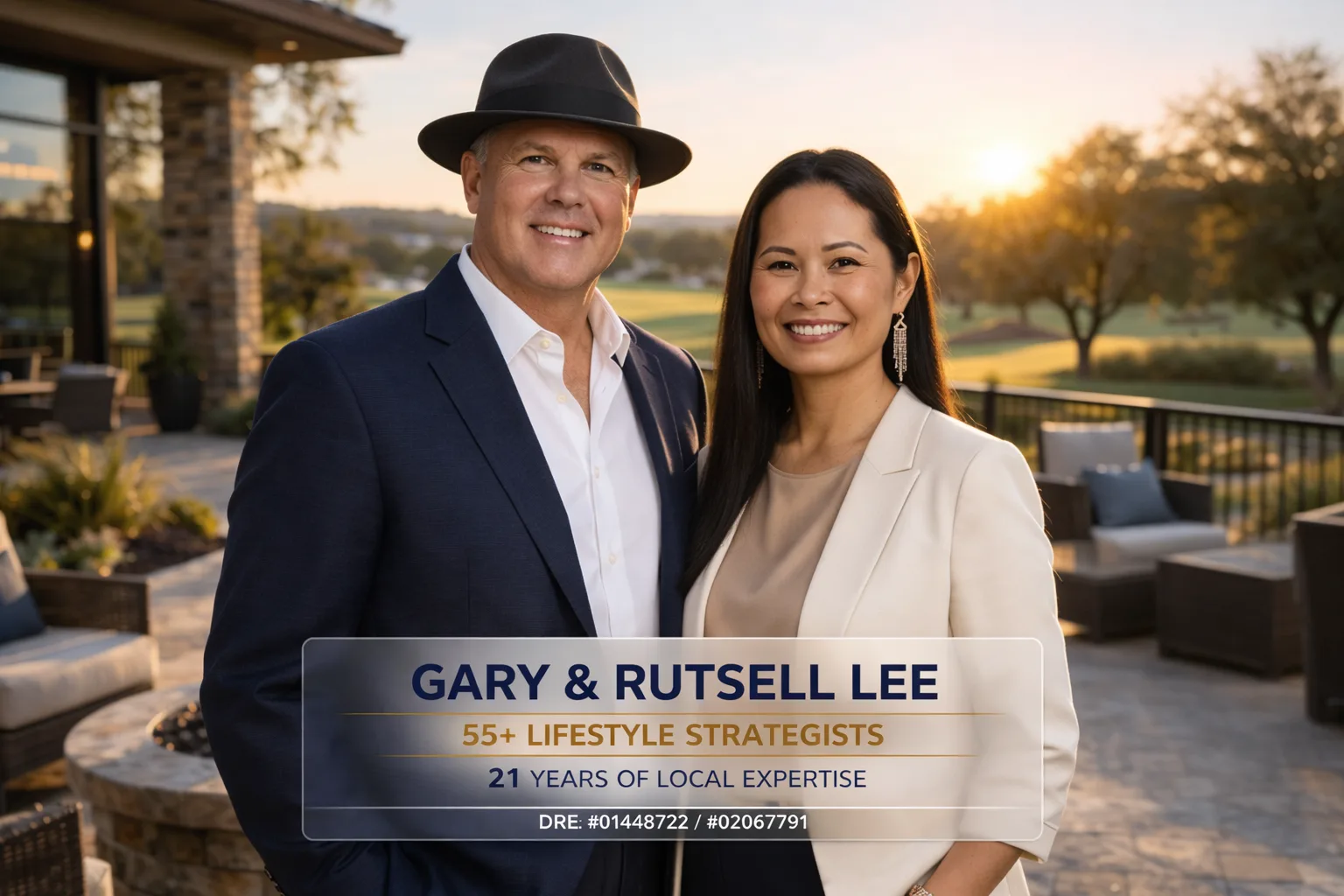
Meet your specialists
Meet Gary & Rutsell, your Northern California 55+ REALTORS
Gary Lee has been a full-time California REALTOR® since 2004. Rutsell Lee is also a California REALTOR® and co-founder of The Gary Lee Team. Together they research Northern California 55+ communities, tour homes and amenities, and help buyers and sellers compare their options throughout Greater Sacramento and Northern California.
The Gary Lee Team · eXp Realty of Northern California, Inc.
Sources and Official References
This article is general consumer education from the team’s experience working with 55+ buyers and sellers in Northern California, not legal, tax, or financial advice, and not an offer or solicitation of a loan. Reverse mortgage program terms, age minimums, costs, and rules change over time; verify everything current with a HUD-approved counselor and a qualified mortgage professional before relying on it. We do not receive compensation from any lender, and we do not cite our own guides as proof of a claim.
- HUD: FHA Reverse Mortgage for Seniors (HECM) The federal government’s own page on the Home Equity Conversion Mortgage, the only reverse mortgage insured by the U.S. government.
- HUD Exchange: HECM Counseling The counseling requirement that applies before any HECM, and where to understand what counseling covers.
- CFPB: Considering a Reverse Mortgage? Proceed with Caution The Consumer Financial Protection Bureau’s consumer guidance on the questions to ask before a reverse mortgage.
- CFPB: Reverse Mortgages Report The bureau’s report on reverse mortgage markets and borrower outcomes.
- The Complete Guide to Reverse Mortgages for Buying a 55+ Home The companion deep-dive on this site: HECM basics, purchase-money use, loan costs, the required counseling, and when a reverse mortgage does and does not fit.
Reviewed September 2026. Gary Lee, CA DRE #01448722 · Rutsell Fabillar Lee, CA DRE #02067791 · Brokered by eXp Realty of Northern California, Inc. Equal Housing Opportunity.
Disclaimer: Gary Lee is a licensed REALTOR® with eXp Realty of Northern California (CA DRE #01448722) specializing in 55+ transitions and buyer representation. Real estate financing information is provided for general educational purposes. Reverse mortgages are originated through licensed FHA/HUD mortgage lenders. Consult with a qualified reverse mortgage professional and financial advisor to determine specific loan eligibility.